











































Technology Outlook for Singaporean K-12 Education 2012-2017
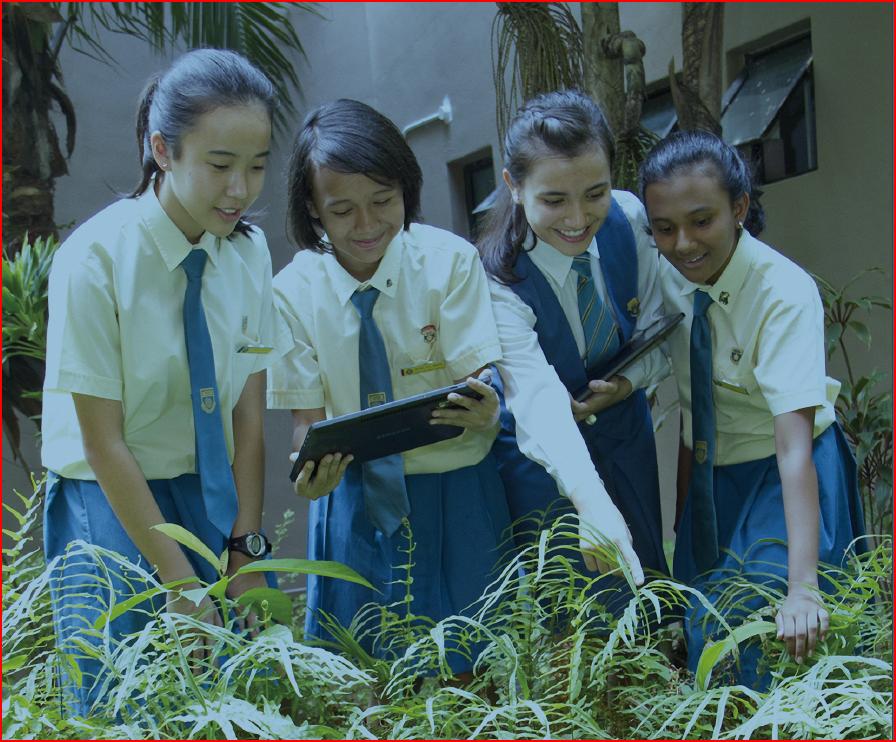
This report presents the findings of a research project led by the New Media Consortium (NMC) in partnership with SingTel Education that intends to inform educational leaders about significant developments in technologies supporting teaching, learning, and creative inquiry in Singaporean K-12 education. In an effort that ran from August through September 2012, a group of experts was asked to consider hundreds of relevant articles, news, blog posts, research, and project examples as part of the preparation that ultimately pinpointed emerging technology topics, trends, and challenges for K-12 education in Singapore over the next five years.
The 12 "technologies to watch" presented in the report reflect the advisory board's opinions as to which of the nearly 60 technologies considered will be most important to Singaporean K-12 education following the publication of the report. There was an agreement that cloud computing, collaborative environments, mobile apps, and tablet computing are only a year or less away from mainstream adoption; electronic publishing, gamification, learning analytics, and personal learning environments are poised within the two-to-three year horizon; and collective intelligence, the Internet of Things, massively open online courses, or MOOCs (a type of online course aimed at large-scale participation and open access via the web), and natural user interfaces are four to five years out. Each of the 12 key technologies are profiled on a single page that opens with a definition of the highlighted technology, outlines its educational relevance, points to several real-life examples of its current use in schools, and ends with a short list of additional readings for those who wish to learn more.
"Gamification was a topic that particularly sparked considerable discussion among the Singapore advisory board members. There was a general consensus that gaming mechanics and the integration of actual games, whether online or in app form, are transformative in K-12 education because they foster more immersive learning experiences and increase student engagement. [Furthermore, a] growing number of key universities worldwide are looking to MOOCs as a way to facilitate free learning and extend their courses to a broader audience, but Singapore is the first region that has identified MOOCs as an area of interest for K-12 - a choice that reflects the nation's stated interest in applying innovation and technology wherever it may help Singapore achieve its vision for learners and learning."
The Singaporean panel of experts saw doors opening in K-12 to more online, hybrid, and collaborative learning models. They contend that these emerging models foster teamwork, communication, and both informal and peer-to-peer leaning. In this context, they note that, "with a constantly expanding universe of online resources at students' disposal, it is the responsibility of teachers to become guides and help them navigate the abundance of content and relationships."
According to the report, many challenges impacting technology uptake are grounded in everyday realities that often make it difficult to learn about, much less adopt, new tools and approaches. The need to transform textbooks, for example, continues to dominate conversations in Singapore about improving learning experiences in K-12 education; there is a common belief that merely digitising or making the print versions of textbooks available online will not adequately meet these demands.
The panel members assert that there is a growing need for the K-12 sector to better understand and be a part of the blending of formal and informal learning. The challenge embedded in this topic is that more than ever, students at a younger and younger age are equipped with their own devices, such as mobiles, that they use outside of the classroom to explore subjects that personally interest them. "Students do not learn to use these technologies in school, but on their own and at their own pace. Tools such as mobile apps breed discovery of new information for users, and there is a need for schools to leverage and promote these informal learning experiences while integrating them with in-school learning. The Singapore advisory board also felt that schools do not sufficiently incorporate real-life experiences in their curricula. Models such as challenge based learning, which encourages students to solve local and global problems, are interesting to schools, but have not gained enough traction and are not yet widespread. In order for students to be engaged in the material they are learning, there is a need for it to be tied to their own lives and the community around them."
NMC website, December 14 2012. Image credit: Courtesy of Crescent Girl's School, 357 Tanglin Road, Singapore
Comments

Gamifying SRHR Education in Ethiopia
Hi there!
Very interesting, thanks for sharing! I have especially enjoyed reading about the take on "gamificaiton" as I am very interested in the strategy and have just finalized leading my own pilot research "Gamification in SRHR" aimed at piloting the strategy for influencing positive youth sexual reproductive health and rights choices. This is one of the few posts which discusses the startegy in depth.
Here is a publication on FP2020's tumblr that explains my motivation for choosing to research the area:http://fpvoices.tumblr.com/post/168499274249/yeabsira-bogale-rise-up-yo… My abstract has been accepted for the 2018 International Social and Behavior Change Communication Summit (#SBCC2018) and I hope tother gamification ethusiasts and social and behavior change communication experts will find it as interesting as I have!
It is important to see how to integrate the strategy with other pillars such as human-centered design and behavioral economics- I believe it holds a lot of promise in contextualizing health messageses and effectively influencing the field of social and behavior change communication.
Thank you very much!
- Log in to post comments