










































Integrated Social Behavior Change Communication to Improve Maternal, Infant, and Young Child Nutrition Practices
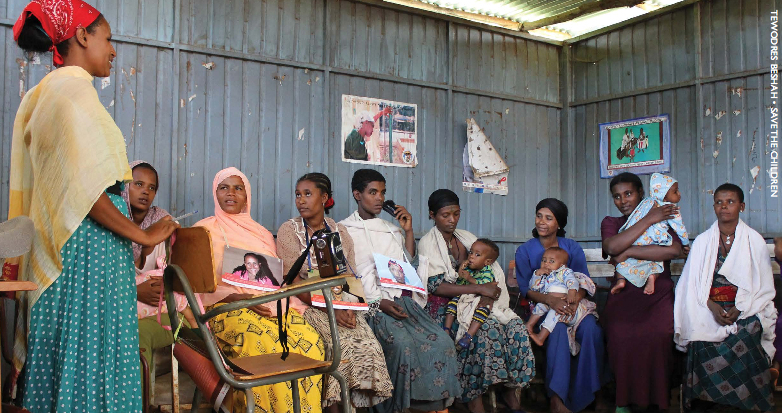
This technical brief describes the social and behaviour change communication (SBCC) approach used by the Empowering the New Generation to Improve Nutrition and Economic Opportunities (ENGINE) project, a multisector nutrition project implemented in Ethiopia from September 2011 to September 2016. Led by Save the Children, ENGINE partnered with Ethiopian ministries to strengthen existing multisector coordination and to support the development and revision of nutrition policies, guidelines, and standards. It integrated instruction on nutrition into the pre-service curriculum for health and agriculture workers and built the capacity of frontline workers to provide high-quality nutrition services. The project’s SBCC activities promoted optimal maternal, infant, and young child feeding practices and dietary diversity at the community level.
As explained in the report, “[t]he ENGINE project baseline assessment showed that women often found the information they received from health workers vague or unclear. When mothers did have knowledge regarding healthy maternal, infant, and young child nutrition (MIYCN) behaviors, such as the importance of eating a diversified diet including a sufficient amount of animal protein, barriers such as poor communication with spouses or other household members, gender imbalances, economic constraints, and limited control of household finances prevented them from providing themselves and their children with an optimal diet.” ENGINE’s SBCC approach was designed to address this. The focus was on behaviour-centered programming, which provides opportunities for families, health workers, and other community members to participate in formulating and testing proposed practices, strategies, activities, messages, and materials that support improved MIYCN behaviours and relationships between couples.
The SBCC process involved the following steps, which are described in brief here:
Situational analysis to understand context: This included gaining an understanding of the cultural context, as well as common gender and family dynamics. To do this, ENGINE conducted diagnostic role plays in which participants acted out typical attitudes and behaviours followed by discussion and analysis.
Creative concept testing: The project identified several creative concepts and symbols that could be used to explain healthy MIYCN behaviours through cultural resources and tested local audiences’ comprehension of the concepts. For example, in order to describe the concept of a balanced diet, the project used the concept of a traditional cooking pot, which needs to be balanced on three clay pillars.
SBCC strategy: The strategy’s overarching theme was Nutrition is a Family Affair. It focused on improving couple dialogue, women’s self-efficacy, and supportive family actions to improve MIYCN behaviours and practices using improved community dialogue, audio recordings, and interactive skills-building activities to engage communities.
Supporting frontline workers with training and creative SBCC materials: ENGINE developed songs, videos, and printed materials which were distributed to health centres, health posts, and farmer training centres and trained health extension workers (HEWs) and agriculture extension workers (AEWs) on their use.
Enhanced community conversations: ENGINE supported three local non-governmental organisations to conduct enhanced community conversations (ECCs) with 1,800 peer groups, divided into three categories: pregnant and lactating mothers, husbands and fathers, and grandmothers of children under the age of two years. The ECCs use an audio-recorded virtual facilitator and a community change agent to guide participants through role plays, games, contests, and songs - all aimed at transforming nutrition behaviours and communications between household members.
Engaging religious leaders: To raise awareness on the effects of fasting practices on under-nutrition and childhood stunting, ENGINE held two consultative workshops with Ethiopian Orthodox Tewahedo Church (EOTC) senior leadership and scholars, and developed a nutrition guide based on church teachings.
Using innovative technology to support front-line workers: ENGINE created an mNutrition platform to enable AEWs and HEWs to access key nutrition information, skills, and tips on their mobile phones.
Mass media: ENGINE developed a 32-episode radio programme in two local languages, Amharic and Oromiffa, to promote healthy nutrition during the first 1,000 days.
The report discusses the results of the SBCC activities. Overall, the project found that the SBCC activities had a significant impact in changing relationships between partners, with men reporting they are more supportive of their wives and caring for their children. A survey of the most vulnerable households (MVHH) found improvement in several key MIYCN behaviours. For example, households that had a hand washing facility increased from 22 to 44 percent, and the proportion of mothers who reported washing their hands before serving a meal increased from 52 to 76 percent. The proportion of exclusively-breastfed children zero to five months increased from 77 to 86 percent. In addition, households who received advice on dietary diversity from HEWs (the most common source of information) were more likely to have children consuming diverse diets than those who did not receive this information (28 versus 10 percent, respectively).
The following are some of the lessons learned, which are described in more detail in the report:
- A comprehensive approach to SBCC that includes water, sanitation, and hygiene (WASH), adolescent nutrition, and other target behaviours and groups is necessary to sustainably address stunting.
- ENGINE’s SBCC efforts with HEWs and the Health Development Army need additional development.
- More study is required to identify effective communications that encourage increased dietary diversity while also ensuring adequate meal frequency.
- AEWs need an SBCC nutrition tool developed specifically for the unique opportunities that their interaction with households and communities presents.
- Radio is a common mass media communications approach; however, programme development must take factors that affect listenership and effectiveness into account.
- mNutrition holds promise to reach frontline workers with targeted nutrition information; however, working through EthioTelecom, the national telecommunications company, inhibits building a system that can be implemented at scale.
Save the Children Ethiopia website on June 15 2017.