










































Impact Data - Improving Maternal, Infant, and Young Child Nutrition and Hygiene through Community Videos in Niger
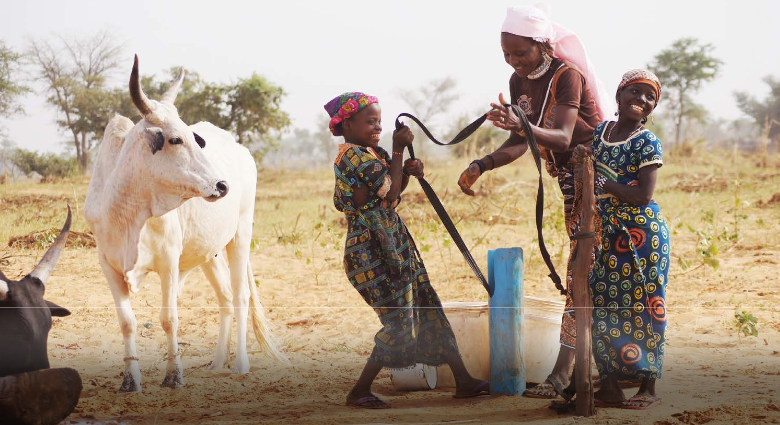
"The community video approach proved effective in improving and sustaining knowledge, attitudes, self-efficacy, and self-reported behaviors in Niger."
Niger, located in the Sahel region of West Africa, is characterised by harsh climate conditions that contribute to structural food crises and high rates of severe acute malnutrition among children. Many of the underlying determinants of malnutrition are influenced by cultural norms and practices, including polygamy, an emphasis on male decision-making, and low levels of literacy.
The 7-year United States Agency for International Development (USAID)-funded Strengthening Partnerships, Results, and Innovations in Nutrition Globally (SPRING) project holds that promoting practices that support appropriate feeding behaviours and styles as well as hygiene requires highly contextualised social and behaviour change communication (SBCC) strategies that address the constraints presented in rural, traditional, resource-constrained societies such as Niger.
To that end, between January and December 2015, the SPRING project implemented a community video approach with a total of 80 community groups in 20 villages in Niger's Maradi region. Videos were screened among 4 community groups in each village, and were followed by facilitated discussions. Following the pilot, activities were scaled up to 115 villages in 2016 (61 villages in Zinder and 54 in Maradi). In 2017, the community video approach was expanded to 131 additional villages in these regions. (See Related Summaries, below, for a description of the intervention and midline results, which were collected in 2015.)
To measure the sustained effect of the community video activities, an endline study was conducted:
- Sample: Approximately 300 women exposed to the intervention who had children ages 6 -23 months at the time of the intervention
- Study design: Pre-post intervention household survey
- Study period: Respondents interviewed in April 2015, June 2015, August 2015, and May 2017
- Analysis: Bivariate analysis
The household surveys collected information on knowledge, attitudes, self-efficacy, and behaviours related to handwashing and responsive feeding. Indicators assessing behaviours were self-reported.
Handwashing
- Indicator 1: Percentage of households with at least one place designated to wash hands (observed by interviewer)
- Indicator 2: Percentage of households with handwashing station with soap and water (observed by interviewer)
- Indicator 3: Percentage of handwashing stations maintained by the husband
- Indicator 4: Percentage of households with handwashing station near the latrine or kitchen (observed by interviewer)
Responsive Feeding
- Indicator 5: Percentage of women who fed their child with a separate plate at each meal
- Indicator 6: Percentage of women who actively encouraged their child to eat
- Indicator 7: Percentage of women who said their child was helped by responsible person at the last meal
- Indicator 8: Percentage of women who said that the person responsible for helping their child was less than an arm's length away
There was a decrease from the endline survey and follow-up survey in knowledge about the importance of having a handwashing station: from 94.4% (n=301) at baseline to 97.2% (n=356) in August 2015 to 87.2% (n=297) in May 2017.
After the intervention ended, there was a slight decline in the percentage of women who demonstrated soap and clean water use while handwashing: from 78.6% at baseline to 95.7% in August 2015 to 90.5% in May 2017. There was a slight decline over time in knowledge about the need for a child to have a separate plate.
The percentage of women who know they should encourage their child to eat increased from 46.5% at baseline to 84.8% in May 2017.
Women who said they could install a handwashing station increased and then declined 2 years after the intervention. However, a much higher percentage of households had handwashing stations after the intervention: from 14% at baseline to 47.2% in May 2017.
The percentage of women who had soap and clean water at a handwashing station was not sustained over time following the intervention: from 73.8% at baseline up to 96.2% in August 2015 to 46.8% in May 2017.
There was an increase in the percentage of husbands who were responsible for maintaining the handwashing station following exposure to the intervention in August 2015. However, by May 2017, 86.5% of women reported that they were the primary person responsible for maintaining the handwashing station in the household - a ratio similar to baseline.
At baseline, 37% had a handwashing station near the kitchen, nearly 20% had such stations next to the latrine, and fewer than 5% had them next to the compound. After the intervention, there were increases in the number of handwashing stations across all locations. However, these increases declined 2 years following the intervention except for those next to latrines. Placement of handwashing stations near latrines increased from approximately 20% at baseline to 44% following the intervention and remained at the same level 2 years after the community videos were shared.
The percentage of women who said they could provide their child a separate plate increased from 71.8% at baseline to 91.3% two years following the intervention (May 2017). In addition, although the percentage of women who had a separate plate for their child declined 2 years after the intervention (88%), it was still higher than prior to initiating the community video approach (69.8%).
The percentage of women who intend to provide encouragement for their child the next time he or she eats increased from 76.4% at baseline to 96.7% two years after the intervention. While the percentage of women who actually carried out that practice declined from 85.1% two months after the intervention to 76.2% two years later, this is still much higher than at baseline (31.2%).
At baseline, approximately two-thirds of women said a responsible person was an arm's length away from their child at the last meal. This increased to nearly 80% two months following the intervention and to approximately 98% two years following the intervention.
At baseline, approximately 88% of women said a responsible person helped their child at their last meal. This increased to nearly 93% two months following the intervention and to 98% two years following the intervention.
There was a slight and sustained increase over time in the percentage of women who agreed that everyone should have a handwashing station: from 86.7% at baseline to 90.7% in August 2015 to 92.9% in May 2017.
There was a sustained increase over time in the percentage of women who agreed that everyone should wash with soap and clean water (from 92% at baseline to 98.7% in May 2017) and who said they could use soap and water following the intervention.
There was a slight decline in the percentage of women who agree that a child should have a separate plate.
At baseline, less than 10% of respondents shared information with co-wives, husbands, friends, and neighbours. Two months following exposure to the intervention, sharing messages with co-wives, husbands, and neighbours had doubled, while sharing messages with friends had tripled. Two years after the intervention, women were still sharing messages about handwashing with co-wives, husbands, and friends, ranging from roughly 50% among friends to 75% with neighbours.
At baseline, less than 15% of the women had held conversations on responsive feeding with co-wives, husbands, friends, and neighbours. Two months following the intervention, information sharing increased significantly; these increases were even more significant 2 years after the intervention. For example, sharing with a neighbour increased from 12.3% at baseline to 43% two months after the intervention and 79% two years later.
Dougherty, Leanne, Marjolein Moreaux, Chaibou Dadi, and Sophie Minault. 2017. Seeing Is Believing: Evidence from a Community Video Approach for Nutrition and Hygiene Behaviors. Endline Evaluation. [PDF] Arlington, VA: Strengthening Partnerships, Results, and Innovations in Nutrition Globally (SPRING) project - accessed on March 26 2018.
- Log in to post comments