










































Addressing Corruption in Education: A Toolkit for Youth from Youth
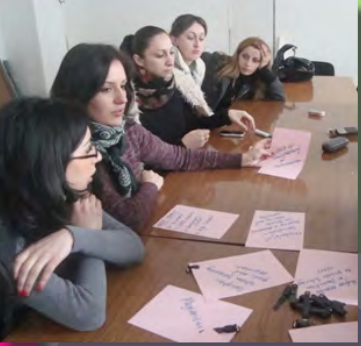
This toolkit is intended to serve as an educational tool, providing information and resources for the design and implementation of activities to promote transparency in education. Created for individuals and institutions, particularly youth-led and youth-oriented non-governmental organisations (NGOs), it was developed by the International Development Division (IDD) at the Education Development Center, Inc. (EDC) in the framework of the United States Agency for International Development (USAID)-funded Europe & Eurasia Social Legacy Program (E&E SLP).
As explained here, this resource emerges from E&E SLP, which reaches out to youth and other vulnerable groups in the E&E region, providing them with the tools to become local leaders and to promote social change. Through E&E SLP, EDC has established the Transparent Education Network (TEN), an association of individuals and organisations from the E&E region who are working to study and address corruption in education. At the time of writing, TEN comprised: (1) NGO Center (NGOC) in Armenia, (2) YUVA Humanitarian Center (YUVA) in Azerbaijan, (3) Youth Educational Forum (YEF) in Macedonia, and (4) Alliance NGO in Ukraine. TEN teaches and supports youth who participate in these organisations to share their experiences facing corruption in education, to understand it, and to work together to address it, and so promote transparency in education. Examples of TEN's awareness-raising and capacity-building projects have included a contest for youth to create videos about corruption, seminars and town hall-style meetings on corruption, and corruption-themed cartoon and poster competitions accompanied by educational activities.
The toolkit includes 3 modules:
- Module I is a general outline of the nature and scope of the problem of corruption in education.
- Module II outlines concrete strategies for promoting transparency and was designed for use by NGOs and youth organisations - e.g., 4 crucial elements include: (1) assessing or mapping the scope, the form of corruption in education, and the stakeholders and opportunities to address it; (2) educating and raising the awareness of youth, faculty, and staff on issues pertaining to corruption in education and engaging them in initiatives to promote transparent and accountable education systems; (3) developing local and international partnerships; and (4) improving transparency and accountability in institutions of higher education through codes of conduct (CoC).
- Module III consists of best practice case studies from the E&E SLP experience.
42
Education Development Center, Inc. (EDC) website, December 16 2014.
- Log in to post comments