










































Outside the Circle: A Research Initiative by Plan International into the Rights of Children with Disabilities to Education and Protection in West Africa
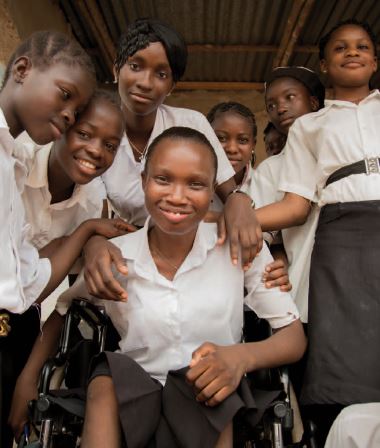
This 44-page report shares findings of Plan International's research to investigate why girls and boys with disabilities in West Africa are so often denied the right to education and protection. It explores different approaches that have been used to ensure these rights. The research was conducted to help Plan International raise awareness of the rights of children with disabilities and to work with governments and humanitarian programmes to review policies, action plans, and budgets to reflect the needs and aspirations of children with disabilities.
According to the report, children with disabilities face widespread stigma, which can include both verbal insults and physical violence, from peers, the community, and even their families. In many cases, this keeps them from schooling, and from here they remain "outside the circle" of opportunities to grow and develop. While all governments in West Africa have committed to including children with disabilities throughout their societies through ratifications of relevant United Nations Conventions, in practice few of these legislative initiatives are implemented. Multiple levels of prejudice exist towards these children, much of this based on traditional beliefs that associate disability with shame, for example that the disability is because the family "did something wrong."
The study also shows that there is huge resistance at many levels to including children with disabilities in mainstream schools. Physical accessibility and teacher training may be important, but their impact will be limited unless attitudes are changed.
The research found that where disability awareness-raising has taken place, the situation and acceptance of children with disabilities has improved. However, the report notes that there are still relatively few examples of good practices that address the substantive issues of including children with disabilities in either education or protection work.
The research findings lead to several "calls to action", defining the next steps in making the inclusion of children with disabilities in education and protection work in West Africa a reality. These are addressed to government, community leaders, religious leaders, non-governmental organisations, development agencies and donors, and child-focused agencies and include the following (as excerpted from the executive summary):
- "Governments in West Africa must act to implement their legal commitments to children with disabilities, particularly regarding the implementation of the UN Convention on the Rights of Persons with Disabilities.
- Measures to reduce and eliminate stigma and discrimination towards children with disabilities must be prioritised to address the root cause of exclusion from education and protection.
- Inclusive education practices must be adopted and sufficiently resourced. Families of children with disabilities need support to enable them to attend school.
- Awareness raising regarding the right to protection for children with disabilities is needed across every country in West Africa, along with implementation of protection measures.
- Non-governmental organisations, development agencies, and donors should mainstream children with disabilities across all their programmes, collaborating with disability protection organisations to inform their work."
Click here to access the report as well as audio files of the report online.
Plan International website on June 16 2014, and email received from Aidan Leavy, Plan International, on October 3 2016.
Image credit: Room3/Plan.
Listen Up! Children with disabilities speak out - Video
- Log in to post comments