











































Using a Modified Champion Community Approach for Improving Maternal, Newborn, and Child Health Outcomes in Remote and Insecure Health Zones in the Democratic Republic of Congo 2012-2017: A Case Study
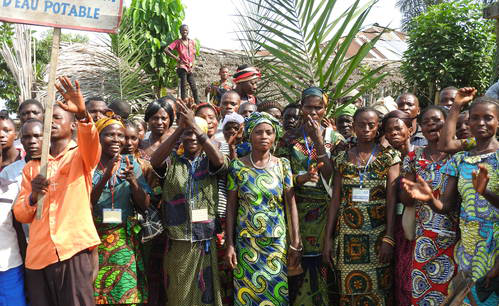
Uniformed Services University of the Health Sciences (Lawry); ABT Associates (Barhobagayana); Management Sciences for Health (Faye)
Research has found that the use of community mobilisation approaches can aid in changing attitudes, norms, practices, and behaviours, enabling communities to better assess and prioritise their needs and develop solutions that are contextualised and culturally appropriate. This report shares the results of a study assessing the impact of a modified champion community approach (CCA) on maternal, newborn, and child health (MNCH) indicators and identifies factors that made this approach a success in rural areas of Democratic Republic of Congo (DRC) to inform the application of a modified CCA to other settings.
The United States Agency for International Development (USAID) funded the Integrated Health Project (IHP) and the IHPplus in the DRC to reduce mortality through improved access and quality to MNCH services, family planning and reproductive health (FP/RH), malaria, and water, sanitation, and hygiene (WASH) services. As part of this effort, a modified CCA was implemented as a community mobilisation approach to strengthen the community dynamics to promote health services and improve the health of communities.
Specifically, supported by the Plan National de Développement Sanitaire 2016-2020 (National Health Development Plan), the modified CCA was used to engage community members in 4 provinces and 34 health zones in DRC to improve MNCH outcomes, conduct outreach within their community, and become invested and involved in the development of their community instead of relying on others. The modified CCA utilised a bottom-up and inclusive approach and included income generation and development of the champion community (CC) into a non-governmental organisation (NGO). Action plans and accountability were built into the approach, with steering and executive committees for mentorship and guidance with the inclusion of all community structures into the approach.
The 7 steps to the development of a CC in DRC took from 6 months to 1 year and were dependent on the ability of community members to freely move (more difficult in conflict areas of Sud Kivu and the Kasais) and organise on a regular basis. These steps, which are described in the article, included orientation of community stakeholders, election of steering and executive committees, recruitment of CC members, work plan development, capacity building, monitoring and evaluation, and CC qualification.
Box 1 shows the criteria for determination of reaching CC status. A ceremony in the community, funded by the community, was encouraged to celebrate reaching their goal of becoming a CC. At this point, the development of CC sub-groups was encouraged, such as: Champion Mamas to better address breastfeeding and gender-based violence (GBV) or to create a network of women to conduct household monitoring of pregnant women and women with infants and children; Champion Youth to address youth-specific issues such as education, drugs, alcohol, or early marriage; and Champion Men to address negative norms and increase dialogue among household members and change men's attitudes towards women.
Utilising District Health Information System (DHIS2), MNCH indicators were analysed. Between 2012 and 2017, 73 CCs were developed. Among health areas with CCs compared with health areas with no CC, there were statistically significant increases in health area indicator rates in antenatal care (48%), early and exclusive breastfeeding (77%), FP (55%), and assisted birth (50%), and there was a decrease in moderate malnutrition rates (44%).
The researchers explain that "Understanding the accelerator behaviors in each CC implementation area was paramount to address behaviors through specific messaging to change deeply held beliefs, develop and cultivate a critical mass of supporters, expose communities to better services/solutions, create precedents and inevitably help communities realize health and enact behavior change..."
There were, however, challenges with the CCA, including, for example, paternalism and failure to use local languages, which limited women's participation. Yet, where sub-groups of Champion Mamas were autonomously developed in Ruzizi and Katana health zones, there were statistically improved and higher rates of MNCH indicators, especially for breastfeeding and nutrition, showing the importance of including women in CCs.
Various lessons learned are outlined. For example: "Income generation and NGO status were unique and transformative steps that led to independence, autonomy and sustainability of the approach and were associated with improved MNCH indicators through behavior change." CCs, once established and independent, were contracted for their expertise by other international and local partners, such as the Ministry of Health, to aid in health campaigns and household sensitisation and independently developed other CCs - thus extending the approach. "Many of the autonomous CCs developed in 2017 during a time when the CC activities for the project were not funded. This illustrated the approach was sustainable and likely to continue even after the end of the project."
"This same approach is also being implemented in USAID's ONSE Health Activity in Malawi with similar success."
Journal of Global Health Reports 2019; 3: e2019068. Image credit: Lynn Lieberman Lawry
- Log in to post comments