










































Community Engagement and Reproductive, Maternal, Newborn and Child Health
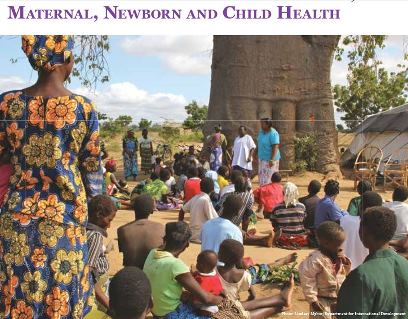
This document is a draft policy brief that was prepared for the International Conference on Maternal, Newborn, and Child Health (MNCH) in Johannesburg, South Africa, August 1-3 2013. As background, the brief states that "most causes of maternal, newborn, and childhood mortality are preventable using an evidence-based, cost-effective set of essential interventions." It also indicates that women and children die from three delays - seeking care, reaching the health facility, and receiving appropriate case management by health workers. As a solution, the brief proposes "...communities to be empowered and engaged to participate in RMNCH [Reproductive, Maternal, and Newborn Child Health]" through community engagement.
The brief lists common challenges, and then outlines the following strategies and best practices, which are copied here:
- "Involve communities in the identification of RMNCH problems, as well assign the planning, financing, and implementation of solutions. Community systems (e.g. community-built maternity waiting homes, community emergency transport, pooled financing mechanisms for emergencies, community-led construction of health worker housing)..." and help to create "community ownership of women and children's health and a potential for sustainability."
- "Involve communities in the creation of accountability mechanisms and quality assurance."
- "Utilise community- and facility-based maternal and perinatal death reviews and maternal near miss audits to explode any avoidable factors that contributed to a maternal death. Community engagement in identifying community-level gaps as well as relevant strategies and responses to address those gaps and stimulate action is critical."
- "Support women's participatory learning and action groups."
- "Leverage new digital technologies to bridge the gap between communities and states. For example, mobile phones, Internet, and social media platforms can be used by citizens to access evidence, hold governments accountable, and carry out RMNCH advocacy." SMS (text messaging) systems can be used to remind mothers of antenatal health visits, provide incentives, and record data.
- "Focus on change agents, including male change agents." (local leadership networks, women's groups, religious institutions, etc.)
- Work to ensure that strategies for "RMNCH advocacy and community engagement are institutionalised at the national level."
- "Ensure National Health Policies and Strategic Plans build community engagement into their mission or vision statement..."
- "Commit to recruiting, training, and retaining quality human resources for RMNCH at the community- and primary-levels."
The brief presents a case study on Nigeria and also lists some key opportunities in Africa that can be accessed by stakeholders in the region and used to improve RMNCH locally. These resources include: Africa-wide campaigns and action plans, such as the Campaign on Accelerated Reduction of Maternal Mortality in Africa (CARMMA) and MamaYe! (see Related Summaries below); advocacy strategies, such as the Maputo Plan of Action; technical support; community-led total sanitation (CLTS) as a model for participatory community engagement; and integrated management of childhood illness, for example, Integrated Community Case Management (iCCM).
The Partnership for Maternal, Newborn & Child Health website on March 28 2104. Image credit: Lindsay Mgbor/ Department for Internaional Development (DFID, United Kingdom)
- Log in to post comments