










































Supporting Children, Adolescents and Young People Living with HIV to Start and Stay on HIV Treatment
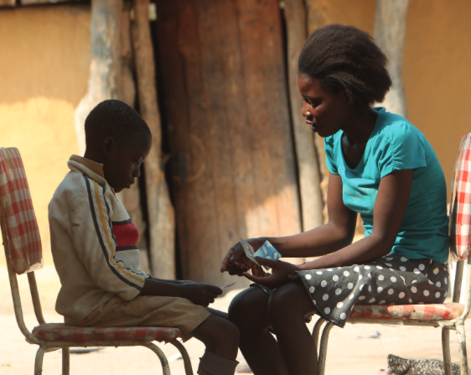
"Using their personal experiences and learnings from the programme, young advocates have become key players in campaigns to demand better services and support for adolescents and young people living with HIV."
Suitable for those working with adolescents and young people living with and affected by HIV, this International HIV/AIDS Alliance case study is informed by the experiences of Africaid, a private voluntary organisation in Zimbabwe. Through its peer-led Zvandiri programme, Africaid provides differentiated HIV prevention, treatment, care, and support services for children, adolescents, and young people across the HIV cascade.
As the case study explains, numerous barriers mean adolescents are far less likely to be on antiretroviral treatment (ART) or virologically suppressed than adults living with HIV. For example, stigma can lead families to keep their HIV status secret, leaving young people no space to ask questions or voice their concerns. In fact, many young people learn they are HIV positive too late and in ways that leave them unclear about HIV transmission or the treatment they need to stay healthy. In addition, HIV services that fail to take into consideration adolescents' wider sexual and reproductive health and rights (SRHR) or their needs relating to socio-economic issues, education, and mental health impact negatively on whether adolescents living with HIV are able to initiate or remain on treatment.
To address these issues, Africaid Zvandiri's team of 860 Community Adolescents Treatment Supporters (CATS) actively provide (as of September 2017) adherence support for more than 45,000 HIV-positive children, adolescents, and young people in Zimbabwe. CATS are adolescents and young people (ages 18-24) living with HIV who support 0 to 24-year-olds to begin ART and remain on treatment. They are trained, mentored, and supervised by Africaid in a way that is supportive rather than directive. CATS actively participate in all aspects of programme planning, implementation, and monitoring and evaluation. Individual CATS support a caseload of between 60 and 80 clients from their own or neighbouring communities.
In their work, CATS identify and link adolescents and young people to HIV testing services. Those who are diagnosed as HIV negative are then linked by CATS to prevention services, while those who are HIV positive are linked to treatment and care, including initiation on ART. CATS then support HIV-positive adolescents and young people to adhere to treatment by providing peer-led, adolescent-focused information, counselling, and support. They provide this support during home visits, group meetings, visits to clinics, and by sending SMS (short messaging service, or text) clinic and adherence reminders. Any adolescent or young person experiencing challenges with adherence, as well as those facing poor physical health, mental health challenges, disability, pregnancy, or child protection risks, are referred by CATS for enhanced support.
More specifically, CATS' core work is supporting adolescents and young people living with HIV in their homes. CATS often have to build a family's trust and confidence in order for them to give the adolescent family member the privacy they need to discuss their issues. CATS are trained in how to deal with difficult or hostile situations and are also very aware of the need for confidentiality. For this reason, CATS do not come to their clients' houses with programme-branded materials; rather they visit as 'friends'.
CATS support treatment adherence during these home visits. Because of their own experiences, CATS understand that adolescents often face confusing messages, as some faith healers and churches talk about curing HIV. They may also feel isolated if they are the only person in the family on ART. CATS discuss all these issues, as well as advising on how to store medicines, count pills, and use pill boxes correctly.
One tool CATS use is 'Our Story', an interactive card game based on a book of the same title written by the CATS. The game provides messages about HIV and some of the physical and biological impacts it can have. It also shows how ART, when taken effectively, enables people to live healthy lives. CATS also teach the game to clients so they can use it to help articulate their status to others.
CATS also facilitate support groups for adolescents and young people living with HIV and run adolescent-friendly corners in health centres. These are spaces where adolescents and young people can ask confidential questions and gain a better understanding about HIV, as well as finding support for other issues such as SRHR. Through Zvandiri, a young mothers' group has also been established in recognition of the challenges facing young women living with HIV around conception, pregnancy, feeding, and parenting. CATS remind clients about this and other support groups and will accompany young or nervous clients to gatherings themselves.
CATS provide the link between adolescents and health facilities. For example, they help local clinics attract more people in the community to get tested for HIV through index case finding and mobilisation activities at high-volume events such as music galas, exhibitions, and commemorations. CATS also train health service providers, social welfare officers, and Ministry of Health and Child Care officials to build a better understanding of the needs of adolescents and young people living with HIV.
CATS are also involved in local, national, and global advocacy work. For instance, nationally, Zvandiri has supported government campaigns on HIV testing, as well as developing its own campaigns (e.g., a stigma reduction initiative called Bury stigma, resurrect love). CATS have also partnered with organisations such as the Elizabeth Glaser Pediatric AIDS Foundation in provincial HIV testing and counselling campaigns and community dialogues.
Based on these experiences, the case study outlines lessons learned and offers key recommendations, including:
- Peer-led interventions are extremely effective for adolescents.
- Services that are accountable to adolescents and young people are more effective.
- The relationship between programme staff and CATS is critical.
- Enabling autonomy leads to strong leaders and role models.
- It is important to create a physical space where adolescents and young people can meet, hold activities, and be listened to.
- There is a need to change the understanding of the virus, to provide a more positive, strengths-based perspective for these young people.
- Zvandiri works with children, adolescents, and young people and has developed responses that are age differentiated.
- Tracking progress on treatment is important for measuring the programme's impact but, to do this effectively, data that can be triangulated need to be collected.
In 2016, the CATS model began being scaled up in Mozambique, Tanzania, and Swaziland under the READY+ programme, led by the Alliance. In 2017, Africaid created employment for 13 former programme beneficiaries and CATS who are now responsible for leading and supporting the scale up of the Zvandiri model in various districts, with continued mentoring support from health service providers.
International HIV/AIDS Alliance website, October 30 2018. Image caption/credit: CATS at work 2017 © Africaid
- Log in to post comments