










































Saving Newborn Lives by Increasing Use of Skilled Care in Rural India
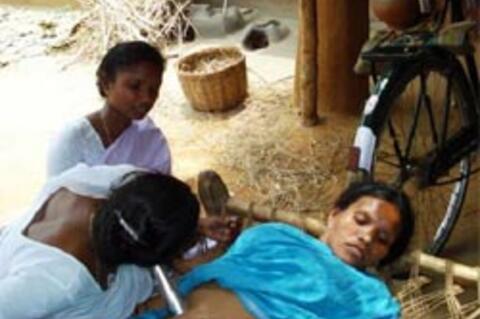
Interpersonal communication and capacity building are central to these efforts to support the Government of India's Ministry of Health and Family Welfare initiative to increase skilled attendance at birth. Observing that ANMs are the health care providers closest to communities and thus best-positioned to assist women during delivery, to refer them for emergency care, and even perform life-saving skills.
Specifically, ACCESS provided 37 ANMs with 12 weeks of refresher training on pregnancy, childbirth, and newborn care. The goal was to teach ANMs about active management of the third stage of labor (AMTSL), immediate postpartum care, postnatal and newborn danger signs, the importance of early breastfeeding, maintenance of newborn body temperature, newborn assessment, newborn resuscitation, newborn immunisation, etc. To facilitate this, two local ANM schools were equipped with clinical training materials, models, and skills labs; in addition, faculty and future trainers learned effective teaching skills. Clinical practice in communities was designed to help trainees translate skills they had learned within the lab - e.g., listening to a fetal heartbeat (using an anatomic model) - into a real-world scenario.
To increase demand for maternal and newborn care, ACCESS trained and mobilised community members in more than 200 villages. These villagers then raised awareness and advocated for local action. Community workers from a local non-governmental organisation (NGO) work with the villages - e.g., giving friendly advice whenever they cross paths with local pregnant women - and counsel women in their homes on birth preparedness and complications readiness (BP/CR), skilled care during childbirth, and postpartum and newborn care. By reaching out to other family members as well, the workers hoped to alert those in a position to help - e.g., husbands - as to the danger signs for mother and baby, and to prepare them for what to do when they observe these signs. Both community workers and ANMs are instructed to visit the new mother at home to engage in such communication as counselling on exclusive breastfeeding and family planning.
Children, Health.
According to organisers, at the community level, knowledge about birth preparedness and complications readiness (BP/CR) was very low. For example, only about 7% of almost 800 recent mothers surveyed in August 2007 could name three or more newborn danger signs. In these rural areas, beyond the limited numbers of locally available, skilled health care providers, there are also other barriers to accessing skilled care: distance, transportation, cost, and unsatisfactory past experiences with the public health care system.
ACCESS claims that the project demonstrated the "numerous opportunities to save lives with skilled birth attendants and community mobilisation. ANMs, once trained, have been able to provide community-based maternal and newborn care competently and increase access to and use of these services. Moreover, women, families and communities in Dumka have quickly learned about maternal and newborn care, and have been willing and able to seek services, plan for childbirth and be prepared for complications." ACCESS interventions reportedly led to the following results, by August 2008:
- 100% of mobilised villages have a functional emergency transport system for BP/CR during pregnancy and childbirth;
- 69% were actively using the services provided by the ACCESS-trained ANM in their area;
- over 270 community savings groups now have BP/CR savings plans; and
- 100% of deliveries attended by ACCESS-trained ANMs in the past month received AMTSL, and the three key essentials of newborn care.
USAID, CEDPA, Jhpiego, Save the Children, Constella Futures, the Academy for Educational Development, the American College of Nurse-Midwives, and Interchurch Medical Assistance (IMA) World Health.
ACCESS Update, October 2008; Saving Newborn Lives by Increasing Use of Skilled Care in Rural India.
- Log in to post comments