










































Right to Play Progress Report 2008
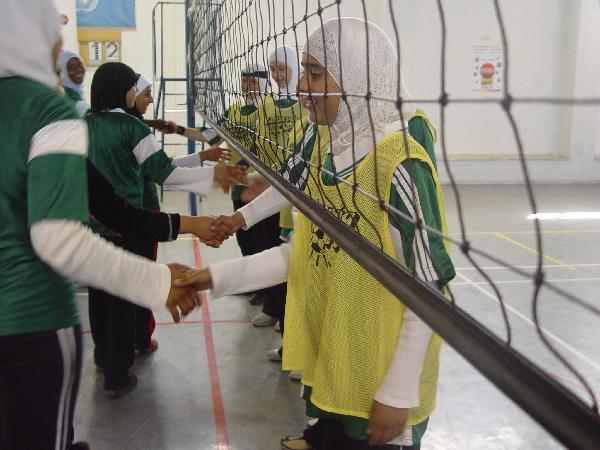
This 20-page report evaluates the global initiative Right To Play (RTP), which develops projects imbued with sport and its values to encourage the healthy physical, social, and emotional development of children and youth - especially refugee children, former child combatants, and young people at risk for, or orphaned by, HIV/AIDS. Launched as "Olympic Aid" in 2000 with 2 projects in Côte d'Ivoire and Angola, by June 2008, RTP had evolved into an organisation with 56 programmes, plus 2 special initiatives, spanning 23 countries across the globe. This report chronicles this journey through both statistics (e.g., number of volunteers and children reached) and through anecdotes and qualitative findings - to the end of demonstrating how RTP impacts children and their communities.
Data reported here were gleaned from evaluations conducted in Azerbaijan, Benin, Mali, Occupied Palestinian Territory, Pakistan, Rwanda, Sierra Leone, and Tanzania. A variety of qualitative and quantitative methods were used, including focus group interviews, one-on-one interviews, and individual questionnaires. Data from a study conducted in Mozambique and Zambia (2006) and evaluations of training (2006, 2007) were also used.
By 2007, RTP had reached approximately 525,688 children in regular activity, which is defined here as children who participate at least once per week. (If the number of children reached is defined not only as those taking part in regular RTF activity but also those attending summer camps and sports festivals, that figure is 723,761) According to organisers, regular participation has various benefits, including the opportunity to:
- Develop positive and lasting relationships with role models that contribute significantly to a child's resilience to cope with and manage life's events;
- Establish a sense of structure and "normalcy" in children's lives, which is particularly important for children affected by armed conflict and disease;
- Build life skills, deepen knowledge, and change attitudes, which can, it is hoped, contribute to sustained behaviour change; and
- Strengthen leadership skills by becoming peer leaders, leading discussions, and creating games. (By the end of 2007, RTP reports that the number of "active leaders" (leader, coach, animateur, or teacher) reached 12,855).
As detailed in the next section of the report, RTP's work is focused on 4 areas:
- Health Promotion and Disease Prevention - selected examples and findings:
- RTP implements its HIV and AIDS prevention and education programme - Live Safe Play Safe - in 12 countries. (This is a 10-day intensive training programme enhanced by 4 resources: A Trainer Manual, Leader Manual, Games Manual with more than 100 games, and a Frequently Asked Question Guide.) On a test of 20 HIV and AIDS basic knowledge questions conducted in 2006 in Sierra Leone, nearly 75% of children and leaders achieved an 85% average or above, compared to only 25% of children and leaders achieving an 85% average at the start of RTP.
- In Uganda, more than 1,500 children were immunised against measles during a 3-day national campaign. Leading up to the campaign, children participated in RTP educational activities about measles and were provided with information postcards that they could share with their families and friends.
- Other reported health outcomes include improved eating habits and higher levels of activity (Azerbaijan evaluation, 2007).
- Basic Education and Child Development - selected examples and findings:
- Resources - such as "Early Child Play", "Abilities First", "Health Games", and "The Guide to Being An Effective Adult Facilitator" - and training materials are designed to help RTP trainers design and implement sport and play events that integrate principles of behaviour change communication (BCC).
- School principals in Azerbaijan, especially in rural areas, reported an increase in attendance by 15-20% as a result of RTP's programming in schools. Parents and community leaders in Tanzania noted that RTP had resulted in a reduction in school dropouts. The head teacher at Mikumi Primary School in Dar es Salaam, Tanzania reported that attendance is higher on days when RTP activities are offered.
- "When we teach about HIV and AIDS in the classroom, the children fall asleep, but through sports [RTP], they actively take part, and they understand more quickly." - Teacher/Leader at Pius Msekwa School in Dar es Salaam, Tanzania
- Community Development and Participation - selected examples and findings:
- RTP uses sport and play as tools to promote leadership, build capacity of community members, and enhance community partnerships. Leaders and children in RTP programmes are the catalysts for promoting behaviour change to their wider communities, and act as role models for children and youth.
- In both Makeni and Freetown, Sierra Leone, parents reported that children spoke about and advised them on issues related to HIV and AIDS that they learned through RTP.
- "When Tilahun Jamaneh, a Paralympic athlete and Right To Play Athlete Ambassador, visited children with disabilities in Ethiopia, I could see that his presence offered them hope. He was important and respected, and the kids saw a role model who was just like them." - 2006 Athlete Forum participant
- RTP builds local capacity by training community volunteers as leaders, who then "become positive role models for children, train other community volunteers, and learn leadership and job skills that create the foundation for community development." Reportedly, through "Play Days" and sports festivals, RTP has facilitated collaboration between community-based
orgnisations (CBOs), non-governmental organisations (NGOs), and other agencies, so that these groups can better reach shared development goals. - Peer-to-peer education and leadership skill development were ranked among the top 5 outcomes of RTP programmes by leaders and parents in Azerbaijan.
- RTP introduced a competency-based training and certification system for leaders in 2007. "Anecdotal data to date indicates that the certification process has improved program implementation and also serves to motivate staff."
- Conflict Resolution and Peace Education - selected examples and findings:
- Children in Azerbaijan reported that RTP helped them become less aggressive and argumentative and helped them differentiate between "good" and "bad". Parents in Rwanda said that as a result of participating in RTP games and activities their children were less inclined to engage in negative or destructive behaviours. Parents in Sierra Leone felt that involvement with RTP enabled some children to interact better with their peers, and that troublesome and violent behaviour diminished.
- A RTP volunteer from Tanzania said that, through RTP activities, "we are able to bring together different groups in the community to play together. The activities we play teach peace keeping and communication skills and bring together children, adults, and different neighbours that wouldn't otherwise interact with one another."
- Parents and community leaders in Tanzania noted that children are more diplomatic and less violent when they receive messages from games about how to settle disputes more amicably. Approximately 78% of leaders in Makeni, Sierra Leone, and 79% of leaders in Freetown, Sierra Leone, noted that RTP activities provided a distraction from negative activity.
Guiding principles:
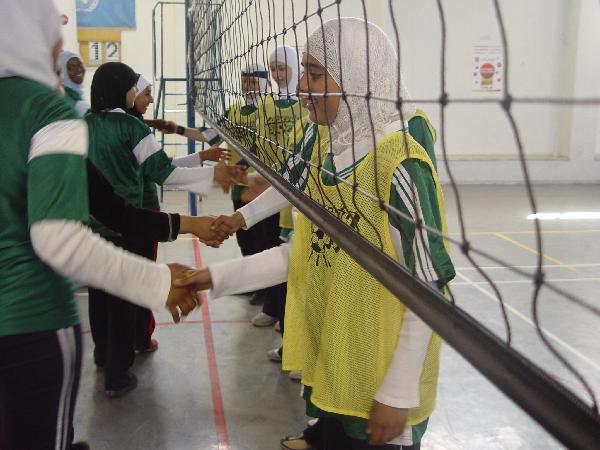
Inclusion: sport and play activities can be delivered in ways that promote effective inclusion of all children regardless of race, gender, disability, and religion. RTP activities are envisioned as tools for reducing isolation, exclusion, fear, poor self-esteem, and feelings of powerlessness. "We believe that through specially designed games and sports, attitudes towards those children who are marginalized will change." RTP puts this principle into practice through strategies such as the following:
- The 4-day Abilities First training programme for leaders, which focuses on knowledge, skills, and attitudes for reducing social barriers imposed on people living with disabilities.
- To promote the inclusion of all children, leader Sana'a Al Sadi, who lost her eyesight when she was 11, runs RTP activities for children with visual and developmental impairments at the Ghassan Kanafani Cultural Association in the Ein-El-Helweh Palestinian refugee camp in Lebanon. According to Sana'a, the programmes help children play safely, participate fully, and make their own decisions.
- For all new resources, RTP integrates training on strategies for inclusion with a particular emphasis on gender and persons with disabilities. In addition, the Live Safe Play Safe programme emphasises addressing stigma and discrimination.
Sustainability: RTP works in partnership with CBOs, as well as with professionals from the region, governments, and schools, to ensure compatibility with local culture and systems. The idea is that, by developing sport and play programmes with the support of community members, local volunteers, and staff who are trained in RTP's resources so that programming can be sustained at the local level. RTP puts this principle into practice through strategies such as the following:
- RTP is continuing to concentrate on the development of sustainable projects within existing country programmes rather than expand into new countries. As part of this expansion, RTP is working with national ministries to integrate programmes into school curricula. "Commitment to sustainability has led to an intensive decentralization of programs."
- In Chikumbi, Zambia, local leaders describe how parents are reporting the positive impact of their children's participation in RTP, are freeing up their children's time to participate. Community members have pooled resources to make this possible, including using local tractors to transport children and donating land and local resources to build a recreation centre.
- In Occupied Palestinian Territory, several umbrella organisations that have worked alongside RTP "are now taking ownership of the programming and are able to implement programs without assistance" from RTP.
RTP has developed several ways to ensure that these perceived successes continue, such as by putting into place a monitoring and evaluation (M&E) team, with regional M&E officers hired to support and lead regional- and national-level evaluations. Also, assessments of learning and developmental outcomes have been integrated into all of RTP's new resources.
Our apologies, but this report is no longer available online. Please utilise the contact information below to inquire about how to access it.
RTP website, December 11 2009.
- Log in to post comments