











































People, Politics, and Change: Building Communication Capacity for Governance Reform
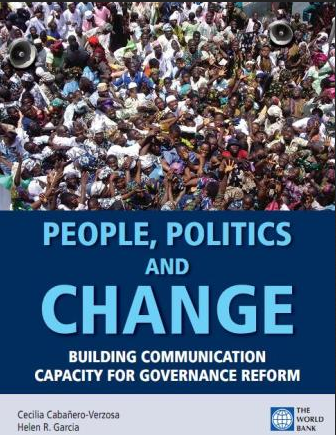
Published by the Communication for Governance & Accountability Program (CommGAP), this facilitator's guide is designed to help reform leaders, change agents, development practitioners, and training professionals who need to use communication to promote change through governance reform. The guide focuses on governance reform and how communication approaches can help reformers build understanding and support for their goals and aspirations.
Specifically, the guide is designed to address major communication challenges in governance reform and to advancing CommGAP’s strategic focus in promoting positive, accountable governance in terms of development policy and practice. One of its goals is capacity building and disseminating innovative communication approaches and techniques to strengthen the various components of the public sphere - engaged citizens, a vibrant civil society, pluralistic and independent media, and transparent government institutions - to bring about positive outcomes through the sphere of government reform.
According to the authors, because governance reform can only be effectively achieved through the combined energies and commitment of three key entities within a public sector governance system, the book highlights communication approaches that diagnose the power relationships among these three groups and enables them to find ways to collaborate, coalesce, and work together to achieve good governance. As described in the World Bank’s World Development Report, 2004, the key relationships of power among the State (politicians and policymakers), the citizens, and service providers (management teams in bureaucracies) are critical for governance reform.
The guide includes four modules:
- Module I: Knowing the reform context
- Module II: Addressing recurring challenges - The three wills
- Module III: Managing reform politics
- Module IV: Sustaining change
The Communication for Governance and Accountability Programme (CommGAP) of the World Bank is dedicated to exploring and documenting the role of communication tools and approaches to improving governance and, as a result, development effectiveness. See Related Summaries below for further publications by CommGAP.
English
The World Bank website on August 15 2012.
- Log in to post comments