










































Building Peace through Social Change Communication: Participatory Video in Conflict-affected Communities
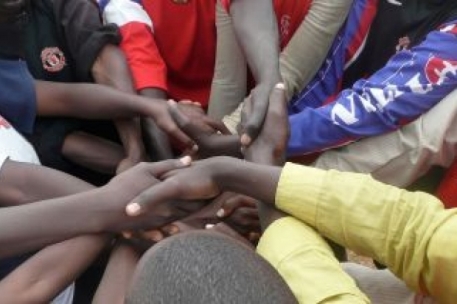
This 17-page journal article shares insights into the use of participatory video (PV) in peacebuilding initiatives, based on the experience of Mercy Corps' incorporation of video into a "Most Significant Change" monitoring exercise in the Rift Valley of Kenya. Following post-election violence in 2008, Mercy Corps initiated the Local Empowerment for Peace (LEAP) Programme, which used sports to bring together young people of different ethnicities and tribes. While the PV process was originally intended to document change as part of the LEAP evaluation, interviews conducted by the author in 2012 found that the video-making process and screenings became additional peace-building tools which contributed to conflict transformation in themselves.
The LEAP programme, which was launched in 2010, brought together youth from different tribes to take part in sports, conflict management and peace dialogue, and income-generating activities. In order to evaluate the LEAP Sports programme, Mercy Corps worked with InsightShare to collect the stories of change. The PV process included recruiting and training nine youth video coaches, gathering groups of beneficiaries from LEAP to tell their stories, and democratically choosing 12 stories to address three areas of change. The chosen storytellers recounted their stories in detail, while others continued to participate in storyboarding, filming, recording sound, or acting. As stated in the report: "The stories told, and at times acted, in the PV productions show how each LEAP Programme beneficiary changed his or her feelings, attitude and behaviour towards members of the rival tribe, from hatred and violence to forgiveness and/or acknowledgement of the wrongs done during the conflict." Two screenings were hosted in the community, facilitated mainly by the video coaches.
The author explains that, while the activity was not originally intended to produce peacebuilding materials (but, rather, serve as a monitoring exercise), the nature of PV means that the process in itself can contribute to peacebuilding and conflict transformation. Putting together and then screening the videos provides a space for dialogue and debate, observation of events, and a critical reflection of where a community is at in a post-conflict context. It also provides a space to better understand other people's situation and promotes healing, both at individual and community level.
The author provides an analysis and proposes a framework of change based on conflict transformation theory, linked with ideas around communication for social change.
Individual change
For individuals, "the PV activities seem to have strongly contributed in instating participants' confidence in re-establishing peace, in helping them identify themselves as agents of change, and also in guiding them in the discovery of new skills." The storytelling process provides an opportunity for people to reflect on their own actions, creates greater awareness on their present situation, and promotes an understanding of the need for peace. The pride and confidence gained by the participants, as well as the increased community members' respect, provided them with a renewed commitment to peace and change.
Relational change
In terms of relationships, the PV activities provided an opportunity for youth of different tribes to collaborate and produce something together, and in doing so better understand each others' story, which contributed to greater understanding and harmony amongst participants. This applied not only to the storytellers but also to those who watched the videos as part of the screenings. "An understanding was created of the situation of both victims and perpetrators and relationships that were broken began to heal."
Social change
In terms of social change, the telling of particular events helped tribes to begin to bridge the divide between them. "One of the tribes invited the opposing one to come together and talk. From the feedback received by the participants, members of all tribes welcomed a new mentality of change and peace, which was accompanied by an acknowledgement of the different realities of the violence and a need to move forward."
The author concludes that the video production activities contributed to peace-building and that concepts borrowed from conflict transformation theory show the potential role of communication for social change (CSC) in post-violence contexts, through the use of PV. "The CSC in conflict transformation model... shows how the application of CSC flows effectively within the design of participatory interventions aimed at transforming conflict and building peace. It provides a structure in which the role of participatory media and their effect on conflict transformation is clearly illustrated, and it is a point of departure for the elaboration of more sophisticated participatory development communication strategies in post-conflict work."
Email from Valentina Bau and Academia.edu website on September 3 2014.
- Log in to post comments