











































My Rights My Voice Completion Report 2011-2016
Oxfam
"The project has created a dynamic which will allow us to change the destiny of our communities." - Sofia, aged 24, MRMV youth group member, Niger
My Rights My Voice (MRMV) is an Oxfam programme that aims to unlock young people's potential by giving them the knowledge, skills, and confidence to become "active citizens" who are able to voice their rights to education and healthcare and to hold duty bearers to account. Through the MRMV programme (see Related Summaries, below), Oxfam and its partners aimed to demonstrate that young people are not just passive bystanders in development but a positive force for change. Since its inception in 2011, the programme has worked directly with more than 400,000 children and young people in 8 countries: Afghanistan, Georgia, Mali, Nepal, Niger, Pakistan, Tanzania, and Vietnam. MRMV officially ends in 2016, and this Oxfam report reflects on the project's successes as well as on the challenges the programme faced in working in post-conflict and fragile countries and in addressing sensitive or taboo issues, such as sexual and reproductive health (SRH), in extremely conservative cultures. It offers progress reports for each country, examines programme learning and development, measures progress against the Global Programme Framework, examines programme management, and provides a summary of the final Global Evaluation (see Related Summaries, below), which found that in many countries, MRMV went beyond its objectives of youth voicing their rights to young people actually ensuring these rights were fulfilled, particularly with regard to SRH. The report also suggests recommendations to enable future programmes to learn from MRMV's experience.
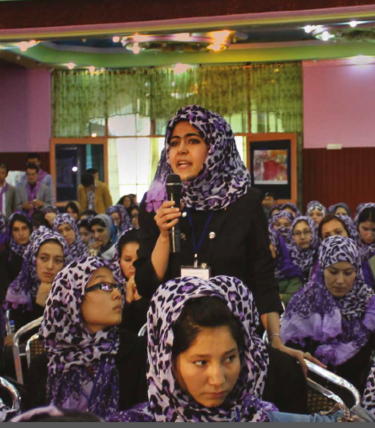
As explained here, as with all of Oxfam's work, the ambition to achieve gender justice was at the core of MRMV. In most countries, the programme initially had to invest in substantial efforts to be able to work directly with youth - particularly girls and young women – and ensure their effective participation. An increased focus on gender equality, which followed the MRMV Strategic Gender Review in 2013, is reflected in the final-year results: up to 59% of the youth involved were girls and young women (up from 47% in 2014), and more than half of the programme's youth group leaders were female. Oxfam considers this to be a major achievement given the deeply conservative contexts of several of the implementing countries, where female participation, let alone leadership, went against social norms.
Some of the stand-out achievements are presented in the report, under MRMV's 4 objectives. Here is a selection:
- Children, youth, and allies (parents, educators, health staff, etc.) are more aware of the specific health and education rights of children and youth and with confidence voice these rights, needs, and aspirations in a manner that strengthens equality. Over the past 4 years, MRMV reached an estimated 522,8581 people, of whom 416,201 (80%) were young people. With time, empowered young people took over from Oxfam and partner organisations and started designing and delivering activities to raise awareness about their needs with peers and decision makers. This often resulted in a more focused influencing strategy, with increased attention paid to country-specific topics including SRH rights, gender-based violence (GBV), child marriage, and female genital cutting (FGC). Throughout the programme, there was a continued increase in examples of allies acting as advocates for child and youth rights and needs within their communities and increased evidence of changing attitudes. For example:
- In Pakistan, 8 million families have seen MRMV's nationally broadcast soap opera addressing SRH issues, and a campaign that reached 10 million people resulted in the federal government including SRH in the national curriculum.
- In Afghanistan, 6,354 parents and community elders were reached by awareness-raising campaigns on the importance of youth participation and girls' education.
- In Nepal, thanks to young people's efforts to raise awareness, project areas reported a reduction in the number of child marriages of as much as 61% in 2015.
- In Georgia, civil society organisations (CSOs) and doctors reported 344 child health-rights violations over 3 years, of which 270 were resolved. (None was reported in 2011, the year before MRMV began.)
- In Mali, an e-learning platform provided more than 22,000 young people with information on SRH issues; this is now being integrated into the national curriculum.
- In Vietnam, over 10,000 ethnic minority children and their parents reportedly have strong knowledge of their rights and are confident in engaging inschool decision-making processes.
- Children, youth and allies (parents, educators, health staff, CSOs, etc.) successfully apply improved individual and collective skills, confidence, resources, and organisational skills to claim their rights to health and/or education in decision-making spaces. Over time, the emphasis moved from the establishment of new child and youth groups to strengthening young people's leadership, lobbying, and advocacy skills, and deepening their knowledge on specific topics. Youth groups increasingly paid attention to the specific rights and issues of young women. For example:
- In Nepal, advocacy work resulted in more than 1,600 women being elected to local decision-making bodies, where they influenced male counterparts to ensure gender-responsive planning and implementation.
- MRMV Vietnam engaged youth ambassadors and researchers from rural and urban settings to work with project schools. They documented 10 child-friendly school governance models in a manual that has been widely distributed.
- Youth campaigners in Niger gained the support of municipality officials, imams, and community leaders on gender equality issues, including access to education and ending domestic violence, child marriage, and FGC.
- Within the global MRMV programme, 1,081 examples were recorded of youth and children taking part in public decisionmaking events and/or processes, many of which received strong coverage on local and national radio and television. In Afghanistan, roundtable talks with duty-bearers were broadcast on radio, reaching an estimated 690,000 listeners. At national level, children and youth in Vietnam were involved in consultation workshops with the government, leading to the revision of the law on children and the development of the national programme on promoting child participation.
- Duty-bearers and influencers (ministries, politicians, donors, parents, teachers, health staff, religious leaders, non-governmental organisations (NGOs), etc.) engage directly with marginalised children and youth, and as a result take specific actions to deliver better access to, and quality of, health and education. For example:
- Youth leaders in Niger are now called on by traditional leaders to help solve issues within their communities.
- In Nepal, following MRMV campaigns, 13 additional outreach clinics were established by the government, the number of free medicines provided by the state increased from 40 to 70, and over the 4 years, there was a 65% increase in the use of healthcare services in project areas.
- In Tanzania, student lobbying led to corporal punishment being banned in MRMV project schools.
- In Georgia, the government improved the design and implementation of its state drug-prescription programme following monitoring and advocacy activities by MRMV youth and partners.
- In Tanzania, the MRMV barazas (student councils) are now recognised by law.
- In Vietnam, MRMV models for effective, child-friendly school governance have been officially recognised by local governments in 2 provinces.
- In Mali, the MRMV e-learning platform on SRH was officially adopted by the government.
- In Niger, the Ministry of Education publicly adopted a declaration on access to education for all children and young people, with special attention given to girls' education.
- In Afghanistan, the National Youth Policy was ratified by the government in 2014. MRMV youth campaigners advocated for the policy and contributed to the drafting process to ensure a strong gender equality component. A Memorandum of Understanding was signed with the government Directorate of Literacy to ensure the continuation of MRMV literacy classes after 2015.
- Oxfam, partners and others have strengthened capacity to work on youth agency in country programmes, and Oxfam's global campaigning force has facilitated youth claiming and accessing better health and education. Efforts to strengthen children's and youths' networking, coordination, and influencing skills resulted in stronger links between groups in different areas and with existing national-level initiatives for and by young people. For example:
- Global Annual Learning Events and a Global Advocacy Workshop provided a platform for collective reflection and continuous improvement of the work carried out by MRMV youth groups in different countries.
- In the final year of the programme, there was a steep increase in youth participation in national and global advocacy processes - from 13 recorded cases in 2014, to 33 in 2015.
- In 2015, MRMV youth campaigners from several countries, including Mali, Nepal and Afghanistan, took part in international events, conferences, and meetings on the rights of young people.
- In June 2016, MRMV young people led sessions with development practitioners and donors at a Learning Event with the Department for International Development (DFID) in London, United Kingdom (UK) and at a Youth Symposium in The Hague, both organised by Oxfam.
- In August 2016, MRMV youth took part in the Oxfam Youth Summit focusing on inequality campaigning during the World Social Forum in Montreal, Canada, supported by an Oxfam Policy Briefing on Youth and Inequality. They worked together with other youth campaigners to develop a Youth Manifesto on Inequality which will support future advocacy work.
- During a Youth Programme Development Workshop in Istanbul, Turkey, in 2015, Oxfam staff, youth and partners from more than 25 countries met to share learning and identify ways to ensure participatory and impactful youth-led programming.
Every year, countries completed a youth audit, allowing for the tracking the prioritisation of young people's voices and the gender sensitivity of the work. The Mid-Term Review was structured as a "peer review" to stimulate maximum exchange and learning between countries. During 2013 and 2014, the Learning and Innovation Fund led to the introduction of new digital media and other approaches within the MRMV programme. An example is the "PhotoVoice" project in Vietnam, where ethnic minority children took pictures of their everyday lives. The resulting exhibition with stories from the children was taken to the capital, Hanoi, and shared with politicians and journalists to challenge prevailing perceptions about the lives of children and ethnic minorities. A strong global digital media strategy allowed programme stakeholders to remain connected and facilitated the dissemination of communications and learning materials both internally and externally. This was done through the MRMV Ning website and quarterly MRMV e-newsletter. Facebook groups fostered informal exchange between staff, partners, and youth participants. Webinars were also organised to share and discuss the findings from the Mid-Term Review, Strategic Gender Review, and Global Evaluation.
The report offers a summary of the Global Evaluation (see Related Summaries below), which consisted of an extensive analysis of programme documents for all 8 MRMV countries, field research in 4 countries, and in-depth interviews with key staff from the Global Coordination Team and Steering Committee. Despite progress in specific areas such as those outlined above, the evaluation report found that the impact has been limited in terms of wider-scale improvements in the quality of education and health services for young people. There are various reasons for this, including severe resource limitations at the level of the authorities concerned and the relatively short duration of lobbying and advocacy efforts. All country programmes attempted to ensure the active involvement of children and youth in implementing and driving the programme. The evaluators found that this proved to be a sometimes challenging journey, with each of the 8 countries working at a different pace and with varying levels of progress. Different forms and degrees of participation of children and youth often co-existed within the same country project. Some countries did manage to reach disadvantaged groups quite successfully, while others continued to rely on more advantaged or educated youth to achieve an impact. Some other challenges specific to working with youth (such as high rotation among youth leadership, particular characteristics and needs of youth organisations) were explicitly addressed in the preparation phase, and most countries dealt with these effectively. However, the evaluators also found that while gender considerations were well analysed during the preparation phase, these were not sufficiently operationalised.
The MRMV Global Evaluation offered recommendations to Oxfam and the wider development community. In short:
- Continue adopting a rights-based approach in youth programmes, but adapt such an approach to local circumstances and to the needs and aspirations of youth and do not restrict it to "voicing and claim-making" directed at government and other dutybearers. The approach should also include concrete and direct attempts to address the key needs of the youth.
- Seek clarity and realism on the role and position of marginalised youth. The inclusion of marginalised youth should always be part of the programme; however, it might be adequate to start by engaging relatively better-off youth, as they might have the greatest potential as agents of change, particularly in socio-culturally sensitive areas such as SRH rights and gender. Better-off youth also seem best-placed to devise approaches to engage marginalised youth in the later stages of the programme.
- Redesign the approach to mainstream gender in the programme, beginning with efforts to make it completely clear that the aim of gender mainstreaming is (to contribute to) gender equality. The inclusion of gender equality as a specific programme objective is therefore strongly recommended. It should be accompanied by specific outputs and activities, the implementation of which can be closely monitored.
- Guarantee adequate and genuine participation of youth and youth groups based on an adequate assessment of youths' capacities and also on a very clear decision by NGO partners and Oxfam offices to empower youth by making them responsible for programme implementation.
- Continue with the development of multi-country programmes, but remain realistic about what they can achieve. Key to a successful multi-country programme is the quality and success of the individual country programmes within it, which should serve as a basis for broader exchange, learning, and (maybe) regional impact. It is further recommended that multi-country programmes involve countries with similar socio-cultural characteristics (including a common programme language), as this will offer broader and more cost-effective opportunities for cross-country learning and exchange.
- Simplify financial and administrative procedures.
- Recognise the need for a longer programme duration.
In conclusion, the report notes that MRMV has shaped the way Oxfam engages with young people in other priority areas - for example, strengthening the organisation's commitment to gender justice and influencing both the Oxfam Strategic Plan and many Oxfam country strategies for 2013-2019. MRMV has inspired many other programme development and management initiatives beyond Oxfam and has led to the creation of Youth as Active Citizens, an initiative that builds on the spirit of youth engagement, inclusion, and gender justice that MRMV helped to foster. "Our efforts throughout the programme to share the MRMV experience have already contributed to learning across the development sector, and will continue to do so. But the legacy of which we are most proud is the empowered young people who are already showing themselves to be the new leaders within their communities and countries, and are changing their world for the better."
Oxfam website, October 28 2016.
- Log in to post comments