










































EFA Global Monitoring Report 2011 - The Hidden Crisis: Armed Conflict and Education
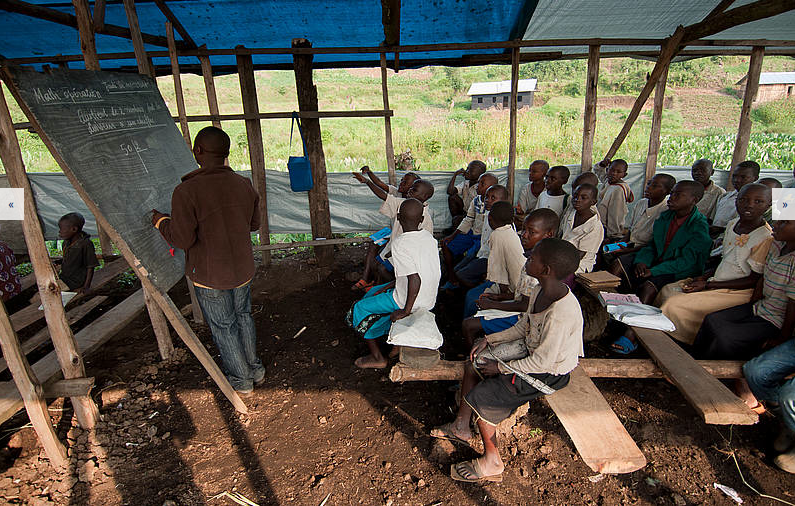
"Violent conflict is one of the greatest development challenges facing the international community. Beyond the immediate human suffering it causes, it is a source of poverty, inequality and economic stagnation. Children and education systems are often on the front line of violent conflict."
The Education For All (EFA) Global Monitoring Report is an annual publication by the United Nations Educational, Scientific and Cultural Organization (UNESCO) designed for tracking progress, policy reforms and best practice in areas relating to EFA international education goals to meet the learning needs of all children, youth, and adults by 2015. In addition to reporting on progress and challenges toward those goals, respective annual reports adopt particular themes central to the EFA process. For 2011, the Global Monitoring Report focuses on the consequences of conflict on educational goals.
"The 2011 EFA Global Monitoring Report is divided into two parts. Part I provides a snapshot of the state of education around the world in the context of the EFA goals. It identifies advances, setbacks and a range of policy interventions that could help accelerate progress. Part II focuses on the theme of the report as a barrier to the Education for All goals: armed conflict in the world’s poorest countries. The Report looks at the policy failures reinforcing that barrier, and at strategies for removing it. It also sets out an agenda for strengthening the role of education systems in preventing conflicts and building peaceful societies."
In a discussion of the progress being made toward EFA goals, the report concludes that most of these goals will be missed "by a wide margin". Areas of early childhood welfare, primary school enrollment, and gender parity have shown improvements, especially in some of the world's poorest countries, but nevertheless there is still a gap between the goals set in 2000 and the advances that have been made. Factors influencing this conclusion include malnutrition and its effect on cognitive development, high illiteracy among adults, continuing gender disparities, and poor educational quality.
- The combination of a 'youth bulge' and failures in education represent a risk of conflict - Educational systems that are unable to provide youth with the skills they need to escape poverty and and unemployment, especially in conflict-affected countries with a high percentage of population under 25, it is harder to overcome the economic despair that often leads to violence.
- The wrong type of education can fuel violent conflict - Reinforcement of social divisions, intolerance, and prejudice within school systems prevents education from being used as a force for peace.
- National governments and the international community are failing to uphold human rights - EFA stakeholders are recommended to act as a much more forceful advocate for human rights, to prevent participants in armed conflict from using schools, students, and teachers as targets.
- Failures of protection - "Working through the United Nations system, governments should strengthen the systems that monitor and report on human rights violations affecting education, support national plans aimed at stopping those violations and impose targeted sanctions on egregious and repeat offenders. An International Commission on Rape and Sexual Violence should be created, with the International Criminal Court directly involved in assessing the case for prosecution. UNESCO should take the lead in monitoring and reporting on attacks on education systems."
- Failures of provision - "There is an urgent need to change the humanitarian mindset and recognize the vital role of education during conflict-related emergencies. Governance arrangements for refugees should be reformed to improve access to education. Governments should also strengthen the education entitlements of internally displaced people."
- Failures of reconstruction - "Donors need to break down the artificial divide between humanitarian and long-term aid. More development assistance should be channeled through national pooled funds."
- Failures of peacebuilding - "To unlock education’s potential to nurture peace, governments and donors need to prioritize the development of inclusive education systems... schools should be seen first and foremost as places for imparting the most vital of skills: tolerance, mutual respect and the ability to live peacefully with others."
Education For All website, Oct 25 2011.
Image ©UNESCO/M. Hofer