










































Learning, Digital Media and Creative Play in Early Childhood
Spotlight
"[W]hile there is some evidence that games and mobile apps can be a powerful tool for learning for older kids, we don't actually know that much about the potential of these newer technologies to educate toddlers and preschoolers or what effect they are having on children's cognitive, social and physical well-being. And the rapid pace of change is making it harder and harder for researchers to keep up."
From the United States (US) initiative Spotlight, which covers the intersections of technology and education, this article explores developmentally appropriate uses of technology in early childhood classrooms.
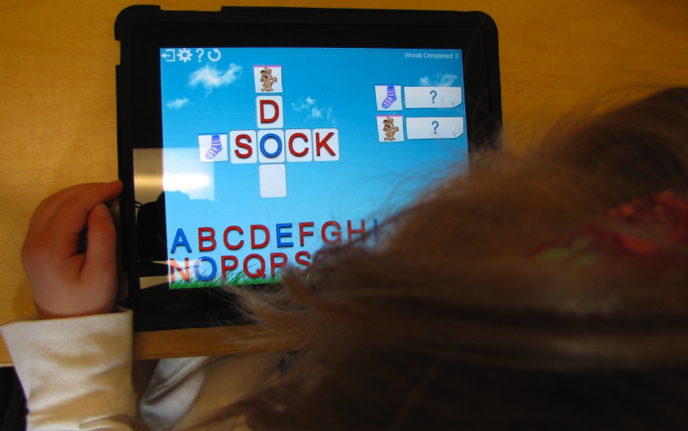
It begins by discussing the strategies of an Oregon, US-based Early Learning Community (ELC), where "a typical day for 3-year-old students might involve using digital cameras to photograph their latest block creations and then, with the help of a teacher, uploading the photos to the classroom's iPad and dictating narratives about their work." In the words of ELC's director, technology is here used not to replace hands-on engagement with the world; rather, it is "as means to play, not supplanting play, but extending and supporting play."
As noted here, early childhood experts have long cautioned against media use for preschool age children; some studies have linked screen time to childhood obesity, poor school performance, and attention deficit disorder. One early childhood development expert quoted here explains: "In order to create your own story, you have to have an imagination and the experience that comes from conjuring something out of nothing, or transforming an inert object into something alive. We need to be ensuring that babies and toddlers and preschoolers have the time, the space, the silence and the inspiration to engage in creative play."
However, in contrast to television, which is passively absorbed, children are gaining access to media that requires some interaction on their part. Examples of such tools are: speech-to-text software to help emergent writers put their stories on paper; the National Library of Virtual Manipulatives, a collection of web-based manipulatives and tutorials that teach early mathematics concepts; or collaborative online tools that encourage children to connect with people and places around the globe.
"Parents need help figuring out how to set limits with new media and making sure it doesn't replace one-on-one time talking with their children, which experts agree is still the most valuable learning tool of all."
Spotlight website, May 9 2012. Photo courtesy of Mark Bailey