










































Jalan Sesama's Educational Impact: Evidence from an Experimental Study of a Sesame Street Outreach Project in Indonesia
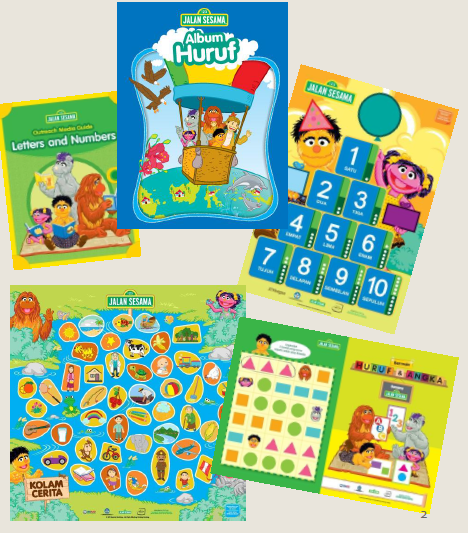
Jalan Sesama is the Indonesian version of Sesame Street. Produced in partnership with Jakarta-based Creative Indigo Productions, it debuted on Indonesian television in mid-February 2008. Jalan Sesama means "street for all" in Indonesian, and is inspired by the concept of togetherness and diversity. In partnership with the Ministry of National Education (MONE), Jalan Sesama launched an educational outreach initiative in early childhood centres (Pendidikan Anak Usia Dini, or PAUD). The project developed a set of educational materials focusing on fundamental literacy and math skills, with an accompanying training component for PAUD teachers. This report describes findings from a summative evaluation of the educational impact of the outreach project on children's literacy and math skills, as well as the MONE's, principals', and teachers' perceptions of the value of the project.
As detailed in the report, outreach initiatives extend the reach of the project beyond the television broadcast; it also allows the team to address topics in a more in-depth way. Jalan Sesama partners and MONE developed and distributed a set of early childhood educational materials consisting of: two Big Books (one on literacy and one on math), two posters (one for literacy and one for math), a flash card game, a Story Mat, and a children's activity book, as well as a DVD compilation of Jalan Sesama segments that address literacy and math. The outreach materials were distributed to teachers and children in 800 PAUD centres in West Java and West Nusa Tenggara between October and December 2011. The materials focus on early literacy and mathematics skills. In addition to the materials, Jalan Sesama conducted a 2-day training workshop with PAUD teachers to ensure that educators are familiar with the materials and can use them effectively in the classroom. Jalan Sesama trains one teacher from each PAUD centre, who in turn trains other teachers in their PAUD on how to use these materials in their classroom.
A total of 823 children, 100 principals, and 210 teachers took part in this qualitative study, which involved both intervention and control groups. Selected findings:
- Positive impact on children's literacy and math skills: Children exposed to the Jalan Sesama outreach project showed greater gains on a range of literacy and math skills compared to those not exposed. Specifically, children demonstrated more growth in overall literacy scores, letter recognition, letter naming, knowing initial letters of words, number recognition, number naming, and relational concepts. An exception was in the area of knowing shapes, where the control group showed greater gains. These findings were over and above the effects of age, area (province), and socio-economic class.
- Evidence of greater impact among children in needier areas: The outreach initiative had particular benefit in literacy and math outcomes for children in West Nusa Tenggara - a province in eastern Indonesia that is typically under-resourced.
- MONE personnel valued the collaboration, training, and materials: They particularly valued the collaboration and coordination with MONE and the training and thought that the materials were creative and innovative. Areas of improvement that MONE emphasised were a longer training workshop and more focused content in each piece of material.
- Principals praised the project and would like more training and materials from Jalan Sesama.
- Teachers found the materials very useful and engaging, and valued the opportunity to receive training: Echoing feedback from MONE and principals, teachers would like the training to be longer so that they can have more time to absorb the knowledge and engage in discussion. Teachers use the materials regularly in class and intend to continue using them.
To request a copy of the full evaluation (106 pages) or a summary document of it (19 pages), please contact June Lee June.Lee@sesame.org
Email from June Lee to The Communication Initiative on September 21 2012. "Sesame Street" excerpts provided courtesy of Sesame Workshop (New York, New York) © 2012 Sesame Workshop. "Sesame Street" ® and associated characters, trademarks, and design elements are owned and licensed by Sesame Workshop. All Rights Reserved.
- Log in to post comments