










































Education about the Holocaust and Preventing Genocide: A Policy Guide
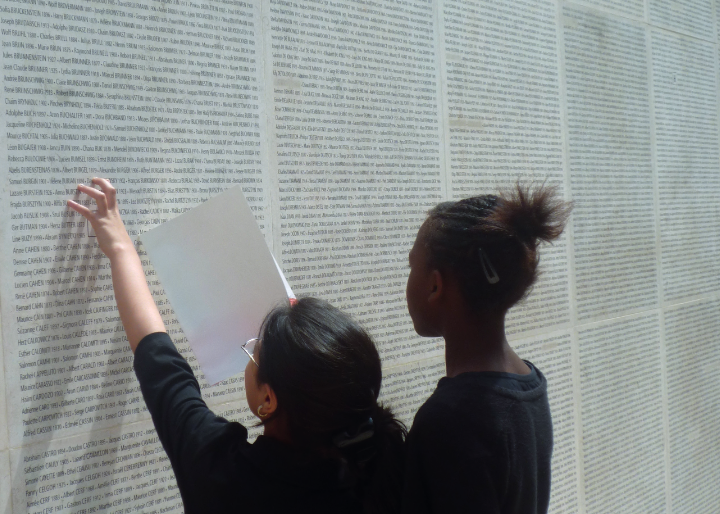
"Understanding how and why the Holocaust occurred can inform broader understandings of mass violence globally, as well as highlight the value of promoting human rights, ethics, and civic engagement that bolsters human solidarity at the local, national, and global levels."
This guide provides policymakers with solutions to introduce education about the Holocaust, and possibly broader education about genocide and mass atrocities, into education systems and curricula. United Nations Educational, Scientific and Cultural Organization (UNESCO) contends that education is indispensable to help foster a sense of belonging to a common humanity, to empower learners to become active citizens in crafting a more peaceful, tolerant, inclusive, and secure world. It is this spirit that the policy guide was created for education stakeholders: policymakers, curriculum developers, textbooks writers and publishers, and teacher educators.
The publication addresses a wide range of questions, including: Why teach about the Holocaust? For one thing: "Providing learners with tools for critical inquiry that enable an understanding of how human rights violations happen is essential for countering future offences - and can even lead to important conversations about contentious aspects of their own communities' past." UNESCO asserts that examining difficult pasts such as the Holocaust has a powerful impact on young people because it helps learners identify the roots of prejudice and enhance their critical thinking about racism, antisemitism, and all forms of prejudice. It allows them to navigate moral dilemmas of the past as well as of the present, and reflect on their role as citizens to protect and uphold human rights.
Other questions explored include: What learning outcomes can be expected from such educational endeavours? How do they relate to global education priorities? How to introduce the subject in the curriculum, train teachers, promote the most relevant pedaegogies, and work with the non-formal sector of education?
The guide suggests key learning objectives for education about the Holocaust, as well as topics and activities aligned with educational frameworks relevant to Global Citizenship Education, a priority of the 2030 Education Agenda and a pillar of the Sustainable Development Goal 4 on Education: Target 4.7 seeks to develop students to be informed and critically literate, socially connected, respectful of diversity, and ethically responsible and engaged. The guide shows how education about the Holocaust, and more broadly genocide and mass atrocities, can meet some of the world's educational policy priorities. It also provides policymakers with rationales to teach about the history of genocides in a variety of contexts, both formal (e.g. history classrooms) and non-formal (e.g., study trips to museums, memorials, and historic sites).
It is noted that policymakers "can help to ensure educators are supported with accurate sources of information (such as textbooks with historically accurate content) and reliable methodologies (such as those suggested in this guide) accessed through professional development opportunities made available to pre- and in-service teachers. Given the interconnectedness of these factors, open and collaborative dialogue between policymakers, textbook authors, school leaders and educators nationally and internationally is important to help ensure the quality of education about the Holocaust on the level of curriculum, textbooks, and classroom practice." To that end, the guide identifies key areas of implementation: curricula, textbooks, professional development, classroom practices, cooperation with museums, memorials and the civil society, adult education, and commemorative activities. It provides recommendations for curriculm developers and textbook authors, such as: "Provide opportunities for students to engage in critical analysis and reflection; tap prior knowledge - which can include misinformation - through reference to influential out-of-school media. Ensure appropriate context for illustrations, so that it clarifies the relationship between included illustrations, the source and intent of each illustration, and the context in which the illustration is understood today. Where relevant, define human rights so that students understand what they are, how they relate to this specific historical example and how students can promote them."
The publication builds on the expertise of many Holocaust and genocide-related organisations, including the United States Holocaust Memorial Museum. It contains various links to historical and educational resources relating to several cases of genocides and mass atrocities and explains how they can be taught. The guide focuses primarily on the history of the genocide of the Jewish people by Nazi Germany and its collaborators. Some principles and policies outlined are applicable to other cases of genocide and mass atrocities.
72
UNESCO website, February 6 2018. Image credit: © Mémorial de la Shoah/CDJC