










































Development of a US Trust Measure to Assess and Monitor Parental Confidence in the Vaccine System
Emory University (Frew, Murden, Mehta, Chamberlain, Randall, Hargreaves, Omer, Orenstein, Bednarczyk); Task Force for Global Health (Hinman); University of Georgia Grady College of Journalism and Mass Communication (Nowak); National Vaccine Program Office, Health and Human Services (Mendel, Aikin)
The World Health Organization (WHO)'s Strategic Advisory Group of Experts on Immunization (SAGE) Working Group on Vaccine Hesitancy and others have deemed confidence, convenience (access), and complacency to be core domains associated with hesitance and immunisation decision-making. In response to the need to address growing issues with hesitancy, global efforts are underway to measure one of those domains - confidence - as reflected in the cross-disciplinary and collaborative efforts undertaken since 2010 to develop vaccine confidence indices (VCIs). In the United States (US) context, this group of researchers developed Emory VCI (EVCI) measures to offer potential research, clinical, and surveillance tools for assessment of parental vaccine confidence, as well as to identify shifts in attitudes and behaviours.
During the fall of 2016, the researchers assessed the draft EVCI using a 114-item survey with 893 US parents drawn from market research panels. The survey was designed to assess confidence-related constructs and the childhood vaccination decisions of parents of children younger than 7 years. Respondents' overall EVCI score was calculated by summing scores across each collapsed variable, and could range from 0 (i.e., no confidence) to 24 (i.e., complete confidence).
One goal was to create a confidence index that was understandable, time efficient, and usable in different settings (e.g., surveillance, clinical, research). Initially, 30 items representing 5 constructs were included in the EVCI. On average, participants spent 8.1 minutes completing the 114-item survey. Accounting for any extra time needed (e.g., clinician distraction), the final proposed 8-item scale should take less than 1 minute to complete. It can be understood by individuals with a middle-school level of education. In short, the scale involves:
- Please rate your level of trust in each of the following items:
- 1. Scientists involved in developing and testing new vaccines;
- 2. Federal government agencies responsible for monitoring the safety of recommended childhood vaccines;
- 3. Centers for Disease Control and Prevention (CDC), the federal government agency that makes recommendations about who should get licensed vaccines; and
- 4. Food & Drug Administration (FDA), the federal government agency that licenses vaccines.
- Please indicate your level of confidence in each item below about childhood vaccines for children aged 0 to 6 years:
- 5. Vaccines recommended for young children are safe.
- Please indicate how strongly you agree with the following statement:
- 6. It is important for everyone to get the recommended vaccines for their child(ren).
- Please indicate your level of confidence in each item below about childhood vaccines for children aged 0-6 years:
- 7. My doctor or nurse is a trustworthy source for vaccine information.
- 8. My doctor or nurse has my child(ren)'s best interest in mind when making vaccine recommendations.
Notably, this endeavour emphasises a positive approach (predictors of vaccine acceptance) to measurement rather than a negative one (predictors of hesitancy).
EVCI scores in the sample ranged the entire scale from 0 to 24 (mean = 17.5 (standard deviation (SD) = 4.8); median 18). Children of parents in the lowest vaccine confidence category (EVCI score 0-12) had the lowest level of reported coverage for the routinely recommended vaccines. In addition, reported uptake of each vaccine increased with increasing EVCI category. Furthermore, for each 1-point increase in EVCI score, the odds of parental report of their child receiving a vaccine increased by approximately 10-15%. (Table 5 in the article highlights resulting EVCI items compared to other vaccine trust measures.)
In reflecting on the findings, the researchers note, in part: "While we cannot attribute all non-vaccination to lower vaccine confidence, it is possible that parents with higher EVCI scores may be more willing to seek vaccination, even in the face of logistic barriers, than those with lower EVCI scores."
Looking ahead, the researchers explain that use of EVCI could provide utility for research, surveillance, and clinical needs. For example, in their survey, they collected additional sociodemographic variables to be used in future analyses to meet the challenges of gauging the overall level of US parental vaccine confidence and also to identify clusters of parents with lower confidence, where they live, and how they seek healthcare for their children. In addition, further development of the instrument may be useful to providers and policymakers to help inform continued vaccination recommendations and promotion. The next step in this research process will be to assess accuracy of self-reported immunisation compared vs. record (e.g., registry, provider medical records).
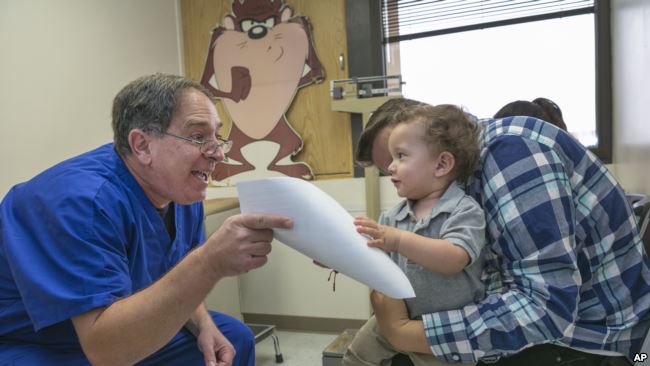
Vaccine Vol. 37, Issue 2, 7 January 2019, Pages 325-32. https://doi.org/10.1016/j.vaccine.2018.09.043. Image credit: Damian Dovarganes
- Log in to post comments