










































Children and Youth Advocacy in Africa: Context, Approaches and Lessons
UNFPA East and Southern Africa
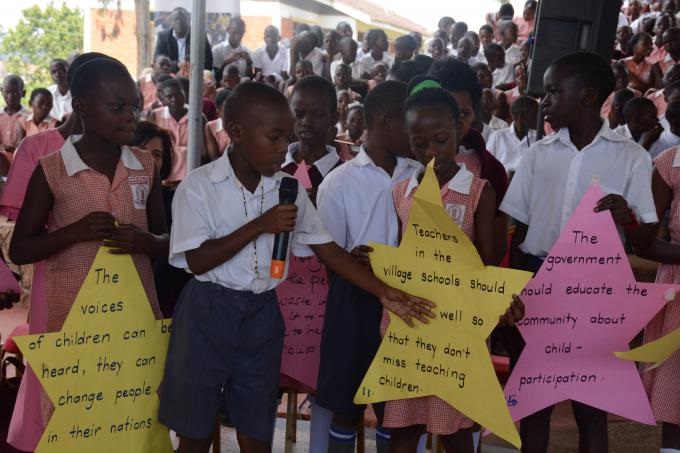
"In many African countries, children and young people [(CYP)] have become critical stakeholders and advocates in achieving the 'child rights agenda'. In addition, the pervasiveness of social media and information technologies has expanded opportunities and platforms for digital activism by young people."
This paper explores CYP advocacy in Africa. It describes the diverse advocacy interventions undertaken to promote their rights, "including children’s parliament, participation in national and international conferences, Voices of Youth, 'speaking to power' through performances and information campaigns for issue positioning....[T]he paper argues for a re-examination of existing participation and advocacy paradigms and practices in line with the complexities of development programming and Africa’s social and political contexts. Strategies for addressing the weaknesses in children and young people’s advocacy are outlined."
Patterns of CYP advocacy in Africa are grouped into three categories: community, national, and transnational. Advocacy mechanisms and examples include the following:
Community:
- Advocacy through children groups - "In Malawi, children’s clubs such as Edzi Toto (Say No to AIDS) organize and implement community campaigns to change social practices that make young people vulnerable to contracting HIV."
- Speaking truth to local power structures - " In Swaziland, development agencies have facilitated the creation of intergenerational dialogues with local authorities and community gatekeepers to address the challenge of sexual exploitation in the country. Through the use of community theatre performance, songs and poetry, children and young people have spoken up about the problem of sexual violence against girls in families, schools, villages and communities."
- Engagement of young people on their empowerment and promotion of their rights: "In 2005, UNICEF and other partners supported the establishment of the Rural Voices of Youth aimed at promoting the participation of hard-to-reach young people in rural areas [with the] overall goal ...to ensure that their voice is heard on child rights issues."
National:
- Harnessing the opinions of young people - More recently, development partners supported the commencement of an initiative called U-Report in Uganda, which allows children and young people to report via mobile platforms on social issues; ...voices of young people (called UReporters) have been heard on immunization, child rights violation and disease outbreaks."
- Children’s parliaments - "An important milestone for CYP advocacy in Africa is the institutionalisation of the child parliament mechanism. Children’s parliaments currently exist in the following countries: Nigeria, Rwanda, Zambia, Malawi, Burundi, Mozambique, Tanzania, Ghana, Sierra Leone, and Lesotho."
- Thematic advocacy campaigns - "Under the platform of Education as Vaccine, young people in Nigeria have deployed a multitude of mobilisation tactics ranging from the production of participatory videos, social media campaigns, leveraging informal relationships and youth outreaches to influence the passage of the HIV and AIDS anti-Discrimination Bill."
- Commemorative events - " Many countries have institutionalised the National Children’s Day, which is the epitome of child participation to highlight children’s issues. During such events, children undertake various performances - parades, poems, dances, road show, and marches – to highlight issues that affect them."
- Use of mainstream and digital media - "In many countries, development agencies support radio and TV programmes to enhance the voices of young people on major issues that affect them. In Burundi, children are being empowered to express their views on the security situation through the media, while in Zambia children have been engaged as junior reporter’s to disseminate reports on issues that affect them....Social platforms through Facebook, Twitter, Flickr, YouTube, and Instagram have been established to promote their issues. In the West African counties affected by Ebola, SMS [text messaging] platforms were used to circulate information on the signs and symptoms of Ebola with active engagement of young people. On HIV and AIDS, young people aged 15-24 in South Africa through the support of UNAIDS have been involved in leveraging social media and various digital platforms through an initiative tagged 'CrowdOutAids' for community mobilisation and political advocacy on AIDS."
Transnational:
- Regional platforms - "Particularly, the Africa Youth Parliament is a continental network of youth activists from 50 African countries which highlights youth issues in Africa through a strong and effective voice, increased participation of young people in national and international policy decisions and lobbying for policies that create an enabling environment for increased participation of young people in economies societies and governance."
- Participation in regional and international conferences and meetings - Though it children and young people are invited to high profile conferences and events, including United Nations functions. the World Economic Forum, and the International AIDS conference, participation may raise visibility, but care must be taken to ensure that participation is meaningful and influences outcomes.
- Transnational social media use - Young people employ digital media for transnational rights, for example, reduction of maternal mortality, sexual and reproductive health (SRH), and ending child marriage.
Challenges include: reaching an outcome of voice, visibility or influence; guarding against tokenism and manipulation; and finding the effective digital approaches and platforms for achieving the goal of advocacy.
Key recommendations include the following:
- "Greater coherence of CYP advocacy at all levels: … a coordinated framework that various organisations and advocacy groups can operate from. Strengthening networks and partnerships for CYP will assist in achieving this goal.
- Addressing inequities in CYP participation and advocacy: … [side-lined] sub-populations...[including] children with disability, children affected by extreme poverty and peri-urban youth. An equity lens in framing the participation and advocacy approaches of young people is proposed.
- Long term approach to advocacy: …. an independent capacity building structure to equip CYP with necessary advocacy and mobilisation skills...integrated into existing socialisation processes to make advocacy competence more systemic and improve the culture of participation and civic competence of young people. It will also build a more progressive CYP movement for the child rights agenda and mitigate the ‘manipulative’ tendencies of different agents.
- Enhanced digital advocacy: ...digital power [harnessed] through a more strategic engagement that empowers children and young people as powerful digital activists and advocates of their agenda across the socio-ecological spectrum."
Intellectual Property Rights: Open Access website, January 16 2018. Image credit: Save the Children