










































PSAf publishes report on living conditions for prisoners and circumstantial children
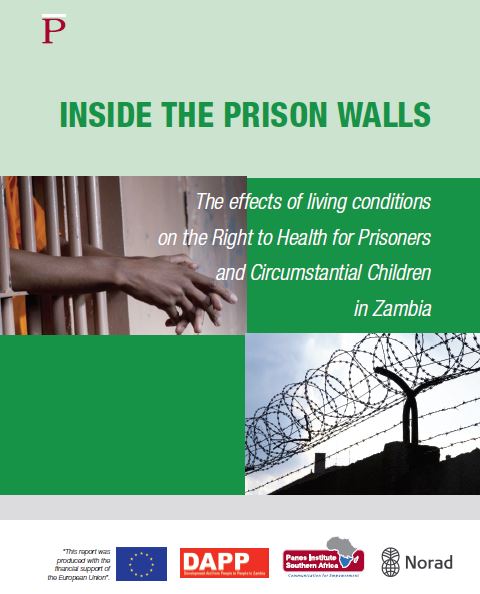
From Panos, Lusaka, Zambia, originally posted May 8 2018 - Panos Institute Southern Africa has published a report that highlights the living conditions in correctional facilities across Zambia, and their effects on the right to health for prisoners and circumstantial children.
Titled Inside the Prison Walls – The effects of living conditions on the right to health for prisoners and circumstantial children in Zambia, the report was produced under the Prisoners’ Rights and Human Rights Project which PSAf is implementing with financial support from the European Union (EU), with a contribution from the Norwegian Agency for International Development Cooperation (NORAD). The project seeks to contribute to an increased protection of rights and improved living conditions of prisoners in Muchinga, Luapula and Central Provinces of Zambia.
PSAf conducted an assessment aimed at reviewing the living conditions and the availability of health services by prisoners and circumstantial children in relation to the correctional services laws and policies in Zambia. The sample used in the assessment covered correctional facilities in Luapula, Central and Muchinga provinces. The assessment was to determine the extent to which the living conditions of prisoners in Zambia have an impact on the right to health and access to justice for prisoners and circumstantial children.
The specific objectives of the assessment were:
- To assess the impact of poor living conditions on access to health for prisoners and circumstantial children;
- To identify and discuss the existing laws and policies that guide promotion of the right to health for prisoners and circumstantial children; and
- To identify advocacy issues to champion the right to health for prisoners and circumstantial
The newly published report sheds light on the numerous human rights treaties that Zambia signed and/or ratified at the international and regional level, undertaking to respect, promote and protect the rights of prisoners and circumstantial children. The report highlights prison conditions such as limited access to all medical services, sanitation, adequate food, decent housing, healthy working conditions, and a clean environment impact the right to health of the prisoners and circumstantial children.
The report also makes recommendations for policy advocacy and programming that informed the media interventions as well as advocacy activities. These activities included media fellowships, roundtable discussions for the high-level stakeholders and policy makers as well as the Parliamentary Committees on Health and Justice. These advocacy messages targeted the policy makers and the prisons management to improve the living conditions for the prisoners and circumstantial children.
It is our hope as an organisation that this report will complement efforts to increase awareness of the living conditions of prisoners and circumstantial children, and enhance the protection of their rights – especially those in relation to access to health. Panos also hopes this report will serve as a reminder that prisoners have the right to health as enshrined in the international, regional and national human rights instruments.
A copy of the report can be downloaded here in PDF format.
As with all of the blogs posted on our website, the content above does not imply the endorsement of The CI or its Partners and is from the perspective of the writer alone. We do not check facts and strive to retain the writer's voice, as is detailed in our Editorial Policy.