










































Assessing Child Protection in Emergencies
Program on Forced Migration and Family Health
"In the middle of an emergency, [you] can’t read a 60-page document and translate it."
This presentation and document describe a structured analysis of learning on the use of an emergency resource kit for protection of children. The evaluation, designed to document the strengths and weaknesses of the guide "Child Protection Systems: Mapping and Assessment Toolkit - Users' Guide" [see related summary below], gathered lessons learned and recommended improvements based on the experiences of end users in the field as an evidence base for recommended revisions and also to inform other measures necessary to support the emergency assessment process. The resource kit was developed through an inter-agency process through 2007-2009 under the auspices of the Protection Cluster’s Child Protection Working Group (CPWG). The presentation is from the Learning Into Action Conference, Geneva, Switzerland.
The analysis, conducted by a research team from the Program on Forced Migration and Health at Columbia University, New York, United States, was carried out in 7 of the 20 sites identified for study. The document describes 4 case studies, including the context, child protection concerns, how the resource kit was used, including training on its use, and lessons learned.
For example, in the Gambella region of Ethiopia tensions, exacerbated by vulnerable livelihoods, limited government capacity, and natural disasters such as drought, became conflictive and caused migration to Sudan. The emergency assessment process was intended to provide an evidence base for programming and to inform emergency preparedness and response. The resource kit was used to provide a "purposive sampling" based on risk and vulnerability mapping with local government, United Nations (UN), and non-governmental organisation (NGO) staff. "[The] key informant interview guide, participatory ranking exercise, focus group discussion guide, and desk review tools [were] selected for use." There was a 5-day training followed by 3 and a half weeks of data collection.
The lessons from this case study include:
- Implementation challenges: difficulties of moving contracts through the UNICEF approval channels; limited amount of time allotted to the assessment process; planning and time constraints hindering use of more rigorous sampling plan to assess magnitude and severity of protection concerns; and limited capacity of the assessment team.
- Toolkit: The participatory ranking exercise "provided good data, assessment team quickly mastered the methodology, and data was easy to analyse. Institutional and humanitarian capacity mapping tools were too sophisticated for the context, missed grassroots structures. [There were l]imitations to current guidance on ethics, including addressing 'assessment fatigue,' code of conduct, and informed consent for parents and focus group discussion participants. Guidance notes suggested that context was suited for a quantitative study, but existing tools and guidance on sampling [were] thought to be inadequate for this purpose."
This case study concluded that strengths of the kit include:
- "[The kit a]ddresses a previously unmet need for common tools suitable for assessing the needs of children in emergencies in a coherent and consistent manner
- [The] Resource Kit appears to serve as a useful starting point for inter-agency dialogue and collaboration.
- The key informant interview guide and participatory ranking exercise were widely used.”
The findings and recommendations section of the study document gives details on the following for the kit’s revision by the Child Protection Working Group (CPWG) and the United Nations Children's Fund (UNICEF)'s Child Protection Section:
"1. Clarify mechanisms for managing and monitoring use of the Resource Kit.
2. Edit and reformat the Resource Kit to address issues of accessibility for users in the field.
3. Develop new and revise existing methods for the Re- source Kit.
4. Develop a decision tree to guide the planning process.
5. Develop further concrete guidance on ethics.
6. Develop a strategy for addressing issues of capacity and integrating the Resource Kit into disaster planning and preparedness efforts.
7. Develop discrete tools for Rapid Assessments."
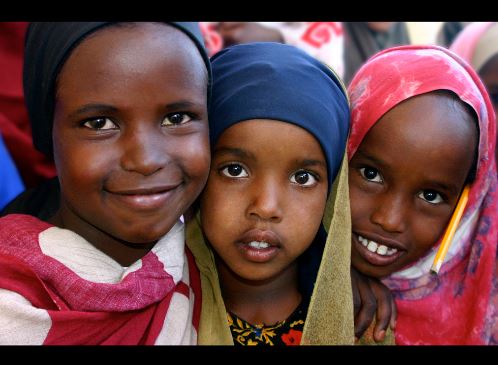
The Program on Forced Migration and Health website, Columbia University, September 18 2013. Image credit: Lindsay Stark
- Log in to post comments