










































HPV Vaccine Gains Favour in Sub-Saharan Africa
Maclean’s Magazine
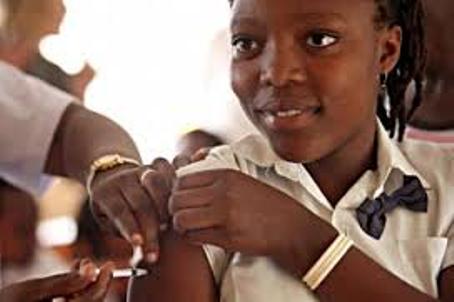
This news article from Maclean’s Magazine website discusses international differences in the approach to the social marketing of the human papilloma virus (HPV) vaccine for adolescent girls. The acceptance of the vaccine in sub-Saharan Africa is compared with its acceptance in North America.
As stated here, in sub-Saharan Africa, "the vaccine has been embraced by politicians and high-profile celebrities, including the first ladies of Tanzania and Zambia and the popular Tanzanian MTV host Vanessa Mdee." It has reportedly faced little backlash from the controversy surrounding in North America which appears to be caused by the fact that it targets strains of the virus most often contracted from sex and is marketed for adolescent girls at the age of 11 years. The controversy is, in part, based in the United States "where any discussions of premarital sex or sexually transmitted diseases have been opposed by conservatives pushing 'abstinence-only' policies."
In Canada, as in many countries with readily available healthcare, women have access to screening measures such as Pap smears and regular checkups for prevention of cervical cancer, associated with some strains of HPV. However, in countries where such care is scarce, "the HPV branding strategy has changed from being primarily associated with preventing diseases contracted from unprotected sex - as the first HPV vaccine, Gardasil, was - to ending cervical cancer. Tania Cernuschi, GAVI’s HPV expert, notes that when the first HPV vaccine, Gardasil, was released in the United States in 2006, 'it was publicized in a certain way, with a focus on sexually transmitted diseases.' Now, says Cernuschi, it is marketed differently."
"The success of the vaccine in sub-Saharan Africa is being watched closely by scientists who see it as a model for future vaccines targeted to adolescents. Vivien Tsu, an epidemiologist at the University of Washington, says this includes people working on the HIV vaccine. 'This was the first time a vaccine in this age group was coming out, and they thought there could be some lessons for them,' says Tsu. Those lessons include developing a vaccine plan for an age group outside the usual vaccination range - newborns and toddlers. 'Many people are saying we’ve neglected adolescents,' says Tsu. 'This is a good time to start building more of a program for them.'"
Maclean’s Magazine website, March 27 2013. Image credit: Global Alliance for Vaccines and Immunisation (GAVI)
- Log in to post comments