
























Child rights action with informed and engaged societies

After nearly 28 years, The Communication Initiative (The CI) Global is entering a new chapter. 

Following a period of transition, the global website has been transferred to the University of the Witwatersrand (Wits) in South Africa, where it will be administered by the Social and Behaviour Change Communication Division. Wits' commitment to social change and justice makes it a trusted steward for The CI's legacy and future. 

On the transfer, co-founder Victoria Martin expressed her pleasure to see this work continue under Wits' leadership, knowing that co-founder Warren Feek (1953–2024) would have felt deep pride in The CI Global's Africa-led direction. 

As Wits, we honour the team and partners who sustained The CI for decades and look forward building from that strong base. This includes co-founders Warren Feek (1953-2024) and Victoria Martin as well as La Iniciativa de Comunicación (CILA), which continues independently at lainiciativadecomunicacion.com with links to The CI Global site. We are also eager to forge new partnerships and entertain new ideas as we consider how best to contribute to social and behaviour change in our rapidly evolving environment.

If you are joining the International Social and Behaviour Change Communication (SBCC) Summit in Panama, please join Wits and CILA on Monday, 22 June, to share your thoughts and suggestion for the relaunch of the Communication Initiative. We will be in Pacifica 5 from 12-1:25 for the Refuel, Reflect, and Renew Lunch Series: The Communication Initiative: celebrating a driving force for Communication for Social Change and the way forward. We will reflect on the legacy of Warren Feek and family in creating the Communication Initiative, consider the contributions of CI over the years and then turn our attention towards the future in this dynamic session. 

If you are unable to join us in Panama, we still want to hear from you. Please contribute your thoughts by following this link: https://redcap.link/CommunicationInitiative2026 or reaching out to ci_surveys@commint.com

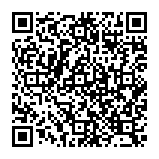
You can also follow the QR Code:

 https://redcap.link/CommunicationInitiative2026

Time to read
less than
1 minute
Read so far

Medication use and abuse in childhood diarrhoeal diseases by caregivers reporting to a Nigerian tertiary health institution

0 comments

Uchendu, U. O., A. N. Ikefuna, et al. (2009). "Medication use and abuse in childhood diarrhoeal diseases by caregivers reporting to a Nigerian tertiary health institution." SAJCH South African Journal of Child Health 3(3): 83-89.

Background. Childhood diarrhoeal diseases have a major impact on morbidity and mortality. Prompt and appropriate interventions improve outcome.

Objectives. To evaluate the practice of mothers/caregivers with respect to use of antibacterial and antimotility drugs.

Methods. Caregivers of under-5s presenting from catchment areas of the University of Nigeria Teaching Hospital between October 2006 and February 2007 were interviewed by means of a structured questionnaire. Data obtained included perception of cause of diarrhoea, use of oral rehydration therapy (ORT) fluids, and use of antibacterial and antimotility drugs.

Results. Caregivers of 156 children met the inclusion criteria. Most mothers (53%) believed that the diarrhoea was caused by teething and 51% had used antibiotics (the commonest was metronidazole). Use of antibiotics was not influenced by the perceived cause of diarrhoea, level of maternal education or social status. Drug use delayed the time of presentation and was associated with more severe dehydration.

Conclusion. We found that home treatment of acute diarrhoea is characterised by unnecessary use of antibiotics and antidiarrhoeal agents. Intermittent public health campaigns and health care worker updates on the use of ORT and zinc supplements are needed. The latter may also satisfy caregivers' urge to give 'medicine' while at the same time reducing antibiotic abuse and drug resistance.