










































Communication for Behavioural Impact - Video
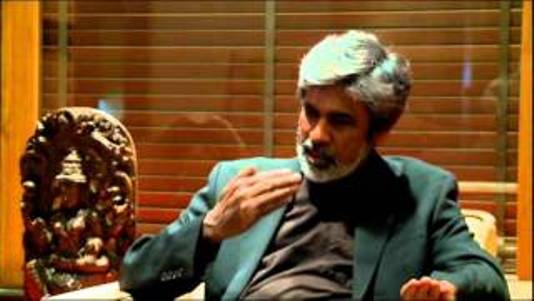
Dr. Everold Hosein, senior World Health Organization (WHO) consultant and founder of the Communications for Behavioural Impact (COMBI), was at the Water Supply and Sanitation Collaborative Council (WSSCC) Global Forum for Sanitation and Hygiene held in Mumbai, India, between October 10-14 2011 to talk about communications for behavioural change. He speaks to the Indiawaterportal.org about the impact of communications and the possible effect of marketing on behaviour change..
Hosein discusses his background and family decisions on consumer choices and decision-making about health and nutrition. He speaks of marketing in relation to economic poverty and how to bring the value (benefits) and cost relationship to the formulation of marketing campaigns for the public sector. Analysing decision-making is a key that he discusses, particularly for the "struggling poor" - those he identifies as aspiring to get out of poverty. He recommends for this sector appealing to their aspiration to get out of economic poverty, using that aspiration to fuel the effort it takes to use bednets for malaria and handwashing for sanitation. He suggests factoring in the aspirations, efforts, and benefits as calculations in the minds of consumers.
In another scenario, Hosein recommends asking the consumer: "What do you really want?" Using the examples of latrines, he analyses the response that women want privacy and how that might affect motivation to build a latrine. Using his own father's motivation as an example of Maslow's hierarchy of needs [defined as "Physiological, Safety, Belongingness and Love, Esteem, and Self-Actualization" needs used to describe the pattern of human motivations - Wikipedia], he recognises esteem as a motivation. He suggests learning from the campaigns that market popular soft drinks, as well as other campaigns that listen to consumers (market research), rather than approaching consumers with technical data.
Emails from Asiya Odugleh-Kolev to The Communication Initiative on October 2 and 4 2012.
- Log in to post comments