










































Communication for Pneumonia and Diarrhoea Control and New Vaccines
This 13-page report from the United Nations Children's Fund (UNICEF) outlines a communication approach for pneumonia and diarrhoea control that revolves around new vaccine momentum and community engagement. It emerged from a consultation held from December 8-9 2009 in New York, United States (US), in an effort to strengthen national communication capacity and the engagement of individuals and communities in the fight against pneumonia and diarrhoea through the development of coordinated communication strategies.
UNICEF was motivated to convene this session by data such as these: pneumonia and diarrhoea are responsible for at least one-third of the 9 million under-five deaths that occur each year, and new vaccines against the leading causes of these two diseases (pneumococcus and rotavirus) offer new hope for saving an additional 1 million lives annually. However, as the new vaccines will not protect children against all causes of pneumonia and diarrhoea, communication is key to ensure that individuals and communities will also adopt healthy practices such as early and exclusive breastfeeding, handwashing with soap, provision of appropriate home-care, and prompt care-seeking in response to "danger-signs".
Participants committed to strengthening communication for social and behaviour change at the household and community levels to engage these key actors in fighting the leading child-killers. They also expressed strong support for a coordinated approach. The discussions stressed the need for effective advocacy with decision-makers at all levels to elevate the priority of, and resources for, reducing childhood morbidity and mortality due to pneumonia and diarrhoeal disease. Finally, the consultation yielded agreement that communication strategies must arise from, and be embedded in, broader programme goals and support for pneumonia and diarrhoea control.
The development of this communication framework is supported by an ongoing partnership of communication and programme experts representing non-governmental organisations (NGOs), bilateral and multilateral institutions, public health partnerships, UNICEF, and the World Health Organization (WHO). Following the consultation, a draft framework to support countries with communication strategy design, implementation, monitoring and evaluation was sketched out; once finalised, it will be pre-tested in a select number of countries. Additionally, consultation participants will continue to collaborate through an ongoing partnership, and seek to engage a broader coalition of agencies and institutions invested in child survival, including non-vaccine constituents. The framework will be tested in-country and developed to include key practices and lessons learned. The consultation will reconvene in mid-2010 to review progress on the framework and involve other partners. Because feedback is an important part of testing and developing the communication framework, UNICEF welcomes any thoughts and comments on this approach. (Please see contact details, below).
An excerpt from the draft Communication Framework follows:
"...The framework is designed to support various needs and contexts, including programmatic and communication considerations that should guide preparation, analysis and assessment planning phases. It may be helpful to create categories to assist strategy development based on risk status; factors that define the status; and needed communication approaches....
Additionally, the complexity of strategies and potential multiple messages may require phased implementation; operationalisation will not simply consist of multiple health messages delivered via health workers - which has been found to be an ineffective approach. Sample scenarios and proposed strategies to fit varying needs and contexts may be useful annexes to include at the end of framework...
An understanding of current policies, guidelines and partnerships will frame the context for developing the communication strategy and help demonstrate needed improvements for effective communication planning...
...Key principles to be integrated into the design phase of the communication framework include:
- Building on existing programmes, partners, resources, systems and results of analysis and research
- Participatory and empowering approaches that engage communities and other stakeholders
- Communication strategies that include advocacy, communication and social mobilisation
- Capacity building of health workers, civil society representatives and media professionals
- Focus on equity and equitable access to health
- Coordination with supply and service delivery to support matching of demand with delivery of services.
...Processes for decision-making, collaboration among partners, progress reports and information-sharing should be addressed in the implementation planning stage.
...Key elements of this stage include:
- Support of policies and guidelines
- Training and capacity building
- Community-focused integrated delivery, based on community ownership and accountability
- Resources and budgeting
- Coordination and leadership
- Implementation through multiple channels
- Monitoring and feedback
...Evaluation of these coordinated communication approaches will provide essential information on strategy efficacy, results and needs for improvement. Planning for evaluation at the very beginning of the process is one of the most valuable and important steps that can be taken in strategy development..."
Emails from Shalu Rozario to The Communication Initiative on March 4 2010 and March 11 2010.
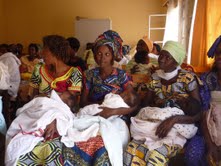
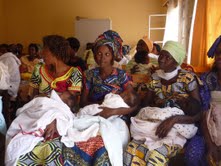
Image Credit: Shalu Rozario, UNICEF; Caption: Mothers attend a health education session on breastfeeding prior to the routine immunisation session in Kigali, Rwanda. August 2009.
- Log in to post comments