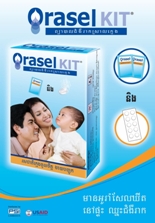
Best Practices in Social Marketing Safe Water Solution for Household Water Treatment: Lessons Learned from 20 Population Services International Field Programs
Population Services International (Szymanski); Abt Associates (MacDonald, Mitchell); U.S. Centers for Disease Control and Prevention (Lantagne)
This 81-page paper synthesises lessons learned, best practices, successes, and challenges of social marketing safe water solution, and discusses how these lessons may be applied to planning safe water treatment programmes around the globe. As part of its global leadership mandate, the United States Agency for International Development (USAID)'s Social Marketing Plus for Diarrheal Disease Control: Point-of-Use Water Disinfection and Zinc Treatment (POUZN) Project, implemented by Abt Associates and Population Services International (PSI), led this effort to gather lessons learned from PSI's 8 years of field experience implementing safe water programmes in 20 countries.
Specifically, since 1998, PSI has been promoting the Safe Water System (SWS), a household water treatment and safe storage strategy originally designed by the U.S. Centers for Disease Control and Prevention (CDC) in response to cholera outbreaks in Latin America. SWS includes 3 elements: water treatment at point-of-use with a dilute sodium hypochlorite (chlorine) "safe water" solution; storage of water in a safe container; and education to improve hygiene and water use practices.
Below are the main lessons from PSI's experience social marketing the SWS:
Project Design: Three factors are critical to initiating a safe water system project: identifying appropriate intended group(s) with high incidence of waterborne diseases, yet sufficient resources to regularly purchase the product; establishing a stable funding base to ensure programme sustainability; and recruiting and assembling the human resource expertise needed to develop and support a safe water programme.
Production of Safe Water Product Components: Key factors to ensure a high-quality product include locating, arranging for, and monitoring local production by companies with the required specialised technical knowledge; establishing stringent, ongoing quality control at programme outset; setting appropriate expiration dates for the product; and correctly determining the chlorine dosage.
The Regulatory Environment: The approval of all relevant government ministries is an essential step in securing product registration, ensuring the product's long-term sustainability in-country, and maintaining collaboration with other government programmes. Programme staff must be prepared to respond to technical questions about the product in a timely and technically sound manner.
Marketing and Communications are "critical for helping people understand the relationship between untreated water and diarrhea, the importance of consistently treating household water, and the efficacy of water treatment products. The associated behavior change challenge is significant....Identifying the appropriate target audience is critical to the success of a program. In general, mothers are responsible for water use in the home, and fathers are responsible for financial decisions; therefore, educational and promotional efforts associated with the safe water solution need to reach both mothers and fathers, although in some cultures other key people, including mothers-in-law or religious leaders, are also targeted with messages to influence adoption of these behaviors in the household and community."
- Shifting the focus of product launch to rural communities with unsafe water and sanitation has been very effective in enhancing product prestige: Instead of a traditional product/programme launch - in a formal setting with highly placed government officials and television coverage - PSI has found success in SWS launch events that brought senior government officials out to communities (thereby enhancing product prestige in the eyes of community members) and fostered involvement and ownership of the product launch activities at all levels of public and civil society. For example, in Mozambique, 4 launch events took place as the programme rolled out regionally. For each event, government, donor, and partner officials spoke while local community members participated in contests and song-and-dance shows. Segments of the launches were aired on television, and follow-up radio question-and-answer contests allowed populations from other areas to learn about the new product.
- Communications must address specific safe water programme behavioural constructs - for example, understanding disease severity by recognising that diarrhoea is a serious and (for children, deadly) disease that is not "natural", recognising that contaminated water brings disease, understanding that water that looks clean may be contaminated, and recognising that (according to PSI) SWS is a safe and effective product, etc. PSI stresses that, before developing and rolling out messages, it is important to identify and address behavioural constructs that pose a barrier to the intended population's acceptance of the product. For example, having noted that the intended population in Madagascar did not understand the linkages between water, diarrhoea, and health, PSI developed a one-hour video shown in mobile video units in rural areas that describes the story of a woman who used safe water with her family, a woman who did not, and the differences in their respective families' health. Other strategies have included group discussions to explain the SWS method for household water treatment, testing apparently clean water to show the presence of microbes, holding product demonstrations followed by "taste testing" to prove that correctly dosed water has neither an off taste nor an odor, etc.
- The branded marketing campaign should be positive and aspirational: "There is a risk that branded safe water campaigns that focus too heavily on the severity of disease can lead to an association and a consumer misconception....To get across the notion that the product can help protect children's health, campaigns must convey images of happy, healthy families that successfully use the product. Product taglines in many countries include short, upbeat messages such as 'Use WaterGuard, the only way to know your water is clean' (Zambia), 'Safe water, happy families' (Mozambique), or 'For the good health of your family' (Guinea)."
- Safe water campaign messages need to be complementary to related campaigns: "For example, in Madagascar, parents did not make a connection between their children's bouts of diarrhea and their children's thin stature. Given Madagascar's ideal of a chubby child, PSI deliberately created an advertising campaign with chubby, healthy-looking children drinking safe water solution-treated water. At the same time, though, the campaign had to exercise caution in not undermining breastfeeding campaigns. To that end, the children portrayed drinking safe water in the promotional materials were recognizably older than six months of age, which is the end of the exclusive breastfeeding period promoted by the MOH [Ministry of Health]. PSI's efforts were therefore complementary to rather than a distraction from existing health promotion efforts."
- Timing of a safe water product launch affects success: "In Madagascar and Mozambique, PSI launched the product just before the rainy season, thereby leading to heightened consumer interest and an increased willingness on the part of merchants to stock the product. However, in both countries, PSI found itself rushing the product to a series of cholera outbreak locations...As a result, consumers viewed the product as intended for cholera outbreaks only. Accordingly, the program then needed time to reposition the product as an essential household good for daily use. Nonetheless, the advantages to launching a safe water product at the critical time of the year for diarrheal diseases outweigh the potential drawback that consumers will associate the product with an emergency...Additional barriers to consistent product use include an attempt to save money during non-high-risk periods, the belief that rain water and tap water are pure and do not need treatment, and the perceived 'off' taste and smell of chlorinated water. Tackling these barriers requires time and sufficient funding for communication and research efforts."
- Choosing the most appropriate communication channels is highly context-specific: "In general, mass media channels - including television, radio, print materials, and billboards - are most likely to reach urban and peri-urban populations with relatively higher socioeconomic status. Interpersonal communication activities - such as roadshows, community theater, question-and-answer contests, and small group demonstrations and discussions - provide more effective opportunities for low-literacy and illiterate outlying populations to gain vital health information....In Tanzania, PSI found that schools are an effective channel for targeting children, and several PSI programs have worked with schools to provide educational materials on the safe water program. All PSI safe water country programs agree that a mix of mass media campaigns and interpersonal communications is necessary."
- Targeted technical information can address concerns about dangers of chlorine use: PSI identifies 3 effective ways to help alleviate these valid concerns: a succinct explanation provided during product demonstration or in written materials; 1-page fact sheets, written for a lay audience; and peer-reviewed, technical literature.
- Behaviour change for safe water use is a long process, requiring sustained funding: "Initial program results confirm that sufficient funding to support the safe water communication campaign does make a difference. In Kenya, PSI targeted advertising and promotional funds to the regions with the highest diarrheal prevalence. Follow-up research indicated that retail availability of the product in these areas was more than double that of the national average while household penetration in these areas was second only to that in Nairobi....Sustained donor support for safe water programs will ensure not only that consumers have an accessible and available product but that they also develop an understanding of the implications of the disease and benefits of prevention that is sufficient to sustain their behavior change over the long term."
- Marketing templates (such as labels) can be developed and adapted to local requirements: PSI stresses that a label must conform to local sensibilities. The use of templates that provide a visual display of information and a list of mandatory technical information can simplify and speed label design. Using various country examples, countries have taken advantage of other PSI programme experience in the design of their labels as well as in the development of other marketing materials, including point-of-sale materials, flyers, billboards, and radio spots - adapting them for their own use.
Sales and Distribution: PSI stresses that ensuring that the product reaches the retailer is not enough. A consistent "push" - through point-of-sale materials that call attention to the product - is needed to keep the product in the forefront of retailer displays and consumer minds. Partner non-governmental organization (NGO) volunteer or community-based distribution networks can assist with promotion and distribution and significantly improve rural penetration.
Creating Partnerships: The cultivation of partnerships has not only strengthened political support for safe water programmes, PSI claims, but has increased product sales. "With appropriate coordination and training, NGO programmes can offer a wealth of opportunities for reaching rural and high-risk populations. Trusted spokespersons and product champions are fundamental to product adoption". In addition to the support of commercial retailers, distributors, and pharmacy chains, public and private healthcare providers and community health agents can improve distribution of the product and related educational messaging. PSI suggests recruiting trusted spokespeople as product champions, especially in rural areas, to improve awareness and market penetration.
Product Costs, Pricing, and Cost Recovery: It is a careful balancing act to set an affordable consumer price that recovers production costs, minimises subsidies, and yet provides key populations access to the product.
Integrating Safe Water into HIV/AIDS Programming: The provision of safe drinking water is critical in support for persons living with HIV/AIDS (PLWHA) since they are particularly susceptible to opportunistic infections and diarrhoea. Partnering with NGOs that provide care to PLWHA has been a successful model for reaching this group.
Recommendations and Conclusions:
PSI's experience in 20 countries over the past 8 years has demonstrated that the major ingredients of a successful programme include:
- Involvement of key stakeholders from programme inception;
- Due diligence in developing and maintaining a high-quality product;
- An appropriate strategy to address the unique marketing, communications, and distribution challenges and opportunities presented by the SWS; and
- Extensive work with government, private, and community partners to reach rural and intended populations with the product and related communications.
According to PSI, "With relatively low awareness or support among key government, multi-lateral, and nongovernmental partners regarding the power of household water treatment programs to improve health, advocacy remains a major challenge. Still, these programs are garnering increasing attention in the international community. In the last four years, for example, donor financial support to PSI for the establishment and scale-up of safe water programs has tripled and other funding sources are beginning to become available....Household-level POU water treatment has been shown to significantly reduce diarrheal diseases in vulnerable populations and should become an essential intervention within child survival, HIV/AIDS, and water supply programs."
Emails from Vicki MacDonald to The Communication Initiative on April 30 2009 and October 26 2009.