










































The Enhanced HIV/AIDS Prevention and Improved Family Health Program (EHAP-IFH), Malawi

Global Health Technical Assistance Project
This report details an evaluation of the Enhanced HIV/AIDS Prevention and Improved Family Health Program (EHAP-IFH), which was launched in Malawi in July 2005 in an effort to contribute to the overall United States Agency for International Development (USAID) Malawi Strategic Objective (SO) 8: Improved Health Status of Malawians. As background statistics provided in the introductory sections of the report indicate, the Malawi health and development situation is dire, with Malawi ranked 166 out of 177 on the United Nations Development Programme (UNDP)'s 2004 human development index (HDI). Malawians face many barriers to access to health services, and life expectancy declined from 48 to 41 years between 1990 and 2000. At least 14% of the total population of 12-13 million Malawians is estimated to be HIV-positive, with 90,000 infected every year. Young women aged 15 to 24 are nearly 4 times more likely to be infected than young men. One in every 8 children dies before age 5, and malaria is endemic in all parts of the country. It was originally intended that EHAP-IFH would run for 21 months (to March 2007), but funding extensions have ensured that some programme components will continue through to the end of fiscal year (FY) 2009.
The evaluation team consisted of 3 consultants from the Global Health Technical Assistance Project (GH Tech), who visited Population Services International (PSI) offices and activities, meeting with representatives of USAID, the Goverment of Malawi (GOM), donor partners, and implementing organisations. Evaluators found that, in the case of several EHAP-IFH components, PSI/Malawi "significantly exceeded the targets set by USAID and contributed to better health outcomes in Malawi through its behavior change (BC) and social marketing activities".
I. Behaviour Change Communication (BCC) Interventions:
IA. Youth Alert! (YA!) - seeks to deepen correct knowledge and to promote behaviour change (BC) and behaviour maintenance (BM) through the effective use of interpersonal communication (IPC). It uses a primarily abstinence and be faithful approach, applying condom messages where necessary, to promote and reinforce correct knowledge of HIV prevention and mitigation, abstinence and secondary abstinence, delayed sexual debut (DSD), fidelity, reduction of partners, and safe sex. It includes:
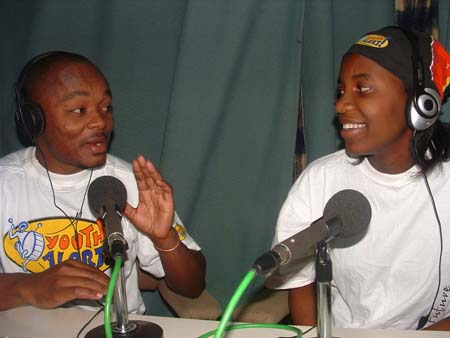
- YA! Mix radio programme - a weekly programme that began broadcasting in February 2003 in an effort to expand the intended audience to the 10- to 14-year group. As of mid-September 2008, 292 radio programmes had been broadcast. The weekly programme has a national reach of potentially 3 million listeners in the 10- to 24-year age range.
- YA! Mix shows - mega-shows that can draw crowds upwards of several thousand and that seek to create brand awareness.
- YA! Listener Club - set up in 2004, with 200 Clubs currently in operation. Membership ranges from 10 to 24 years of age and includes both in- and out-of-school youth. Each Club session includes a "doable action" where members are encouraged to undertake an activity that reinforces the YA! Mix radio programme messages. Discussions are led in each location by a male and female Club leader. All Clubs have a Patron or Matron, a respected member of the local community for whom YA! has provided sensitisation and training.
- YA! Listener Club Open Days - held occasionally to sensitise community members, reinforce messages, and address problems such as adverse societal pressures (e.g., intergenerational sex). This is part of an effort to embed the YA! approach and activities within traditional structures, to engage gatekeepers without whose permission such activities could not occur, and to move forward on BC issues.
- YA! Schools Program - addresses out-of-school youth as well. There are 5 teams; on average, each of the nearly 1,000 state and private secondary schools is visited once a year for YA! outreach and IPC activities. More than 360,000 students have been reached, and 2,954 teachers have been trained using the dedicated teachers guide.
- YA! Magazine - a one-off life skills manual; to date, 240,000 (available only in English due to budget constraints) have been distributed.
- The "Real Man/Real Woman" delayed sexual debut (DSD) video and poster campaign began in 2005 to counter peer and intergenerational pressure that "real" men and women start being sexually active at a young age. The DSD campaign was linked to the YA! music competition, whose winners were featured in a one-hour TV programme ("My Choice"). To date, the National AIDS Commission (NAC) has funded and disseminated 500 copies of the DSD video to secondary schools; it has further funded 200 signed copies of "My Choice" for the deaf.
IB. Targeted Outreach Communications (TOC) - both BC/BM activities and provision of product information. TOC employs four 2-person teams. TOC works with 7 drama troupes, whose shows address all EHAP-IFH activities and address people aged 15 and older; community dramas disseminate HIV/AIDS information, education, and communication (IEC) and BC messages as well as inform people about PSI/Malawi products. Presentations by TOC's Mobile Video Unit (MVU) are designed to inform the public about PSI/Malawi products. MVU shows also address HIV prevention through knowledge creation and BC messages centred on safe sex and the use of the Chishango condom. Such shows reach out to high-risk groups, such as fishing communities and truck drivers, using interactive audiovisual shows with question-and-answer sessions. TOC EHAP-IFH malaria and child survival (ORS) activities are predominately seasonal (October-November).
"TOC represents an essential element of HIV prevention, working with groups of people who may well be difficult to access and who are often high risk in both attitudes and behaviors and resistant to prevention messages. TOC applies an imaginative, interactive approach to BC/BM communication. This is true especially of its HIV prevention activities in 'hot zones' and among general populations. Its work focusing on malaria and diarrheal disease prevention applies a more didactic IEC approach by virtue of its target groups and the settings in which BCC activities are presented (e.g., health facilities attended by pregnant women)."
IC. Pilot Faith Communities Program (FCP) - The pilot FCP began its work in 2004. Its entry point to young people has been through traditional and religious gatekeepers. Adults are also provided with training, another entry point by which communal endorsement of discussion with young people is obtained. A dedicated manual aids in leadership training. FCP faith committees comprising leaders from Christian denominations and the Islamic community - as well as PLWHA - support the programme. FCP BC/BM materials include 3 manuals (youth, adults, and faith leaders), posters, and the DSD video. One noteworthy feature of the FCP manuals is the relatively detailed and culturally aware focus on gender issues such as incest and gender-based and sexual violence, their links to both HIV transmission and human rights, and the need for the community to address such matters equitably. The FCP operates 4 vocational skills training centres for orphans and vulnerable children (OVC) close to Blantyre. As of September 2007, 306 young people had been trained (e.g., in carpentry and tailoring), and 15 reported having gained employment after their graduation.
"Its activities have revealed the potential for balancing respect for societal norms with challenges to harmful practices and unequal attitudes and behaviors....FCP committees testify to BC occurring in their community as a result of FCP interventions. The FCP is an exemplar of how to build gender awareness and promote gender equality."
II. Social Marketing
IIA. Condoms: PSI achieved 82% urban and 54% rural coverage for the Chishango condom in 2007. "The shift to significant free condoms in the Malawi environment requires PSI to reposition itself from a supplier of very low-priced condoms to a more mid-market pricing structure to meet the needs of those who can afford, and prefer, to pay."
IIB. Malaria: Originally started by the United Nations Children's Fund (UNICEF) and PSI in 2002 with funding from the U.K. Department for International Development (DFID), the project "accomplished national coverage by 2003 and, most importantly, succeeded in training health center staff to advise on correct usage. PSI engaged in significant advocacy and community mobilization activities as well as in mobilization and support of retreatment campaigns. UNICEF points out that this dual role is PSI's greatest strength." PSI/Malawi has distributed long-lasting insecticide-treated mosquito nets (LLINs) to every public sector health facility; "this provides a strong proxy indicator of total malaria net access for pregnant women and under-5 children." Furthermore, "PSI has achieved significant success with its untreated ITNs....Similar success has been achieved with sales of retreatment kits." One recommendation: PSI should be employed to support a malaria component of IEC activities to ensure correct ITN/LLIN use and should consider accessing NAC funding in support of promoting the importance of LLIN use by those with HIV/AIDS.
IIC. Oral Rehydration Salts (ORS): "PSI has achieved significant success with its ORS Thanzi brand and has consistently increased its targets for achievement since 2003. Amongst the recommendations is increased spending on promotional and BCC spending to increase rural demand
Key Recommendations:
BC:
- All future PSI/Malawi interventions should segment activities and BC/BM communications into 10- to 14-, 15- to 19-, and 20- to 24-year age groups.
- The YA! interventions should be considered for scale-up and continued funding.
- Continued support should be given to TOC, with its focus on high-risk groups and drivers of the epidemic.
- Consideration should be given to scaling up the FCP model where BC/BM communication works through traditional and religious structures while challenging harmful societal and behavioural norms.
- PSI/Malawi should support creation and regular updating of a live referral register for HIV and other sexual and reproductive health needs. A register would support individuals' desired behaviour change (e.g., the wish to have HIV counselling and testing).
Condoms:
- PSI/Malawi should re-position its existing brand to cover its condom and packaging costs over time; it should continue its present plans to launch brand extensions at full commodity cost recovery.
- PSI/Malawi should work with the public sector to develop joint promotional activities and to ensure that free condoms distributed into the market are targeted better to those most in need under a total market approach.
Malaria ITNs/LLINs:
- PSI/Malawi and donors must prioritise resolution of PSI access to costs for public sector net distribution.
- PSI needs to carefully assess its strategy to launch a commercial LLIN.
- PSI should be employed to support malaria-component IEC activities to ensure correct use of nets and should consider accessing NAC funding in support of promoting the importance of LLIN use by people living with HIV/AIDS (PLWHA).
- PSI needs to work closely with UNICEF and USAID to find creative solutions to funding public sector net distribution costs.
ORS and other commodities:
- Thanzi sales growth requires major increases in promotional and BCC spending, with attention to preventive as well as curative behaviours.
- PSI/Malawi needs to increase rural commodity coverage through higher spending on BCC and promotional costs, which will strengthen rural demand generation balanced by responsive distribution systems.
Gender:
- Future PSI/Malawi BC/BM interventions should further strengthen girls' capacity to communicate and negotiate.
- Gender should be more systematically mainstreamed throughout PSI/Malawi programmes and activities.
- Gender analysis should be incorporated into all qualitative and quantitative research activities and inform all BC/BM message development.
Research/Monitoring and Evaluation (M&E):
- Donors should ensure that all future BC/BM interventions have an adequate Q2 research/M&E budget line, with provision for disaggregated and gender analytic behavioural surveys and potential for participatory M&E.
- Technical assistance should be provided to PSI/Malawi for further development of a qualitative approach to targeted BCC.
- Future BC programmes should address the potential for including qualitative process indicators in addition to quantitative outcome indicators, which will track with more precision the actual impacts of specific interventions on health.
Sustainability:
- Continue to achieve maximum cost recovery of commodities.
- Sustainability is dependent on assured national BCC funding and programming.
- PSI/Malawi should further strengthen its partnerships with national and international partners working on BCC in Malawi.
- PSI/Malawi should further develop its links with Sectorwide Approach (SWAp) partners on BCC.
"To conclude, the team feels that PSI has contributed to the achievement of the objectives required by USAID [Strategic Objective Performance Implementation Review, or] SOPIR indicators and in doing so has contributed to the development and betterment of Malawians' family health. In addition, PSI has enhanced and strengthened EHAP-IFH with its ingenious way of transmitting BCC messages about HIV prevention to youth and targeted rural and urban populations through mega-shows and other interventions. PSI's media work is largely appreciated by its partners and stakeholders, and PSI's messages about HIV prevention are undoubtedly saving many lives. Along with increased awareness among high-risk groups and young people of HIV prevention and PSI's capacity to affect and maintain behavior change, the nationwide distribution of commodities and training of health workers are also associated with improved family health - many more households use ITNs/LLINs, and more women are using ORS for their sick children..."
Development Experience Clearinghouse (DEC) Express, June 26 2009.
- Log in to post comments