











































Johannesburg Youth Orchestra Company (JYOC)
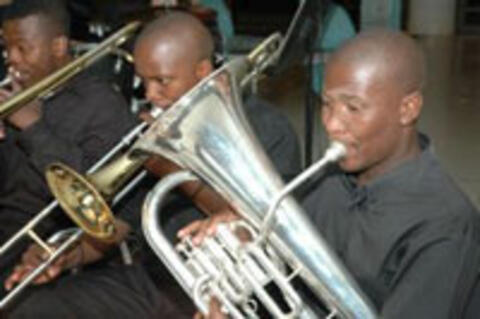
This programme is motivated by the belief that human exchange through music can be a powerful force for healing and change. So, JYOC brings diverse communities together through group music making with the hope of building bridges between children and young people through shared musical experiences. To that end, the JYOC has worked to develop strong, sustainable community partnerships in an effort to form musical structures with children from all communities.
Through this strategy, JYOC provides individual and group music training for young aspiring musicians. Children and youth from any community are welcome to audition for placement in one of eight graded orchestras, from a full symphonic orchestra to the jazz programme. The orchestras perform over 40 public concerts annually, attracting wide media coverage. Music of all genres is learned and performed, from jazz to classical. Expert individual instrumental tuition is offered from Grade 1 to Licentiate level.
The JYOC also mentors and trains student teachers, offering music skills development and instrument repair/making workshops, and creating employment opportunities for young adult musicians. "Through music, young people learn life-skills crucial for personal development and professional development." These skills-building activities focus on:
- Teaching: using individual and groups teaching methods;
- Musical: playing skills, interpretation, technique, ensemble playing, conducting skills, group facilitation, score-reading, transposition, examinations, and auditions;
- Administrative: basic computer skills, music programmes, library skills, managing scores, and organisational and management skills.
In an effort to expose economically poor children and youth to the art of making music, the programme provides scholarships for orchestra membership fees, individual lessons, transport, exam fees, instruments, music stands, orchestra clothing, files and tutors. Learners are from diverse communities in Johannesburg, Soweto, Alexandra, Evaton, and Sebokeng.
Participating young musicians have access to the JYOC's instrument library, allowing young people the opportunity to learn an instrument they may not be able to afford to buy. The music library hosts a collection of 850 compositions, which enables the different ensembles to compile their annual repertoire.
Children, Youth.
This programme is based on the belief that music can improve the lives of children and young people by:
- providing opportunities to interact and form friendships with peers from different backgrounds
- fostering exposure to and understanding of different cultures
- teaching self-control
- helping children learn to respect others
- serving as an outlet for creative expression
- facilitating a sense of personal and social responsibility
- involving them in meaningful, creative activities
- helping children and young people create purpose in their lives.
Anglo American Chairman's Fund; Bidvest; Carl & Emily Fuchs Foundation; Edgar Droste Trust; Gallo Music Group; National Arts Council; National Lottery Trust; Hermann Ohlthaver Trust; AECI; De Beers; DG Murray Trust; Investec; Business Arts South Africa; Rand Merchant Bank; Haggie Charitable Trust; Jim Joel Fund; The Mackenzie Foundation; RB Hagart Trust; The Robert Niven Trust; Mmino; Rupert Music Foundation; University of the Witwatersrand; SAMRO; Africalia; Ernest Oppenheimer Memorial Trust; and Ackerman Family Educational Trust.
Email from Susan Harrop-Allin to Soul Beat Africa on January 21 2005; JYOC website, January 22 2010; and email from Susan Rendall to The Communication Initiative on February 15 2010.
- Log in to post comments