
























Child rights action with informed and engaged societies

After nearly 28 years, The Communication Initiative (The CI) Global is entering a new chapter. 

Following a period of transition, the global website has been transferred to the University of the Witwatersrand (Wits) in South Africa, where it will be administered by the Social and Behaviour Change Communication Division. Wits' commitment to social change and justice makes it a trusted steward for The CI's legacy and future. 

On the transfer, co-founder Victoria Martin expressed her pleasure to see this work continue under Wits' leadership, knowing that co-founder Warren Feek (1953–2024) would have felt deep pride in The CI Global's Africa-led direction. 

As Wits, we honour the team and partners who sustained The CI for decades and look forward building from that strong base. This includes co-founders Warren Feek (1953-2024) and Victoria Martin as well as La Iniciativa de Comunicación (CILA), which continues independently at lainiciativadecomunicacion.com with links to The CI Global site. We are also eager to forge new partnerships and entertain new ideas as we consider how best to contribute to social and behaviour change in our rapidly evolving environment.

If you are joining the International Social and Behaviour Change Communication (SBCC) Summit in Panama, please join Wits and CILA on Monday, 22 June, to share your thoughts and suggestion for the relaunch of the Communication Initiative. We will be in Pacifica 5 from 12-1:25 for the Refuel, Reflect, and Renew Lunch Series: The Communication Initiative: celebrating a driving force for Communication for Social Change and the way forward. We will reflect on the legacy of Warren Feek and family in creating the Communication Initiative, consider the contributions of CI over the years and then turn our attention towards the future in this dynamic session. 

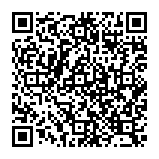
If you are unable to join us in Panama, we still want to hear from you. Please contribute your thoughts by following this link: https://redcap.link/CommunicationInitiative2026 or reaching out to ci_surveys@commint.com

You can also follow the QR Code:

 https://redcap.link/CommunicationInitiative2026

Time to read
1 minute
Read so far

The World Starts with Me: A multilevel evaluation of a comprehensive sex education programme targeting adolescents in Uganda

0 comments

Rijsdijk, L. E., A. E. Bos, et al. (2011). "The World Starts with Me: A multilevel evaluation of a comprehensive sex education programme targeting adolescents in Uganda." BMC Public Health 11.

Background: This paper evaluates the effect of the World Starts With Me (WSWM), a comprehensive sex education programme in secondary schools in Uganda. The aim of the present study was to assess the effects of WSWM on socio-cognitive determinants of safe sex behaviour (delay; condom use and non-coercive sex).

Methods. A survey was conducted both before and immediately after the intervention among students in intervention (N = 853) and comparison (N = 1011) groups. A mixed model repeated measures analysis was performed to assess the effectiveness of the WSWM programme on the main socio-cognitive determinants of safe sex behaviour at post-test. A similar post-hoc comparison was made between schools based on completeness and fidelity of implementation of WSWM.

Results: Significant positive effects of WSMW were found on beliefs regarding what could or could not prevent pregnancy, the perceived social norm towards delaying sexual intercourse, and the intention to delay sexual intercourse. Furthermore, significant positive effects of WSWM were found on attitudes, self-efficacy and intention towards condom use and on self-efficacy in dealing with sexual violence (pressure and force for unwanted sex). A reversed effect of intervention was found on knowledge scores relating to non-causes of HIV (petting, fondling and deep kissing). A follow-up comparison between intervention schools based on completeness of the programme implementation revealed that almost all significant positive effects disappeared for those schools that only implemented up to 7 out of 14 lessons. Another follow-up analysis on the basis of implementation fidelity showed that schools with a "partial" fidelity score yielded more significant positive effects than schools with a "full" fidelity of implementation score.

Conclusions: The study showed an intervention effect on a number of socio-cognitive determinants. However, the effectiveness of WSWM could be improved by giving more systematic attention to the context in which such a programme is to be implemented. Implications for the systematic development and implementation of school-based safe sex interventions in Uganda will be discussed