











































Vision, Values, and Voice: A Communications Toolkit
"In the social justice world we use communications to further issues, big ideas, specific policies, organizations, aspirations, fundraising needs, and so on. All of these efforts should support and complement each other. And they all should be a part of a larger strategy."
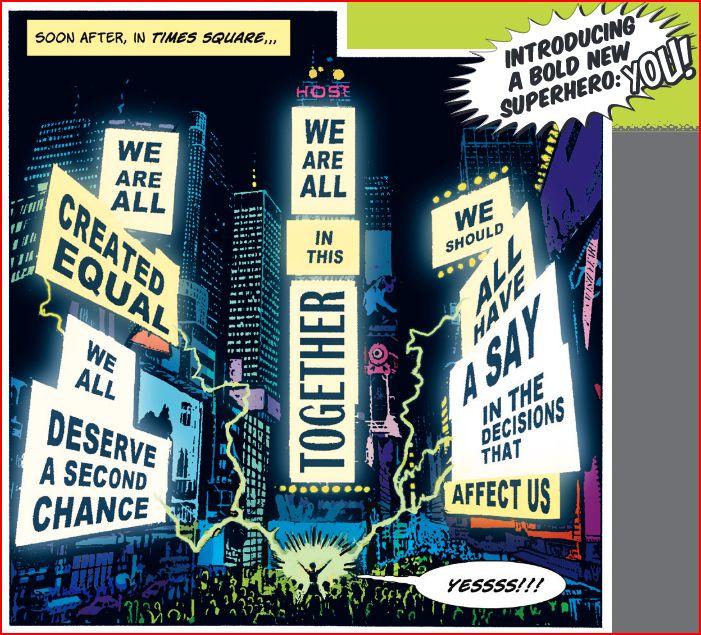
Integrating "social justice superhero Helvetika Bold", this practical toolkit offers social justice advocates tips and ideas to "unleash their communications superpowers", including guidance on forming a communications strategy, framing and messaging, and media outreach. In addition to big-picture thinking about communication strategies, readers will also find examples of a range of tactics, as well as concrete messaging guidance in the form of detachable "Opportunity Flashcards", the first set of an ongoing series of cards that provide what are intended to be short and easy-to-find advice and sample language on a range of social justice issues. "You can download and print each of these flashcards and use them the next time you have a media interview, need to write an opinion piece, or just need some ideas as you think through your messaging strategy." Each card provides a link to more in-depth information on the toolkit website. Here are just 2 examples:
- The card on reproductive justice reads "We all have a basic human right to the information and resources we need to make healthy decisions for ourselves, our families, and our communities about sexuality, reproduction, and gender. Our elected officials have a responsibility to shape policies that remove the barriers that stand in the way." Amongst the actionable suggestions: "Frame access to services, care, information, and programs as basic human rights. Supporting families and women means protecting their right to services and information. Protecting these rights means recognizing all families, ensuring freedom from discrimination, and protecting other rights, including housing, education, and health care."
- The card on economic opportunity for all describes a vision: "Our future depends on educational opportunity for all children in our community. Access to quality schools with well-trained teachers and adequate resources is crucial to helping kids succeed and contribute fully as adults." It describes a problem: "African-American boys face particularly high obstacles to educational opportunity. In our school systems today, black boys are disproportionately suspended and expelled, often for minor behavior that in-school approaches could address. Too often, these educational decisions are based on stereotypes and over-reaction instead of best practices and valuing the potential of all children." It is suggested that advocates: (i) clearly state the economic and political obstacles that working and middle-class families face in the context of inequality grows; (ii) talk about solutions and a positive role for government in making decisions with the participation of citizens; and (iii) call people to action.
This toolkit is a production of United States (US)-based The Opportunity Agenda, which, through active partnerships: synthesises and translates research on barriers to opportunity and corresponding solutions; uses communications and media to understand and influence public opinion; and identifies and advocates for policies that improve people's lives. According to the organisation, the guidance included in this toolkit "is rooted in a large body of opinion and media research; in established communications techniques; and in the shared experience of hundreds of advocates, policymakers, and communications strategists from around the country." The hope is that this toolkit continues to expand and grow as more examples, talking points, and research are added over time.
Table of Contents
- Introduction
- Big-Picture Thinking
- Using This Toolkit
- Strategy
- Making a Plan
- Audience Segmentation
- Communications Research
- Public Opinion
- Media
- Field Case Study: Perceptions and Media Coverage of Black Men and Boys
- Framing, Messaging, and Narrative
- The Opportunity Story
- Leading with Values
- Proposing Positive Solutions
- Evoking Familiar Themes
- Telling an Affirmative Story
- Telling Stories in a Broader Context
- Showing How We're All in it Together
- Building Shared Narratives
- Case Study: Immigration
- Messaging
- Creative Work
- Tips for Working with Creatives
- Introducting Helvetika Bold
- Media
- Working with Reporters
- Choosing Spokespeople
- Press Releases
- Writing an Op-ed
- Letters to the Editor
- Issues Flashcards
- Acknowledgements
58
Email from Brett Davidson to The Communication Initiative on December 3 2013; and Vision, Values, and Voice website, December 4 2013 and November 7 2014.
- Log in to post comments