










































Umoja Uaso Women's Group
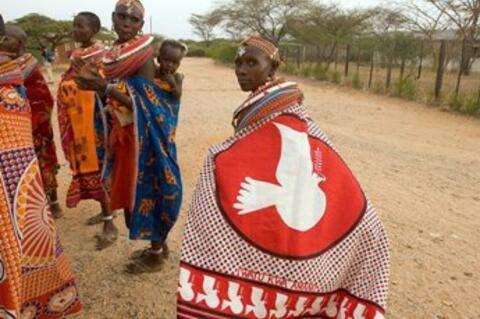
As an independent, women-run village, Umoja has declared itself a violence-against-women-free zone. With MADRE's support, the women of Umoja Village (which means "unity" in Swahili) are engaged in economic development projects in Umoja, including a livestock management programme and a community-based income generating project. The women of Umoja make and market traditional Samburu beadwork to help support their families. Profits are invested in a communal sickness and disability fund that is meant to enable the women to protect one another through hard times.
In the village, MADRE conducts human rights training on women's political participation, HIV/AIDS, female genital mutilation (FGM), and reproductive health and rights, with emphasis on combating domestic violence and ending child marriage. The women then engage in advocacy work, based on their experiences and this training. For example, they are organising to demand an anti-violence unit in the local police force and trainings for women police officers to address GBV.
MADRE supports the Umoja women's commitment to creating opportunities for their children by ensuring that they go to school. MADRE has provided teachers from Umoja and nearby communities with early-childhood education training; worked to improve building conditions of the Umoja nursery school; and delivered books, school supplies, educational materials, and toys to Umoja. MADRE also works to provide girls in the village with a new understanding of FGM, encouraging them to vow not to undergo the procedure (and supporting their mothers in choosing not to circumcise their own daughters).
Women, Girls, Rights, Economic Development, Education.
In the 1990s, dozens of Indigenous Samburu women were raped by British soldiers who were stationed for training on their territory. According to MADRE, Samburu women traditionally have no rights to own property and, as a result, are more vulnerable to poverty, GBV, and other human rights abuses. In fact, MADRE claims, most Samburu women live in extreme poverty, without healthcare, education, or life-saving information about HIV/AIDS.
Formed in 1983, MADRE is an international women's human rights organisation committed to working in partnership with women at the local, regional, and international levels who share their goals.
MADRE website, accessed October 26 2009. Photo credit: © Elizabeth Rappaport
- Log in to post comments