










































Tsangaya School Strategy
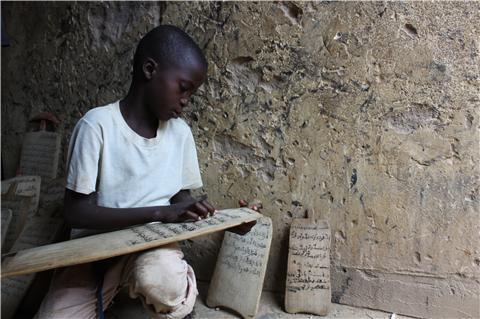
To address an upsurge of polio cases in Nigeria in August 2012, the United Nations Children's (UNICEF), with the support of the Centers for Diseases Control and Prevention (CDC), engaged in a collaboration with Koranic school teachers ("Tsangaya teachers"). At the start of the school year, the Tsangaya School Strategy is being piloted in 10 high-risk local government areas (LGAs) of Jigawa and Zamfara States in an effort to reduce the number of missed children during polio campaigns and help build community ownership of immunisation by reducing ongoing misconceptions and resistance to the oral polio vaccine (OPV).
The Tsangaya School Strategy involves the full engagement of religious schools, institutions, and leaders, and teachers, whom organisers say are critical community leaders and opinion-makers. The concept is that, for polio eradication to succeed, it is important to engage and ensure the full participation of all sectors of society and in particular the communities themselves.
Advocacy meetings and sensitisation workshops are being set up with high-level policymakers, as well as traditional and religious leaders, including the Association of Proprietors of Koranic Schools, in each of the participating LGAs. Tsangaya teachers will also be engaged during immunisation campaigns as part of the social mobilisation teams within their respective settlements for the purpose of convincing those households which may refuse immunisation.
This project is also engaging preachers and Imams, especially during Friday mosque sessions, to ensure that the community is fully aware of the importance of immunisation during every OPV campaign and the risks to children who are not immunised. Rallies with school children and other awareness activities will be arranged at the community level in each of the participating local governments.
Immunisation and Vaccines.
Jigawa and Zamfara are among the highest-risk states in Nigeria, where there is ongoing circulation of wild poliovirus (WPV). In 2012, Nigeria experienced an upsurge in the number of polio cases, with - as of August 2012 - a total of 69 cases of WPV in 11 states, compared to 31 in 6 states in 2011. Community resistance continues to be a key challenge in these states, where the proportion of refusals accounted for 23% of missed children in the July 2012 Immunisation Plus Days.
UNICEF and religious leaders/teachers, with CDC support.
"NEWSNOTE: Partnering with Religious Schools to Fight against Polio in Nigeria", sent from Fatratra Lalaina Andriamasinoro to The Communication Initiative on August 30 2012.
- Log in to post comments