










































Trial of Zinc for Childhood Diarrhoea in Guatemala
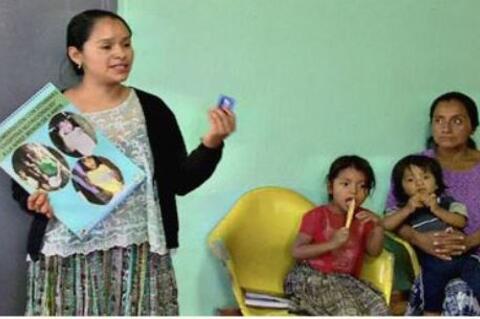
To demonstrate the effectiveness of zinc treatment in reducing child mortality, the Micronutrient Initiative (MI) piloted a programme in 2007 in three districts of Alta Verapaz, Guatemala, to add zinc as a mineral supplement recommended for children with diarrhoea. The trial was subsequently expanded in order to bring zinc treatment to the attention of the Guatemalan Ministry of Health (MoH) through reporting on the efficacy, the demand, and the strategies that created the demand.
MI's highest priorities in Guatemala for this project were to:
- "Implement a zinc supplementation program for children suffering from diarrhea and as prevention against stunting in the health districts in Alta Verapaz, a high disease burden province.
- Support and expand the coverage of Chispitas multiple micronutrient supplement to children under five years of age.
- Support the Government of Guatemala´s National Action Plan to Control Micronutrient Malnutrition, developed in 2007."
MI, through the United Nations Children's Fund (UNICEF), had already established a programme to provide the capsules Chispitas Nutricionales for Guatemala's routine vitamin A supplementation through community health services. The pilot built on the knowledge of health educators and clinic staff to use clinics as the locus of health information and provision of the zinc supplements.
The project included supplies, training, communications materials, monitoring, and supervision. Local staff was trained on how to teach caregivers on the proper use of the supplements. Health educators used the local languages and materials such as posters to explain that when children get sick with diarrhoea, they should continue to be fed, be given fluids and be treated using a combination of oral rehydration salts (ORS) and zinc tablets.
MI reported high rates of adherence and expansion of the project to 19 districts through developing project champions among district health officers using intensive early training. Demand among local parents was demonstrated when stockouts occurred. As reported by a health officer: "They were coming to the health centre and receiving the ORS....Then they would ask for the 'white pills', the zinc strips. They could really see the change the zinc tablets having on their children."
Here, the MI created a video to support their advocacy for zinc treatment:
Children, Health, Nutrition
According to the MI: "Although Guatemala's under-five mortality rate has been significantly reduced since 1990, the country still has the third-highest rate in the Americas at 41 per 1,000 live births. Approximately 49% of children under the age of five suffer from chronic malnutrition (68% among indigenous children), and 30% of pregnant women have nutritional deficits. Food insecurity has worsened in recent years, and pockets of populations with acute and severe malnutrition have reappeared.
Annually, up to 1.5 million children die of diarrhoeal disease. While the use of ORS to treat diarrhoea has been used for decades now, recent studies have shown that adding a 10-day course of zinc supplements can not only help children recover faster, it can even save their lives. Zinc promotes immunity, resistance to infection, and the growth and development of the nervous system. It also promotes the production of antibodies against intestinal pathogens. A course of zinc supplementation can increase children´s resistance to further episodes of diarrhoea and other disease for two to three months following supplementation."
UNICEF, Izumi Foundation, Government of Guatemala
The Micronutrient Initiative website, September 25 2014.