










































Time to read
less than1 minute
Theory of Change (TOC)
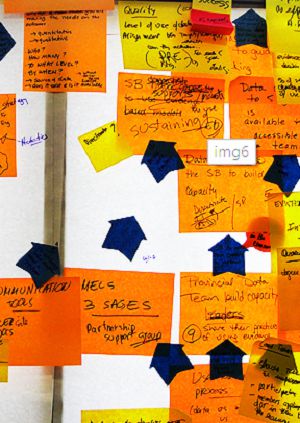
Theory of Change (TOC) maps out an initiative through five stages:
The TOC process hinges upon defining all of the necessary and sufficient conditions required to bring about a given long term outcome. TOC uses backwards mapping requiring planners to think in backwards steps from the long-term goal to the intermediate and then early-term changes that would be required to cause the ultimate desired change. This creates a set of connected outcomes known as a "pathway of change". A "pathway of change" graphically represents the change process as it is understood by the initiative planners and is the skeleton around which the other elements of the theory are developed.
click here for more information.
- Identifying long-term goals and the assumptions behind them.
- Backwards mapping and connecting the preconditions or requirements necessary to achieve that goal.
- Identifying the interventions that your initiative will perform to create your desired change.
- Developing indicators to measure your outcomes to assess the performance of your initiative.
- Writing a narrative to explain the logic of your initiative.
The TOC process hinges upon defining all of the necessary and sufficient conditions required to bring about a given long term outcome. TOC uses backwards mapping requiring planners to think in backwards steps from the long-term goal to the intermediate and then early-term changes that would be required to cause the ultimate desired change. This creates a set of connected outcomes known as a "pathway of change". A "pathway of change" graphically represents the change process as it is understood by the initiative planners and is the skeleton around which the other elements of the theory are developed.
click here for more information.
Source
Message from Bill Siemering, President, Developing Radio Partners, June 12 2005; and What is Theory of Change website, May 15 2015.
Comments

- Log in to post comments