










































Tchova Tchova, Juntos Vamos Mudar "Together Will Change", Mozambique, 2007-2010
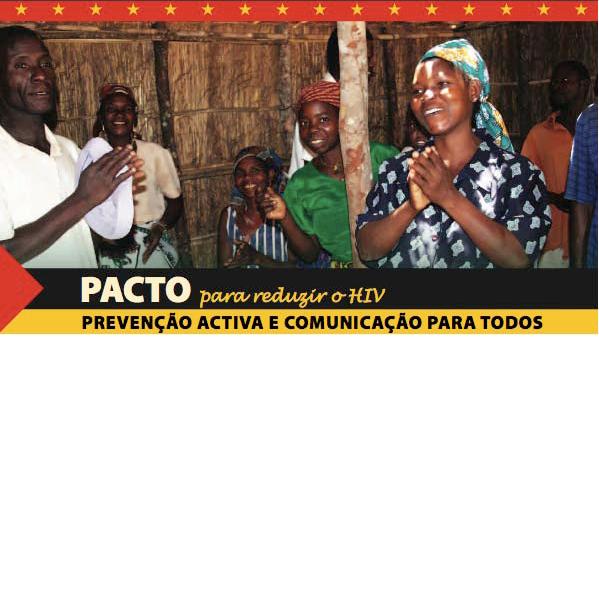
This evaluation report describes one component of Tchova Tchova, Juntos Vamos Mudar (Push, Push, Together We Are Going to Change), the Social and Behavioral Change Communication project for HIV/AIDS Prevention, Treatment and Capacity Building, which was a 3-year project (2007-2010) carried out by the Johns Hopkins Center for Communication Programs (JHUCCP) and partners in Mozambique. CCP implemented a coordinated communication approach to target one of the main drivers of the HIV/AIDS epidemic - multiple concurrent partnerships (MCP) - by tackling underlying social and gender factors. This evaluation explores an HIV/AIDS prevention gender tool - Tchova-Tchova Histórias de Vida Diálogos Comunitários (TTHV) - developed as part of the campaign. It features 10 video and written profiles of Mozambican "positive deviant" men, women and couples telling their stories of how they overcame gender, cultural, and social barriers with a specific focus on HIV treatment and prevention. It also includes: facilitator's and reference guides, a field implementation model, 15 champions' stories/mini posters, cue-to-action cards, TTHV advocacy, and a TT radio magazine. [Please see the "Related Summaries" section below for more information about the campaign and access to all of the TTHV tools themselves.]
As detailed here, formative research was conducted before this HIV/prevention gender tool and its components were developed. In brief, amongst the findings:
- Both men and women are starting to question, in small circles, gender-inequitable norms.
- There is evidence of disagreements regarding traditional and ideal gender and sexual roles.
- Women and men realise that there is high risk of HIV associated with MCP different modalities and practices, and MCP behaviour brings conflicts not only to the couple but to the extended family.
- There is an increasing social disapproval for MCP behaviours; they drain household resources and affect children and family well-being.
- Men and women aspire to engage in a lasting relationship where dialogue, harmony, and understanding prevail.
- There is fear to act differently due to criticism from peers and relatives.
- Women and men recognise the existence of women's rights and refer to the Family Law.
Several slides that follow illustrate social and behaviour change communication (SBCC) pathways for HIV prevention and treatment. The operational and implementation models are outlined. Also shared are details about the various SBCC activities carried out as part of this toolkit process. For example, facilitators were trained to identify "champions of change" among TTHV participants. They agreed to share their stories to inspire others through radio interviews, champions' stories' posters (e.g., "Respect and trust for his wife makes the husband support her desire for continuing education"), and pictures of their new lives. Results are also shared. For instance, in total, over an 18-month period, there were 32,679 participants in TTHV and 54 champions of change.
Outcome monitoring (17 focus group discussions held amongst 72 men and 70 women) revealed the following key reported changes: "valuing" of women, recognition of property rights of widows and their children, changing roles of men and women (e.g., recognising women's rights to work and study), better understanding of HIV/AIDS, more inclusion of people living with HIV (PLHV), and better relations and understanding with neighbours. However, it also exposed remaining communication challenges, such as, for example, the need to change positioning and meaning of condoms, the asymptomatic nature of HIV, and the fact that sex is still a taboo topic.
A post-only survey with a non-equivalent control group - 462 TTHV participants (men and women) and a group of 453 men and women who had not participated in TTHV but accepted to participate - was conducted July 19-29 2010. Results are shared in the form of various charts and graphs. Here are just a few examples:
- With regard to HIV partner communication: talking with partner about HIV/sexual behaviour in last 3 months - the number was 88% among intervention group vs. 72% among control group); intervention group respondents talked about significantly more HIV topics than did controls, and controls exposed to TT radio also talked about significantly more HIV topics than controls that were not exposed to TT radio.
- Intervention group respondents were significantly more likely to correctly identify ways to prevent HIV infection.
- Three times as many controls as intervention respondents reported having more than 1 sexual partner.
Note: this publication is no longer available online. Please use the contact details below to request a copy.
JHUCCP website on October 31 2011.