










































Taste of Life
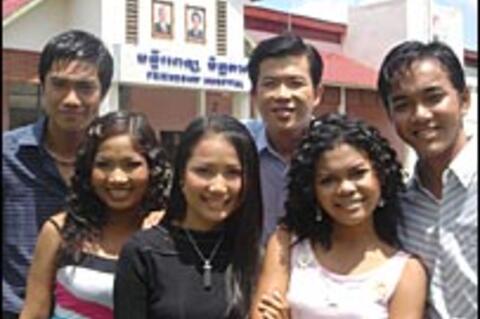
Taste of Life uses entertainment-education to engage viewers while delivering health messages. The stories in the series have also highlighted other social dilemmas considered important to Cambodians including domestic violence, road safety, landmine awareness, drug abuse, human trafficking, and child labour.
In order to be entertaining while educating viewers, the scriptwriters use a number of different dramatic strategies. The drama features a main plot about the health of one or two main best-loved characters running over the whole series. Sub-plots are told over two to five episodes, starting with a patient going to the hospital where they encounter the nursing student lead characters. Short scenes during which a doctor, nurse or nursing student gives information/medical advice to a patient or nursing students about health issues aims to provide factual information to the viewers, and scenes at the nursing school, using question and answer format between teacher and students about health issues are integrated into the ongoing drama.
Through this, the drama aims to both generate public debate on these issues that have traditionally been considered taboo in Cambodia, and provide accurate information while exploring underlying issues, such as the gender dynamics. The team’s researchers work with a network of health specialists from the World Health Organization, United Nations agencies, the Cambodian Ministry of Health and other government and other non-governmental organisations (NGOs) to ensure that the issues are all covered correctly.
Consultation with audience members is also conducted using community forums and a survey of panel members to ensure popularity and resonance among Cambodians. Every episode is tested with audiences using a "Rapid Feedback" methodology developed by the BBC World Service Trust’s Cambodian research team. This involves a regular audience panel in 20 different communities giving regular feedback on the show’s messages, characters and quality.
The drama is written and produced by young Cambodian script-writers, actors and production staff trained by BBC WST. An integral part of the project is the use and capacity building of people to help stimulate local production capacity and provide skills for Cambodia's young broadcast sector.
Taste of Life is supported by a photo-strip magazine funded by the United Nations Children's Fund (UNICEF). Each month, 66,000 copies are produced and distributed to the public by UNICEF and local NGOs.
HIV/AIDS, Sexual and Reproductive Health, Maternal and Child Health.
According to UNAIDS, Cambodia has the world's highest prevalence of HIV outside Africa and the Caribbean. By 2001, an estimated 170,000 adults carried the HIV virus, affecting 2.7% of those aged between 15-49. Of these, 46% are women, and some 30% of new transmissions were from husband to wife.
Research shows that the soap is not only enjoyed by the audience, but also that they understand and accept the wide range of messages integrated into the action. A mid-term study of 2,280 15-35 year old radio listeners and TV viewers (the HIV and AIDS project's intended audience) from 21 of Cambodia's 24 provinces found that 92% of respondents had seen or heard something about HIV and AIDS in the media in the past year. The study also discovered that combined use of TV and radio helped achieve this reach. Furthermore, Taste of Life was among the main HIV and AIDS media audiences recalled with 67% of TV viewers saying they had watched Taste of Life. Of this audience, nearly one-third said they felt the programme was about "Cambodian Life", an indication of the success of realistically portraying contemporary Khmer society.
BBC World Service Trust, Department for International Development (DFID), UNICEF.
BBC WST website; and Developments Magazine website, April 20 2006; and email from Victoria Hollertz to The Communication Initiative on July 27 2007.
- Log in to post comments