
























Child rights action with informed and engaged societies

After nearly 28 years, The Communication Initiative (The CI) Global is entering a new chapter. 

Following a period of transition, the global website has been transferred to the University of the Witwatersrand (Wits) in South Africa, where it will be administered by the Social and Behaviour Change Communication Division. Wits' commitment to social change and justice makes it a trusted steward for The CI's legacy and future. 

On the transfer, co-founder Victoria Martin expressed her pleasure to see this work continue under Wits' leadership, knowing that co-founder Warren Feek (1953–2024) would have felt deep pride in The CI Global's Africa-led direction. 

As Wits, we honour the team and partners who sustained The CI for decades and look forward building from that strong base. This includes co-founders Warren Feek (1953-2024) and Victoria Martin as well as La Iniciativa de Comunicación (CILA), which continues independently at lainiciativadecomunicacion.com with links to The CI Global site. We are also eager to forge new partnerships and entertain new ideas as we consider how best to contribute to social and behaviour change in our rapidly evolving environment.

If you are joining the International Social and Behaviour Change Communication (SBCC) Summit in Panama, please join Wits and CILA on Monday, 22 June, to share your thoughts and suggestion for the relaunch of the Communication Initiative. We will be in Pacifica 5 from 12-1:25 for the Refuel, Reflect, and Renew Lunch Series: The Communication Initiative: celebrating a driving force for Communication for Social Change and the way forward. We will reflect on the legacy of Warren Feek and family in creating the Communication Initiative, consider the contributions of CI over the years and then turn our attention towards the future in this dynamic session. 

If you are unable to join us in Panama, we still want to hear from you. Please contribute your thoughts by following this link: https://redcap.link/CommunicationInitiative2026 or reaching out to ci_surveys@commint.com

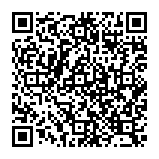
You can also follow the QR Code:

 https://redcap.link/CommunicationInitiative2026

Time to read
less than
1 minute
Read so far

Stigma as experienced by women accessing prevention of parent-to-child transmission of HIV services in Karnataka, India
0 comments

Rahangdale L, Banandur P, Sreenivas A, Turan JM, Washington R, Cohen CR. Stigma as experienced by women accessing prevention of parent-to-child transmission of HIV services in Karnataka, India. AIDS Care 2010; 22(7): 836-842.

BACKGROUND: In Karnataka, India only one-third of HIV-infected pregnant women received antiretroviral prophylaxis at delivery in 2007 through the state government's prevention of parent-to-child HIV transmission (PPTCT) program.

OBJECTIVE AND METHODS: The current qualitative study explored the role of HIV-associated stigma as a barrier to access PPTCT services in the rural northern Karnataka district of Bagalkot using in-depth interviews and focus group discussions with HIV-infected women who had participated in the PPTCT program, male and female family members, and HIV service providers. Participants discussed personal experiences, community perceptions of HIV, and decision-making related to accessing PPTCT services.

FINDINGS: They described stigma toward HIV-infected individuals from multiple sources: healthcare workers; community members; family; and self. Stigma-related behaviors were based on fears of HIV transmission through personal contact and moral judgment. Experience and/or fears of discrimination led pregnant women to avoid using PPTCT interventions. Government, cultural, and historical factors are described as the roots of much the stigma-related behavior in this setting. Based on these formative data, PPTCT program planners should consider further research and interventions aimed at diminishing institutional and interpersonal HIV-associated stigma experienced by pregnant women.

ERT included paper – was not in the scan results