










































Shifting Nutrition and Hygiene Behaviors in Sierra Leone Utilizing Trials of Improved Practices
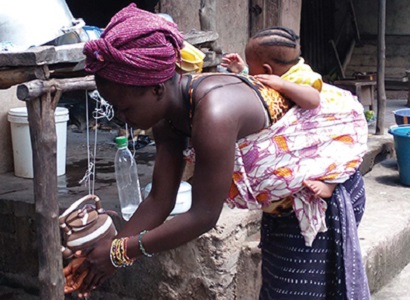
"The SPRING project, together with Helen Keller International (HKI), recently used Trials of Improved Practices (TIPs), a qualitative research methodology, to design social and behavior change communication (SBCC) efforts to improve the nutritional status of women who were pregnant or lactating and children under the age of 2 years old in Sierra Leone."
Due to increased anaemia and stunting among young children in Sierra Leone from 2010-2014, Strengthening Partnerships, Results, and Innovations in Nutrition Globally (SPRING) began a nutrition assessment in 2015 and, in 2016, started small scale approaches to improved nutrition to inform longer-term programming. Working through partner HKI, "SPRING tested several approaches for increasing the demand for and consumption of diverse, nutrient-rich foods [focusing on pumpkin and fish] at the household level as well as increasing the access to and quality of nutrition-sensitive agricultural services", especially for lactating mothers and young children 6-23 months, called 1,000 day households. "The team agreed to conduct three complementary formative research activities in the 1,000 days households: barrier analysis for fish and pumpkin consumption; TIPs for key critical WASH [water, sanitation, and hygiene] behaviors that impact behaviors and infant and young child feeding practices; and an adapted value chain analysis to identify barriers and enablers within the food system for access to fish and pumpkin."
TIPS was chosen because it pre-tests behaviours by engaging people in dialogue to provide an understanding of families' preferences and capabilities, as well as the barriers and enablers. "The specific objectives of the TIPs research were as follows:
- Test mothers' responses to recommendations for improving infant and young child nutrition, WASH and other desired practices and determine which ones are most feasible and acceptable.
- Investigate the constraints on mothers' willingness to change feeding patterns as well as hygiene and other daily routines and their motivations for trying and sustaining new practices."
The menu of evidence-based behavioral options included handwashing with soap at critical times; cleaning the home/play environment, including safe disposal of faeces; and appropriate complementary feeding of children 6-23 months. Three household visits by a staff of trained enumerators with counseling cards to illustrate the behaviours followed these steps:
- "interviewed, observed, and understood the household’s context and current behaviors;
- counseled and negotiated one to two new specific behaviors that the household was willing to try;
- followed-up to understand which behaviors households were able and not able to do and to learn about the most important barriers and enablers to the suggested behaviors. The third visit also served to solicit suggestions from the participants about how to modify and promote the behaviors."
Twenty-three households of various income levels, sizes, religions, and distances from a market participated in 3 visits over 2 and half weeks. The study led to a list of ideal practices that were annotated based upon findings:
- Feed Pumpkin to Children 6-23 Months at Least Two Times a Week - This was modified, due to seasonality of the food, to suggest colourful fruits and vegetables (consuming vitamin-A rich foods such as pumpkin, mango, and papaya). Those who obtained pumpkin reported better child health; others struggled with cost and availability.
- Handwashing with Soap and Running Water at Five Critical Moments (such as before preparing food and after defaecation) - Counseling and demonstrating installing "tippy taps" (made from one-liter bottles) for handwashing stations increased the practice. Suggestions of making soap or sharing the cost were not popular. The station construction involved males and increased behaviour change, as did making liquid soap to make soap last longer.
- Keep Children Away from Feces - Interviewers counseled families on keeping children away from faeces through proper disposal, building a fenced play area (at home or for the community), putting the child on a cloth or mat instead of the ground, using a cloth napkin (diaper) and cleaning the child, and teaching use of a "poo" or "potty". Households instead adopted frequent sweeping of yards and play areas.
From the responses and observations, the research team identified specific SBCC actions to address each determinant based on TIPs findings, including drafting messages to capture or address the motivators or deterrents. The findings resulted in practices that "will be promoted and the instructions and key messages that will be employed to motivate adoption on a wider scale."
SPRING website, February 2 2018. Image credit: SPRING