











































Sema Kenya on traditions and taboos
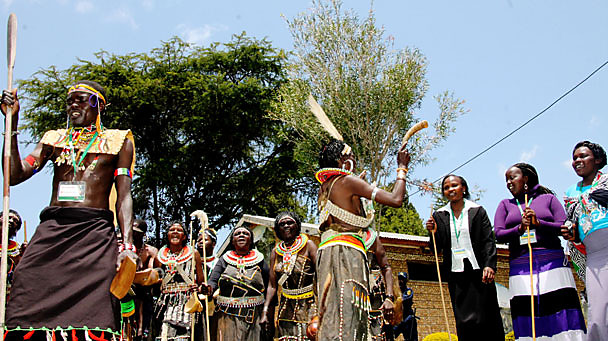
Author: Jackie Christie, September 19 2013 The latest episode of our TV and radio debate programme Sema Kenya came from the small town of Kapenguria in West Pokot, a county rich in culture and tradition. It was the perfect venue for a programme that explored how culture can both enrich and undermine development.
Before the cameras started rolling, the audience, panel and crew were entertained by a wonderful dance group. Their brilliant singing itself was a living embodiment of a tradition that, as an audience member said later in the show, "should never be abandoned."
The subject of their song, however, was a practice that was made illegal in Kenya in 2011: FGM/C - female genital mutilation/cutting.
Rethinking traditions
Through a show of hands, it was clear the audience knew that FGM/C was illegal. But approximately 75% of girls in the county are understood to be affected and, in certain areas, it continues to be a social norm.
Pushing such sensitive issues higher up the public agenda and increasing knowledge and awareness is, of course, at the heart of BBC Media Action's work. And the audience in this episode took full advantage of the opportunity to debate the practice’s effects and how it could be tackled within communities.
One audience member spoke about its impact on the education of girls in the county.
"As we speak, places like central and North Pokot are still continuing with it. So even if our girls go to school in large numbers, when they reach standard 6 or 5 and they are circumcised, they feel like adults. They [then] refuse to go to school."
Sema Kenya's presenter Joseph Warangu also directly asked one youth leader, Richard Ruto, if young men are prepared to challenge the stigma around this issue, asking him if he, personally, would marry a woman who had not been circumcised.
Richard replied, "I will accept. I have also been educating young people like me to do the same."
"So are they accepting?" Joseph continued. "They are," Richard said, before adding that social norms change community by community. "But it depends on where they are - young men in the interior [of the country] still believe it helps."
Government role
One of the guests on the programme, former international long-distance runner Tegla Lorupe, also stressed how important it is to gain the support of men: "One problem we have is that we forget to educate the men. We only speak about the women," he said.
"We should educate the boys when they are still in school so that when they go home they can tell the girls that circumcision will not help them at all," he advised. "I would like to urge the senator and the governor to put money aside and get some elders to go to schools and talk to the boys."
"We have made it a very high priority," Governor Kachapin said. "We know that these outdated traditions will take us behind as a county. We also want our girls to raise good families. We have set aside money that will enable organisations, women and all leaders to have a chance to educate the girls and their parents. And, as Tegla said, we should educate the boys too."
Judging from just this one episode of Sema Kenya, the people of West Pokot will be keen to hold him to his words.
Click here to access this BBC Media Action blog and related links on their work in Kenya.
Image credit: BBC Media Action
Contact:
BBC Media Action
Broadcasting House, Portland Place
London
W1A 1AA
United Kingdom (UK)
Phone: 44 (0) 20 8008 0001
Fax: 44 (0) 20 8008 5970
Media.action@bbc.co.uk
- Log in to post comments