











































Sankofa Center for African Dance and Culture
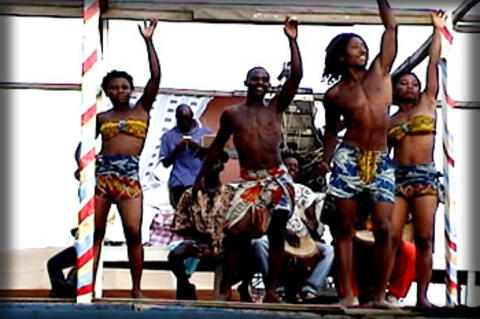
SCADC aims to use the dance and music of Africa's past to foster health and understanding of HIV/AIDS among members of the current generation. The organisation's programming is two-fold: touring dance-dramas, which seek to educate marginalised villagers with little access to resources and information, and after-school programmes that engage youth between the ages of 13 and 19.
SCADC draws on the talents of international volunteers to merge Western art forms with traditional African dance, music, and theatre into performances that are designed to break down the silence, misinformation, and stigma that may exacerbate the spread of HIV/AIDS in Africa. Organisers describe their overall strategy as follows: "Dance/dramas provide a great way to open up dialogue about HIV/AIDS, portraying issues such as safer-sex practices, ways of transmitting HIV/AIDS, tolerance of persons living with HIV/AIDS, enhancement of women's role in sexual health, and exposing the social and economic factors involved in daily Ghanaian life." After each performance, facts about HIV/AIDS are broken down into easily digestible material. Following formal instruction, the students are encouraged to engage in interactive games to reinforce the day's lesson. Volunteers also conduct educational seminars ("HIV/AIDS 101") that address proper condom use and the importance of HIV testing.
Although the participation of volunteers is key, village youth also get engaged in various ways. First, students are asked to get involved in open discussions about HIV/AIDS in the seminars described above. Also, they not only watch the performances but often create choreography in an effort to continue to educate others about HIV/AIDS. This process is fostered by the volunteers, who facilitate workshops, games, and dance lessons to encourage interested students to become peer health educators who counsel others about HIV/AIDS and other sexually transmitted infections (STIs).
The artistic aspect of the programme is only one part of SCADC's work. Based on a belief that providing health information (through drama and dance) is insufficient, the organisation partners with local area clinics that provide free testing for HIV/AIDS, prescription medicines to fight opportunistic infections, counselling, and support services. The premise is that the combination of education and health services is essential for behaviour change.
Please click here to view a short documentary that illustrates Sankofa's work, and the communication strategies that inform it.
HIV/AIDS, Youth.
"Sankofa" refers to an ancient African proverb characterised by a bird looking back on its past. This proverb asks people to revisit their history in order to correct the mistakes that may affect their future.
University of California at Los Angeles (UCLA), Berkeley.
- Log in to post comments