










































The Role of Sanitation in Girl Child Education
Image
SummaryText
This documentary film explores the importance of clean, hygienic toilets and safe drinking water in Indian schools to ensure that girls are empowered to exercise their right to education. It has been said that India is the open defaecation capital of the world, where people have more mobile phones than toilets. In the film, the non-profit organisation HEEALS (Health Education Environment and Livelihood Society) communicates about and advocates for the need to address the fact that only 44% of schools in India have separate toilets for girls, and some schools only have a single toilet that is so unclean - and that carries not only the risk of disease but the risk of sexual harassment - that girls opt to drop out of school. This is particularly the case with adolescent girls, who may lack access to a vending machine at school with sanitary napkins during menstruation. (According to HEEALS, there is a lack of knowledge among the girl community in rural areas about basic menstrual hygiene; the organisation is working to address this and the other issues highlighted in the film through its "Sanitation, Water, Girl Education & Menstrual Hygiene Awareness Project".)
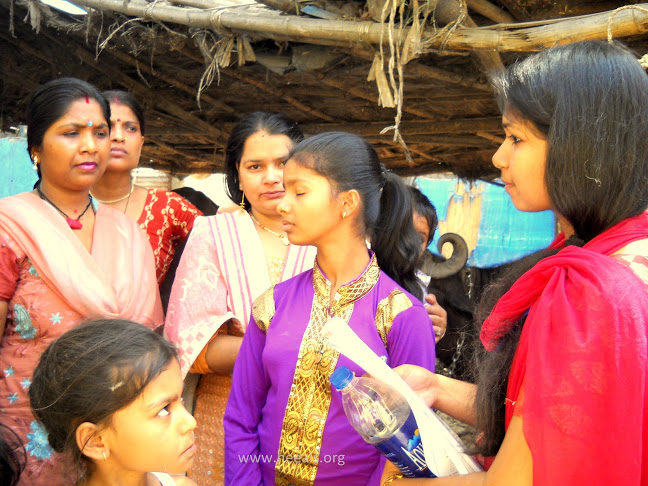
The 10-minute, 21-second documentary features some quotations from organisations like the United Nations Children's Fund (UNICEF) with data about the problem. Also, it includes the voices of many girls and women talking about their experiences at school (as students and teachers) with regard to sanitation and hygiene. Many discuss the importance of hygiene in the context of girls' education; for example, teachers can spark behaviour change about sanitation if there are clean toilets, and a clean environment heightens awareness about sanitation amongst women and girls - in turn possibly leading them to push for change in their own neighbourhood and later, when they have children of their own. Suggestions include advocacy: demand that school authorities provide clean and separate toilets. There are also examples included of the work that HEEALS is undertaking to create awareness among students about why hygiene is so crucial; several events show girls speaking out in public fora about the importance of education for girls.
Click here to learn more about HEEALS.
The 10-minute, 21-second documentary features some quotations from organisations like the United Nations Children's Fund (UNICEF) with data about the problem. Also, it includes the voices of many girls and women talking about their experiences at school (as students and teachers) with regard to sanitation and hygiene. Many discuss the importance of hygiene in the context of girls' education; for example, teachers can spark behaviour change about sanitation if there are clean toilets, and a clean environment heightens awareness about sanitation amongst women and girls - in turn possibly leading them to push for change in their own neighbourhood and later, when they have children of their own. Suggestions include advocacy: demand that school authorities provide clean and separate toilets. There are also examples included of the work that HEEALS is undertaking to create awareness among students about why hygiene is so crucial; several events show girls speaking out in public fora about the importance of education for girls.
Click here to learn more about HEEALS.
Publication Date
Source
Emails from Chinu Vats to The Communication Initiative on February 12 2013 and February 21 2013; and HEEALS website, February 20 2013.
- Log in to post comments