










































Reported National Level Stock-Outs of Home-Based Records - A Quiet Problem for Immunization Programmes That Needs Attention
Brown Consulting Group International (Brown); World Health Organization, or WHO (Gacic-Dobo)
"Home-based records (HBRs) are an important tool for recording and communicating within primary healthcare service delivery. Unfortunately, HBRs are currently unable to fulfil their intended purpose in many communities either because the HBR is not functionally well-designed to serve its objectives, not made available, not fully adopted and/or not appropriately utilized by caregivers and/or health workers."
This report describes the occurrence of nationally reported HBR stock-outs and HBR financing patterns during 2014 and 2015 across 195 countries reporting immunisation system performance data to the WHO and United Nations Children's Fund (UNICEF). A stock-out means that the HBR was not printed in sufficient quantities for all newborns and their caregivers to receive a document they are due as part of national promises made in the Convention on the Rights of the Child (Articles 3 and 24). The key argument here is that "[t]he occurrence of HBR stock-outs remains a concern, particularly in Gavi-eligible countries introducing new vaccines where dedicated funding is received for revising and printing new recording tools, including HBRs. Additional attention is needed to understand the root causes for stock-outs and identify solutions to ensure a well-designed, durable HBR is readily available in the right quantity, in the right place at the right time in all countries."
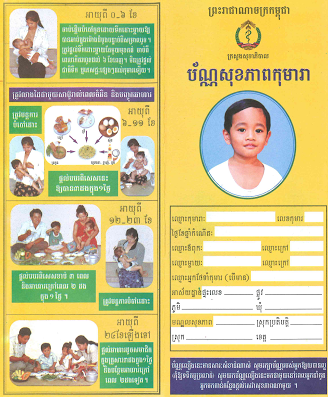
HBRs are printed records used to record immunisation and other primary care services received (including the date of service) that are intended to encourage a partnership in the care of the child between the healthcare worker and the caregiver. Within primary healthcare service delivery, HBRs are a recording tool and information resource (i) to enhance health professionals' ability to make appropriate clinical decisions (e.g., which vaccinations have been received already and which vaccinations remain outstanding) and improve continuity of care across providers in the absence of other health records, (ii) to empower individuals or their caregivers as a vehicle for health education about which primary healthcare services have been received and those that remain outstanding, and (iii) to support public health monitoring efforts (e.g., through population-based vaccination coverage surveys).
Since 1998, WHO and UNICEF have jointly collected national immunisation system performance data using a standardised data collection form, the Joint Reporting Form on Immunization (JRF). The information collected in the JRF serves as a resource for tracking implementation of the Global Vaccine Action Plan (GVAP), endorsed by all WHO Member States at the World Health Assembly (WHA) in 2012, and the Regional Vaccine Action Plans (RVAPs). The nationally reported immunisation performance data are then made publicly available on the WHO website and updated on the website twice per year. A total of 19 countries reported national-level HBR stock-outs during 2014, and 22 countries reported HBR stock-outs during 2015 (see Table 1). Eleven countries reported such stock-outs during both 2014 and 2015. Information on HBR stock-outs was either not available or not reported by 66 countries (19 were Gavi-eligible) for 2014 and 53 (11 were Gavi-eligible) countries for 2015. According to the authors, this absence of information may serve as a signal of more broad problems in a country's recording and reporting system. They also say that the presence of HBR stock-outs observed for Gavi-eligible countries introducing new vaccines into the routine immunisation schedule (e.g., pneumococcal conjugate vaccine (PCV) or rotavirus vaccine) is particularly troubling given that these countries receive dedicated funding for revising and printing new recording tools, including HBRs, as part of the introduction grant. "In most instances, proper prior planning and communication with relevant departments involved in the HBR and recording tool update, printing and distribution continuum in advance of the new vaccine introduction are the recommended solution."
Our understanding of the root causes behind HBR stock-outs is currently insufficient, the authors opine. They point to prior work that has explored contributing factors, such as simple neglect of the records as a priority against a backdrop of suboptimal tracking systems for durable commodities. Further operational research is needed, they say, to understand the viability and potential (dis)advantages of bundling HBRs with other vaccination delivery commodities as mechanism to reduce the risk of such stock-outs. But, this is only one possible solution of many that might be explored. "National immunization programmes, and the development partners supporting them, are encouraged to include monitoring HBR availability and adoption among their programme indicators, to raise their awareness of the challenges surrounding HBRs in their context and to...explor[e] sustainable solutions to correct deficiencies moving forward."
World Journal of Vaccines, 2017, 7, 1-10 - sourced from: Home-Based Records page on the World Health Organization (WHO) website, February 1 2017. Image credit: Home-based Record Repository
- Log in to post comments