










































The "Radijojo Saga": A Global Children's Media Project from a "Mythodological" Perspective
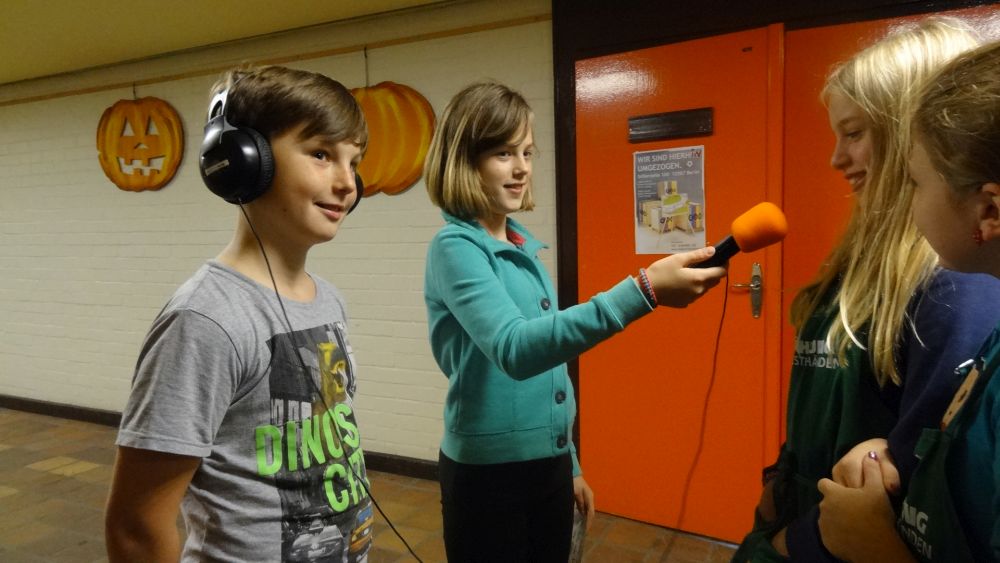
This paper combines reflection on the work of the Radijojo World Children's Radio Network with the cross-cultural approach of Joseph Campbell, whose concept of the "myth" describes patterns that may help to understand the psychological, ethical, and sociological motivations of development activists and to find common structures in their operations. Author and head of Radiojojo, Thomas Röhlinger uses Campbell's approach to mythology as an evaluation tool to recount and reassess the work of the children's radio project using what he calls "mythodology". (For more on Radiojojo, please see Related Summaries, below.)
The work of Radijojo, as interpreted through Campbell's "mythodology":
- The "hero": He (or she) is called by an adventure to find a certain "elixir" to will help his (often suffering) community. To find this "elixir“, he has to leave his safe home world, often against his will. He has to learn new skills, overcome challenges, and make sacrifices. The image of heroism is one that the author applies to the groups who participate in Radiojojo.
- The "messenger”: Because "the media was messenger - and the message was negative" in Children's media in Germany, Röhlinger sought to develop "participative media for kids by kids."
- The "call of the adventure": A seminar on radio management attended by Röhlinger coincided with his understanding of the need to create a radio project and move it forward.
- The "wise people": Several types of mentors, including the children themselves, have been key to the project. In particular, Röhlinger points to the children: "That it is possible to create a culture of Peace and crosscultural understanding anywhere in the world; if one goes to the local grassroots level, starts as early in age as possible and creates safe space for the children's creativity....This in turn pushes us to change our approaches....Today, more and more is done by children themselves; whilst it is the challenge for us adults to facilitate the safe spaces both in reality and in the digital world that the children can use to present and share their views, talents and demands."
- The "enemies": Those with economic and political power, as is pointed out in the paper, may be "indifferent or nationally oriented decision makers who do not support or actively hinder intercultural education, exchange between children across borders and media based global learning. Here, we use our presentations on local, national and international level, e.g. education and media conferences and award ceremonies, but also lobby talks with decision makers."
- The "tricksters”: These are persons (or other beings) that pretend to be somebody else, such as "corporate responsibility" managers who attempt to "use our kids media channel as a 'trojan horse' to sell advertising to the children."
- The "gatekeepers": "These gatekeepers often symbolize inner psychological aspects of the hero; like fear, greed, fury or depression; but they can also be 'real' gatekeepers and barriers on the way to fulfil the organisation's mission..."
- The "other world": For example, as part of Global Green Kids (see Related Summaries below), children in public schools in Germany and India work together in a parallel on- week project on environmental issues, with a focus on agriculture. They meet each other via video conference, thus creating personal relations for future partnerships.
- "[T]he 'elixir'...to improve the situation of his community": For example, a poem created by a boy in a refugee camp in Malawi turned into a song by children in Berlin, then shared the United Nations High Commissioner for Refugees. "The 'intercontinental' song becomes part of a global project uniting kids worldwide." Some of Radijojo's methodologies include: trainings held for children (e.g., as young media activists) and for educators - the network in partners in more than 100 countries (who then produce and share content with their local children's groups and participate in shared actions such as international video conferences), etc.
- The "return to the community": finding political support to bolster the work of organisations working for children worldwide.
He concludes with several reflections, such as his belief that this mythodological approach could potentially be transferable to organisations working for development, education, etc. - especially as a tool for (self-)reflection and qualitative evaluation apart from "number crunching" and as a means for motivation and team building, "for better and more sustainable results in the work for social good."
Email from Thomas Röhlinger to The Communication Initiative on January 10 2015. Image credit: Radijojo
- Log in to post comments