











































Protecting Children in Cyberspace in Kenya: Whose Responsibility Is It?
University of Nairobi Law School; Innovative Lawyering and Sihanya Mentoring
"Recent studies in Kenya indicate that children dedicate a good amount of time on the Internet, using it for different levels of social networking, entertainment and education."
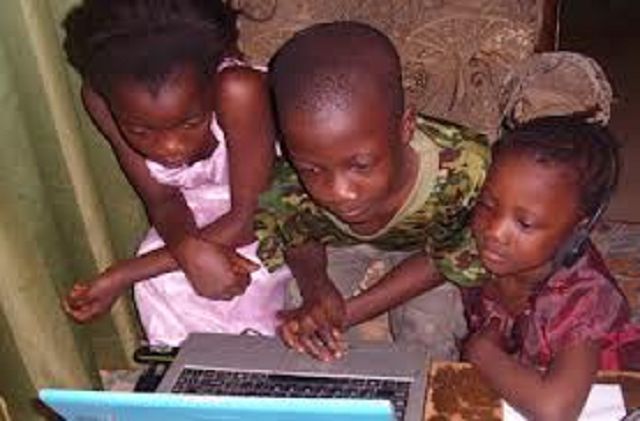
This report shares the presentations and conversations from a meeting exploring the role of cyberspace in the lives, including the educational lives, of children under age 18 in Kenya. As defined here, "cyberspace" stands for the global network of interdependent information technology infrastructures, telecommunication networks, and computer processing systems. It is noted here that, "while cyberspace is lauded for broadening the frontiers of knowledge and education, including social and cultural interaction", there are risks and dangers for children, including pornography, violence, child trafficking, cyber bullying, fraud, negative commercial advertising, and online gaming addiction. It is in this context that the Communications Commission of Kenya (CCK), in its role as a converged regulator of information and communication in Kenya, organised a stakeholders' workshop for the participants to evaluate their roles individually and collectively in child online protection (COP).
The workshop was organised around 9 sessions over 2 days. On the first day, the participants discussed the global perspectives of COP and assessed the policy, legal, and regulatory framework at the national and international level. Participants recognised that there was need to amend legislation to provide for the specific crimes against children committed in cyberspace. The participants were exposed to recent exploratory research on COP in Kenya. The second day focused on discussion of children's experiences in cyberspace and explored the efforts and challenges in law enforcement and reporting mechanisms on COP. It was agreed that relevant enforcement agencies and stakeholders have limited capacity and cannot sufficiently engage in enforcement and reporting on COP. This required responses such as mainstreaming of COP in school curricula.
The workshop also explored the efforts of counsellors offering professional help as part of COP. The participants discussed the different technical standards, tools, and measures that could be used by the industry to protect children in cyberspace, e.g., blocking and filters. The workshop identified best practices that could inform COP efforts in Kenya. At the end of the workshop, the participants affirmed that the responsibility for COP rests with all stakeholders, including government agencies, children, parents, guardians, and schools. Other crucial players include professional caregivers (e.g. counsellors), service providers such as internet service providers, connectivity providers, manufacturers of internet-related devices such as computers and mobile phones, and social institutions like religious societies, among others. CCK and the National Council for Children Services (NCCS) plan to take the lead.
Participants called for an integrated, multi-stakeholder approach towards COP, including policy and legislative reform and enhancement of law enforcement and reporting mechanisms. Other measures include increased capacity-building and awareness campaigns designed to reach stakeholders and the public, as well as concerted industry and market efforts at creating technical tools and standards for COP. Additional recommendations that were made relate to the need for more research and data collection at the national and local levels to augment other efforts with empirical evidence. As reported here, it was most strongly expressed that there is need for social strategies involving the sensitisation of parents, guardians, schools, and the public at large to take a lead role in protecting children from harmful elements of cyberspace.
"It is hoped that the findings of this workshop will provide the necessary platform for a more concerted effort towards Child Online Protection in Kenya."
Innovative Lawyering website, August 8 2013. Image credit: Kokumo Goodie for BiztechAfrica
- Log in to post comments