











































Prevalence and Risk of Violence against Children with Disabilities: A Systematic Review and Meta-Analysis of Observational Studies
Centre for Public Health, Liverpool, United Kingdom (UK) (Jones, Bellis, Wood, Hughes, McCoy, Eckley, Bates, Officer), John Moores University, Liverpool, UK (Mikton, Shakespeare)
"Both children and adults with disabilities are at much higher risk of violence than their non-disabled peers, [according to two] studies [that] confirm the magnitude of the problem and they provide the strongest available evidence on violence against children and adults with disabilities." World Health Organization (WHO)
This review, published in the Lancet, sought to establish a reliable estimate of the scale of the problem of violence against children with disabilities. A systematic review and meta-analysis to synthesise evidence was chosen as the first step in the development of effective prevention programmes. This review and its companion review on adults with disabilities were carried out by Liverpool John Moores University’s Centre for Public Health, WHO Collaborating Centre for Violence Prevention, and WHO’s Department of Violence and Injury Prevention and Disability.
Researchers searched "12 electronic databases to identify cross-sectional, case-control, or cohort studies reported between Jan 1, 1990, and Aug 17, 2010....Reports of 16 studies provided data suitable for meta-analysis of prevalence and 11 for risk."
The review found that, overall, children with disabilities are almost four times more likely to experience violence than non-disabled children. The review indicated that children with disabilities are 3.7 times more likely than non-disabled children to be victims of any sort of violence, including physical violence and sexual violence. Children with mental or intellectual impairments appear to be among the most vulnerable, with 4.6 times the risk of sexual violence than their non-disabled peers.
"By establishment of the prevalence and risk of violence against children with disabilities in this systematic review, we address the initial step in the public health approach to prevention of violence against children with disabilities. The results suggest that up to a quarter of children with disabilities will experience violence within their lifetimes and confirm that children with disabilities are three to four times more likely to be victims of violence than are their peers without disabilities...Interventions that have been shown to be effective for prevention of violence and mitigating its consequences in children without disabilities should be assessed in children with disabilities as a matter of priority."
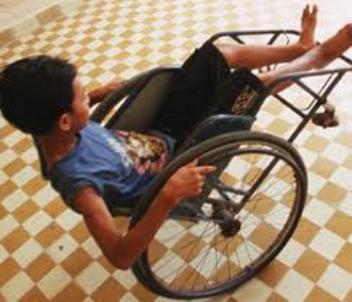
WHO website, October 3 2012. Image Credit: United Nations
- Log in to post comments