










































Prenatal Vaccination Education Intervention Improves Both the Mothers' Knowledge and Children's Vaccination Coverage: Evidence from Randomized Controlled Trial from Eastern China
Zhejiang Provincial Center for Disease Control and Prevention
"Vaccination education in...pregnant women can effectively improve the knowledge regarding immunization and increase the coverage, the completeness and the timeliness of childhood vaccination."
Previous studies have indicated that early intervention programmes such as prenatal vaccination education could improve mothers' knowledge, attitude, and practice (KAP) regarding immunisation. There is also evidence that a face-to-face education session may ensure a better understanding and reception of information on practice, with a positive impact on childhood immunisation. Yet there are very few data available indicating the effectiveness of vaccination education interventions during the prenatal period in China. Thus, this randomised controlled trial (RCT) was conducted to assess the effectiveness of a vaccination education intervention implemented in the Zhejiang province, specifically with regard to mothers' knowledge of vaccination and to coverage, completeness, and timeliness of vaccination of their infants.
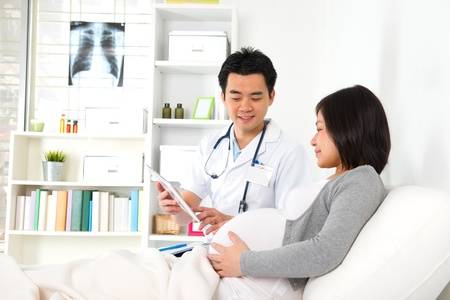
A total of 851 post-survey questionnaires were returned, 418 from participants in the intervention group and 433 from participants in the control group. One finding from the baseline survey was that the most common channel of current/actual vaccination information was family, colleagues, or friends (11.3%), while their desired channels included doctors' advice from the health personnel of the immunisation clinics (28.0%). After the baseline survey, every participant in the intervention group was administrated a 15-minute-long, one-on-one interactive vaccination education session, which was prepared by the researchers from Zhejiang provincial centre for disease control. The session was delivered through physicians of selected hospitals who played the role of the educator. The education session included issues on the importance of vaccination, the schedule of vaccination, immunisation policy in China, immunisation doses, adverse reactions, and contradictions. The validity and understanding of the session were assessed by the vaccination staff, physicians, and pregnant women from each selected district, and modifications were made to adapt the local situations. The participants in the control group did not receive any educational instructions.
The post-intervention survey was mailed to all of the participants in both the intervention group and the control group using the same questionnaire as for the baseline survey, 3 months after the baseline survey. The vaccination status of the child whose mother finished the post- survey was extracted at 12 months of age from Zhejiang provincial immunisation information system (ZJIIS). The primary outcome was the difference of the coverage of national immunisation programme (NIP) vaccines scheduled ≤ 12 months of age between the intervention and the control groups, including 1 dose of bacillus calmette-guerin (BCG) vaccine, 3 doses of hepatitis B (HepB) vaccine, 3 doses of oral polio vaccine (OPV), 3 doses of diphtheria-tetanus-pertussis (DTP), 1 dose of measles-rubella (MR), and 1 dose of Japanese encephalitis vaccine (JEV). Vaccination coverage was defined as the proportion of children who had received the vaccine of interest, regardless of the age at which the vaccine was given.
The coverage of fully vaccination scheduled ≤ 12 months of age was significantly higher in the intervention group than that in the control group (90.0% vs. 82.9%). Also, the timeliness of fully vaccination scheduled ≤ 12 months of age was significantly higher in the intervention group than that in the control group (51.9% vs. 33.0%).
Significant improvements of vaccination knowledge between the pre- and the post- surveys in the intervention group were observed. For instance, the post-survey indicated a significant difference regarding knowing all NIP vaccines between the intervention and the control groups (16.7% vs. 6.7%), a significant difference of knowing the free vaccination policy for NIP vaccines (84.2% vs. 66.5%), and a higher proportion of participants who knew the location and time of the immunisation registry or the location for vaccination or the vaccination school-entry requirement policy in the intervention group. However, the changes of the vaccine score and the vaccination policy score between the pre- and the post- surveys in the control group were not significant.
After controlling for demographics, the researchers found that the pregnant women given vaccination education were more likely to get a higher score of knowledge, with an odds ratio (OR) of 5.2 (95% confidence interval (CI): 2.6-8.8). Children were more likely to complete the full series of vaccination whose mothers were in the intervention group, with an OR of 3.4 (95%CI: 2.1-4.8). Furthermore, children were more likely to complete the full series of vaccination in a timely manner in the intervention group, with an OR of 2.3 (95%CI: 1.6-3.5).
Reflecting on the findings, the researchers suggest that prenatal vaccination education has more advantages than postnatal education would. First, every pregnant woman needs to receive 12-16 antenatal care (ANC) visits in Zhejiang province, which makes the vaccination education practice feasible; second, the coverage of ANC is over 90% in China, which ensures that prenatal vaccination education can reach the majority of pregnant women; and third, the prenatal care setting offers an opportunity to educate the prospective parents before the initiation of immunisation series of their infants. Thus, the researchers suggest that vaccination education should be started during the pregnancy period to assist parental decision-making toward vaccination.
To facilitate such education, the researchers recommend that strong partnerships be established with obstetricians or midwives to make collaborative efforts to improve mothers' immunisation knowledge and to increase childhood vaccination coverage. In this study, the pregnant women tended to value their physicians' advice, considering them to be an authoritative source of information; a doctor's explanation can be a good opportunity to correct misinformation and misunderstanding, eliminating suspicion about the effectiveness of vaccination. Even outside of a formal intervention, doctors can make more precise recommendations, including communicating the importance of the completeness and the timeliness of vaccination, on a case-by-case basis for pregnant women.
Human Vaccines & Immunotherapeutics 13(6), 1477-1484. https://doi.org/10.1080/21645515.2017.1285476. Image credit: 123RF.com
- Log in to post comments