










































Peers and Partners: Empowering Children to Take Civic Action
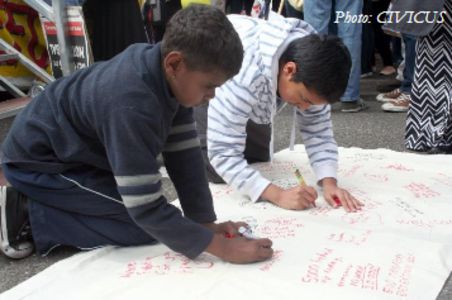
"While threats against civic space are well documented around the world, little is said on how civic space trends are being experienced by children, and how children's rights and abilities to be active agents for change in their countries and communities are being affected."
Based on ongoing research and analysis by Save the Children and CIVICUS, this policy brief sets out how current trends in civic space - the space for civil society - impact on the ability of children, and their allies in civil society, to organise, participate, and communicate to influence political, economic, and social priorities for children. The brief calls for policymakers to support children's civic rights, recognise the benefits of enabling children to exercise these rights, including their right to participate, and act to unlock these benefits. The claim is that improved participation on the part of children will ultimately lead to better informed and more effective policy.
According to the report, civic space, because it enables people to associate, assemble, express their views freely, and access information, is essential to realising human rights and making the Sustainable Development Goals (SDGs) - espcially Goals 16 and 17 - a reality. However, data from the CIVICUS Monitor, an online platform that tracks civic space conditions in every country of the world, show that only 3% of the world's population live in countries where civic space is open. The main reasons states restrict civil society are to prevent people from criticising authority, engaging in human rights monitoring, and calling for their basic social and economic rights to be met. Attempts by states to restrict the legitimate work of civil society through legislation or extra-legal restrictions, for example, can have a chilling effect on adult-led children's rights groups. There are also some positive developments, including for child- and adult-led civil society focusing on children's rights. In some cases, Save the Children has taken action with likeminded organisations against laws being introduced to restrict civic action.
The report presents findings from a study conducted in 2016 combining online consultations and face-to-face group discussions with a total of 1,606 children, aged between eight and 17, from 60 countries, and from an online survey carried out with 488 respondents from adult-led civil society from 98 countries. Among other findings, the research reveals that:
- Eighty-one percent of children consulted through the online survey report that they are interested in "decisions made by government and other people in positions of authority about issues and things happening in their community, country or the world."
- Almost two-thirds say they had faced an issue that made them feel they should do something, and 74% of these children report they had acted in response.
- The challenges faced by civil society in general are accentuated for children who seek to engage in civic action and influence public decision-making. (To see children as equals and as capable agents of change can be very threatening to power hierarchies.
- Only 34% of children participating in the study felt safe expressing their views in public, compared to 81% who felt they could do so in private. Only 38% felt safe joining a public protest or demonstration. A number of children engaged in civic action had also received threats from those who are the focus of their actions.
- In many countries, while the right to information is constitutionally enshrined, in practice public information is often hard to access, inaccurate, out of date, or presented in a way that is difficult for children to understand.
- Children may have the right to the freedom of expression, for example, but without self-confidence and awareness may never exercise the right.
- There is a demand for closer connections between children's groups and governance structures, particularly at local levels, to enable children to participate in governance processes and provide their views and recommendations.
Specific recommencations are put forth for actors in these categories: states; global and regional intergovernmental organisations; the private sector and business leaders; adults in general; and adult-led civil society. Selected recommendations gleaned from the research:
- Governments should put in place laws, regulations, and practices that enable participation and facilitate access to child-friendly information.
- Governments at the local and national levels must repeal or amend laws and change practices that prevent groups led by children and adults, including human rights defenders, from actively exercising their rights of association, peaceful assembly and expression, and their rights to access information and participate.
- State and intergovernmental institutions must prioritise the creation of spaces and opportunities for children to participate in processes that make decisions on issues that affect them.
- Political leaders and the private sector should recognise and support children as civic actors.
- Adults should take every precaution to minimise the risk to children of violence, exploitation or any other negative consequence of their civic action, based on the United Nations Committee on the Rights of the Child (UNCRC) basic requirements for the implementation of the right to be heard.
- Adult-led civil society should work to broker new connections between children and policymakers, and help facilitate meaningful and ethical opportunities for children to participate.
- All need to work to offer children a wide range of opportunities - online and offline - where they can come together, learn about their rights, share experiences, take joint action, and claim their rights.
e-CIVICUS 840, September 21 2017; and CIVICUS website, September 26 2017. Image credit: CIVICUS
- Log in to post comments