











































Pan African Community-Led Total Sanitation (CLTS) Programme
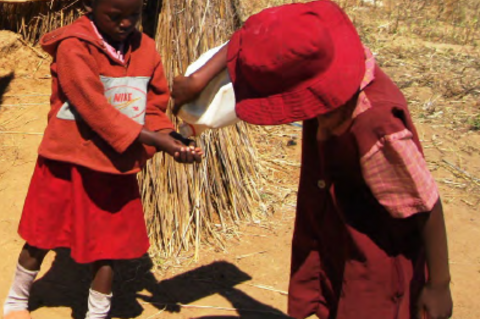
The Pan African CLTS programme is working to reduce infant and child morbidity and mortality in 8 African countries and empower rural and peri-urban communities, as well as improve the CLTS approach by sharing experiences through learning alliances, action learning, and promoting the CLTS approach internationally. By the end of the programme, it is expected that:
- rural and peri-urban communities and schools in project areas will have obtained 100% open defecation free status;
- adequate sanitation and hygiene practices are being applied by the persons in project areas;
- empowered communities will have effectively developed their own sanitation and hygiene systems and maintain them;
- country-specific models of CLTS, School-Led Total Sanitation (SLTS), and Urban Community-Led Total Sanitation (UCLTS) will have been developed;
- south-south and north-south cooperation networks between research and civic society institutions will have been established and mobilised on CLTS, SLTS and UCLTS by 2014; and
- local entrepreneurs are active to help households achieve sanitation.
The strategy being applied includes:
- empowering the population to install by itself appropriate sanitation facilities and undertake proper hygiene practices through the approaches of CLTS, SLTS, and UCLTS;
- engaging and assisting the (local) authorities in the process for continuation and scaling up to reach (many) more persons;
- engaging the private sector in construction and maintenance of the toilets;
- developing national and international networks for lobby and advocacy on this low-cost sanitation approach, for exchange and coordination between organisations, and for action research towards best and acceptable approach models; and
- starting with an inception phase for better coordination and network development (estimated 6 months), followed by the implementation (3.5 years), and a final year to assure sustainability.
In the first year, 256 communities of the intended 805 communities have attained the Open Defecation Free (ODF) status and many more are awaiting ODF verification. According to the project, households in the ODF communities are demonstrating good hygiene practices and 5 of the 8 national governments in the programme countries have recognised CLTS as an effective, low-cost approach to promoting good sanitation and have incorporated it in their national policies and plans. In 2011, a number of programme-wide and global meetings were organised in order to facilitate learning and sharing among the 8 countries in the programme and to improve and promote the CLTS approach internationally.
The project produces an annual publication called Trigger , which is designed to share achievements, challenges and lessons learned from all participating countries.
The programme website also shares case studies of lessons learned from each of the countries involved.
Health, Sanitation
According to the project organisers, for the past 3 decades, many development organisations used different approaches such as provision of latrines and subsidising the cost of building toilets to help economically poor people access sanitation facilities, but these approaches have not achieved intended results, as there are still a significant number of people with no access to sanitation facilities. Plan International was among the first organisations in 2007 to introduce the CLTS approach in Africa. The CLTS approach aims to raise awareness about the sanitation and hygiene practices in rural communities, and trigger the population into collective action to improve the situation by itself.
Plan Nederland, Plan Regional office East and South Africa, International Water and Sanitation Centre (IRC), and the Institute for Development Studies (IDS) UK.
IRC website and CLTS Annual Plan 2012 [PDF] on February 16 2012.
- Log in to post comments