










































In Pakistan's Swat Valley, Health Workers Reach out to Women and Children Already Struggling
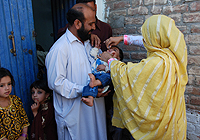
This article describes social mobilisation activities for "Mother and Child Days" and other health and vaccination campaigns that the United Nations Children's Fund (UNICEF) is conducting with non-governmental organisation (NGO) partners in the Swat valley in Pakistan's northwest Khyber Pakhtunkhwa province, which is facing a complex emergency situation. Since May 2009, military operations and conflict have ravaged the area and, in July 2010, floods came, affecting some 3.8 million people in the province and devastating thousands. According to UNICEF's Multiple Indicator Cluster Report on Pakistan (2008), 100 of every 1,000 children in Khyber Pakhtunkhwa province die before their fifth birthday. Of these, many die in the first year of life due to preventable diseases like diarrhoea and pneumonia. The floods have worsened the situation, especially for children and women in remote areas; bridges and roads have been washed away, limiting access to services.
During the Mother and Child Days campaign, children - especially those in rural areas - receive immunisations and de-worming medicines. Mothers are counselled on household practices like breastfeeding and basic hygiene, and on how to identify and treat diseases like pneumonia and diarrhoea. For example, in Kot Naway Kaley village, teams of vaccinators from the area's Basic Health Unit are going door-to-door, identifying and registering children for measles vaccines and administering on-the-spot polio vaccinations. In addition, community mobilisation activities, such as meetings with village elders, are designed to ensure that vaccination teams operate smoothly and that all eligible children are immunised.
Aside from door-to-door outreach, the campaign also provides services and health education at "delivery point" locations. There, health workers conduct health, hygiene, and nutrition promotion activities through counselling sessions; provide demonstrations on using oral rehydration salts (ORS) for the treatment of diarrhoea; and messages about prevention of communicable diseases like diarrhoea, pneumonia, skin infections, and malaria.
UNICEF reports here that, as part of this initiative, some 32,000 families have been reached; nearly 5,000 pregnant women have been registered and provided with clean delivery kits; and 129 high-risk pregnancies were referred to hospitals or other health facilities.
Global Health TV, October 29 2010. Image credit: © UNICEF Pakistan/2010/Dhayi
- Log in to post comments