










































New Questions, New Insights, New Approaches: Contributions to the Research Forum at the World Summit on Media For Children and Youth 2010
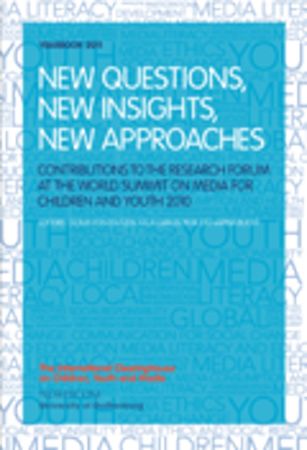
The International Clearinghouse on Children, Youth and Media's Yearbook 2011 is a resource that shares research on children's rights that was presented at a forum held in cooperation with the hosts of the World Summit on Media for Children and Youth in 2010, Karlstad, Sweden, and the International Clearinghouse on Children, Youth and Media at Nordicom. Under the overriding theme of the introductory Plenary Session "New Questions, New Insights, New Approaches", The Clearinghouse Research Forum had 4 more sessions with panels on different themes:
- Media Literacy and Education
- Children, Media, Consumption and Health
- Media Ethics and Social Responsibility
- Communication for Social Change
In these 5 panels, there were 25 presentations of topical research by a range of scholars from Africa, Asia, Europe, Latin America, and North America. For this book, they reworked their contributions to provide slightly extended articles.
Excerpts from the Foreword follow:
"For children and youth, the many media platforms of today are often combined into the trinity of internet, television and mobile phone....Yet social networking, blogging, producing alternative media contents on the internet, etc., are possible only for those who have access to these media....Clearly emerging from the book's articles are the deep structural media divides within and between countries - divides that in their turn depend on economic, social, political and cultural inequalities in society that are much more sluggish.
One recurrent theme related to children, youth and media...is the need for media literacy education. In these contexts media literacy means, besides having access to digital and other media, the ability to scrutinize the media and media contents in a critical way, to express one's own views through the media and to creatively take part in production of media contents. Although media production is becoming easier with the advent of new and cheaper technologies, it is vitally important that these opportunities reach all young people...
There is hope that media literacy will also include young people's participation in the public sphere as citizens. This could be a way to balance the risks and potentially harmful influences of media output....There are certainly many examples of how youth across the world act in their local communities as citizens, creating alternative media, offering resistance to existing circumstances, and communicating for social change. This book offers several such examples.
But it is unrealistic to believe that problematic media influences can be counteracted by the children themselves, acting as independent agents and "self-regulators"...
And although there are examples, some included in this book, of the media helping to reduce serious health problems in collaboration with other societal forces, there are other examples of the media contributing to worsening health. When the media fail to inform about facts and instead heavily emphasize entertainment, underpin and encourage stereotypes about, e.g., gender and sexuality, and/or give the impression that more consumption will make you happy, no progress in this area is made.
It is therefore imperative that the media strive to act more ethically and responsibly. If they cannot do so on their own, due to their dependence on trade and industry marketing, they must be supported and followed up by responsible societal policy.
Several articles in the book show that the media will certainly be more attractive to children and young people if they try to see needs and problems from the perspective of the third of the world's population under 18 years of age...Children's needs and problems as they express them, concern, among other things, justice, equality and solidarity, engagement in societal issues, and a culture one is familiar with. The media's work towards addressing these issues is indispensable..."
280
Nordicom website, July 7 2011.
- Log in to post comments